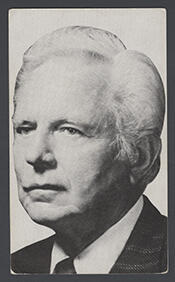
Samuel Lahm (April 22, 1812 – June 16, 1876) was a lawyer, politician, and U.S. Representative from Ohio for one term from 1847 to 1849. A member of the Democratic Party, he served during a significant period in American history, participating in the legislative process and representing the interests of his Ohio constituents in the Thirtieth Congress.
Lahm was born in Leitersburg, Maryland, to John Lahm, an immigrant from Germany. His parents had emigrated from Germany and settled in Maryland, where he spent his early years. From about the age of twelve to eighteen, he worked on his father’s farm, gaining experience in agricultural labor that would later inform his own pursuits. Around the age of eighteen, he briefly left farm work to spend three months employed in a dry goods store in Franklin County, Pennsylvania, before returning to his father’s farm. His early life reflected a combination of manual labor and intermittent schooling typical of rural families of the period.
Lahm’s education was pieced together through several institutions and teaching positions. He attended a local school near Leitersburg for two years and, during the winters, taught school himself to support his studies. He pursued further education by attending a seminary in Gettysburg, Pennsylvania, for a summer session, and then returned to Leitersburg, where he taught school for two years. Seeking more advanced study, he enrolled at Washington College in Washington, Pennsylvania (now Washington & Jefferson College), although he did not complete a degree. In March 1835, he turned decisively toward the law, beginning legal studies under Oliver H. Smith in Indiana. He subsequently moved to Ohio, was admitted to the Ohio bar in 1836, and embarked on a legal career that would serve as the foundation for his public life.
Intending initially to return to Leitersburg, Lahm instead settled in Canton, Ohio, where he opened a law practice. For a time he worked in the office of Almon Sortwell and became active in the intellectual life of the community as a member of the Lyceum debating society in Canton. He formed a partnership with Andrew W. Loomis in the firm of Loomis & Lahm, a collaboration that continued until Loomis left Ohio in 1841. Lahm quickly entered public service: he was appointed master of chancery from 1837 to 1841 and served as prosecuting attorney of Stark County from 1837 to 1845. His growing prominence in Democratic politics led to his selection as a delegate to the Democratic National Convention held in Baltimore, Maryland, in 1844. He also held military responsibilities in the state’s antebellum militia, being elected a lieutenant colonel and later appointed a brigadier general, commanding the 2nd Brigade, 6th Division of Ohio during the period of the Mexican War.
Lahm’s formal political career began in the Ohio General Assembly. He served as a member of the Ohio Senate from 1842 to 1844, where he chaired the committee on public institutions, reflecting his involvement in state-level governance and oversight of public facilities. In 1844 he was an unsuccessful Democratic candidate for election to the Twenty-ninth Congress. Undeterred, he ran again and was elected as a Democrat to the Thirtieth Congress, defeating Samuel Starkweather. He served in the U.S. House of Representatives from March 4, 1847, to March 3, 1849, representing Ohio during a time marked by the Mexican–American War and growing sectional tensions. As a member of the Democratic Party representing Ohio, Lahm contributed to the legislative process during his single term in office, participating in debates and votes that shaped national policy and representing the interests of his constituents. He later sought election to Ohio’s 18th congressional district in 1856 but was unsuccessful. Remaining active in party affairs, he served again as a delegate to the Democratic National Convention in 1860.
Following his congressional service and subsequent electoral defeats, Lahm gradually withdrew from active politics and turned his attention to agricultural pursuits. He engaged in farming and sheep raising, drawing on his early experience in agriculture and establishing himself as a landowner in Stark County. His later years coincided with the tumult of the American Civil War, which had a direct and tragic impact on his family. Two of his eldest sons served in the 115th Ohio Volunteer Infantry during the war and died in service within three weeks of each other, both succumbing to illness rather than battle wounds.
Lahm’s personal life was marked by two marriages and a large family. In 1838 he married Almira Webster Brown, the daughter of Daniel Brown of Portsmouth, New Hampshire, and a relative of statesman Daniel Webster by marriage. Samuel and Almira Lahm had five children: four sons—Marshall, Edward, Frank Samuel, and Charles Henry—and one daughter, Helen Rebecca. After Almira’s death, he married Henrietta Faber of Pittsburgh in 1855, and they had three daughters. Among his children and descendants were figures of note in the early history of aviation: his son Frank Samuel Lahm became a prominent expatriate and pioneer balloonist, and his grandson, Brigadier General Frank Purdy Lahm, was an early aerial pioneer, a student of the Wright brothers, and the first military officer to fly an airplane, extending the family’s public legacy into the age of flight.
Samuel Lahm died at his home on West Tuscarawas Street in Canton, Ohio, on June 16, 1876. He was interred in West Lawn Cemetery in Canton. His life spanned the early republic, the era of westward expansion, and the Civil War, and encompassed service as a lawyer, state legislator, militia officer, and member of the United States House of Representatives, as well as a later career in agriculture and a family legacy that reached into the development of modern aviation.
Congressional Record