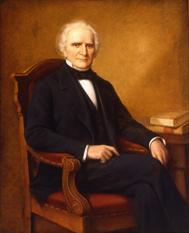
Samuel Delucenna Ingham (September 16, 1779 – June 5, 1860) was an American politician who served as a U.S. Representative from Pennsylvania and as the ninth Secretary of the Treasury under President Andrew Jackson. A prominent Jacksonian and member of the Jackson Party representing Pennsylvania, he contributed to the legislative process during eight terms in the United States House of Representatives, participating in the democratic process and representing the interests of his constituents during a formative period in the nation’s political and economic development.
Ingham was born in Solebury Township, Bucks County, Pennsylvania, on September 16, 1779. He was the son of Dr. Jonathan Ingham, a well-known Philadelphia physician, and his wife, the former Ann Welding. He pursued classical studies in his youth before entering a trade, reflecting the combination of education and practical experience that would characterize his later public career. After his formal studies, he was apprenticed to a paper maker along Pennypack Creek near Philadelphia, an early association with the paper industry that would remain central to his livelihood throughout much of his life.
Upon completing his apprenticeship, Ingham became manager of a paper mill at Bloomfield, New Jersey. While living there he met Rebecca Dodd, whom he married in 1800; the couple would have five children. That same year he returned to Pennsylvania and established a paper mill on his mother’s farm in Bucks County, his father having died in 1793. This enterprise became his principal occupation in the years before and between his periods of public service, anchoring him in the commercial and industrial life of the region and giving him practical experience in business and finance that later informed his work in government.
Ingham began his political career in the Pennsylvania House of Representatives, where he served from 1806 to 1808. After his legislative service in Harrisburg, he was appointed a justice of the peace by the governor of Pennsylvania, gaining experience in local judicial and administrative matters. He was first elected to the United States House of Representatives as a Republican from Pennsylvania and served from 1813 until his resignation on July 6, 1818. During this initial period in Congress he easily defeated his Federalist opponents in his first two elections and faced no opposition in 1816, reflecting his growing political strength. In the 13th Congress he chaired the House Committee on Pensions and Revolutionary War Claims, and in the 14th and 15th Congresses he chaired the House Committee on the Post Office and Post Roads, as well as the House Committee on Expenditures in the Post Office Department during the 15th Congress. He resigned from Congress in 1818 because of his wife Rebecca’s ill health, and after leaving the House he was appointed prothonotary of the Court of Common Pleas of Bucks County, serving as chief clerk, notary, and registrar. In 1819 Rebecca Dodd Ingham died, marking a personal turning point in his life.
Ingham’s state-level responsibilities expanded when he served as Secretary of the Commonwealth of Pennsylvania from 1819 to 1820, a position that placed him at the center of the state’s administrative affairs. In 1822 he married Deborah Hall of Salem, New Jersey; they would have three children together. That same year he returned to national office when he was again elected to the United States House of Representatives from Pennsylvania. He served continuously in Congress from 1822 until 1829, during which time he aligned himself with Andrew Jackson and the emerging Jacksonian movement. Over the course of his eight terms in the House, Ingham remained closely involved with postal and infrastructure issues, again chairing the House Committee on the Post Office and Post Roads during the 19th and 20th Congresses. His long tenure in Congress coincided with a significant period in American history, as debates over internal improvements, finance, and the scope of federal power intensified, and he played a role in shaping legislation affecting communications and transportation across the growing republic.
In recognition of his political loyalty and administrative experience, Ingham was appointed by President Andrew Jackson as the ninth Secretary of the Treasury, serving from March 6, 1829, to June 21, 1831. As Treasury Secretary, his primary concern was the Second Bank of the United States, which Jackson and many of his supporters regarded as an unconstitutional and dangerous monopoly. Jackson opposed paper currency and believed the Constitution was designed to exclude it from the monetary system, favoring instead a specie-based economy. Ingham, by contrast, believed in the utility of the Second Bank and sought to mediate between Jackson and the Bank’s president, Nicholas Biddle, attempting to reconcile the administration’s political objections with the financial institution’s role in stabilizing the currency and credit. Although he was unable to resolve the deepening conflict that would later culminate in the Bank War, his tenure highlighted the growing rift within Jackson’s circle over economic policy.
Ingham’s departure from the Treasury Department arose from a different source of controversy, the social and political scandal known as the Petticoat affair. He became involved in the social ostracism of Peggy Eaton, the wife of Secretary of War John H. Eaton, by a group of Cabinet members and their wives led by Floride Calhoun, the wife of Vice President John C. Calhoun. The dispute, which strained relations within Jackson’s Cabinet, eventually contributed to a broader reorganization of the administration. Eaton challenged Ingham to a duel, which Ingham declined. On June 20, 1831, Eaton organized a group of supporters to search for Ingham, prompting Ingham to arm himself and request President Jackson’s protection. Receiving no assistance from the president, he fled Washington first to Baltimore and then to Bucks County, Pennsylvania, likely avoiding a violent confrontation. He resigned as Secretary of the Treasury shortly thereafter, formally ending his service in Jackson’s Cabinet.
Beyond his elected and Cabinet posts, Ingham was active in learned and civic societies. During the 1820s he was a member of the Columbian Institute for the Promotion of Arts and Sciences in Washington, an organization that included among its members Andrew Jackson, John Quincy Adams, and other prominent figures from government, the military, medicine, and the professions. In 1840 he was elected to the American Philosophical Society, reflecting recognition of his broader interests in public affairs, science, and improvement. These affiliations placed him within the intellectual and reform networks that influenced policy and development in the early republic.
After resigning as Secretary of the Treasury, Ingham returned to private enterprise. He resumed the manufacture of paper and became deeply involved in the development of Pennsylvania’s anthracite coal fields, participating in the early industrialization of the region. He helped organize the Beaver Meadow Railroad Company around 1830 and served as its president for a time, promoting rail transportation to move coal and other goods. He was also connected with the organization of the Hazleton Coal Company and worked to advance canal projects such as the Lehigh Navigation and the Delaware Canal, contributing to the transportation infrastructure that underpinned the state’s economic growth. In 1849 he moved to Trenton, New Jersey, where he became associated with the city’s Mechanics Bank, continuing his engagement with finance and commerce in his later years.
Samuel Delucenna Ingham died on June 5, 1860, in Trenton, New Jersey, at the age of 80. He was interred in the Solebury Presbyterian Churchyard in Solebury, Pennsylvania, returning in death to the county of his birth. His public service was commemorated geographically: Ingham County, Michigan, one of several “Cabinet counties” named for members of Jackson’s administration, bears his name; the city of Lansing, largely situated in Ingham County, later became Michigan’s capital and the center of its third-largest metropolitan area. Ingham Avenue in Trenton, New Jersey, is also named in his honor, reflecting the lasting local and national recognition of his contributions to American political and economic life.
Congressional Record