United States Representative Directory

Samuel Hopkins

Samuel Hopkins served as a representative for Kentucky (1813-1815).

  • Republican
  • Kentucky
  • District 5
  • Former
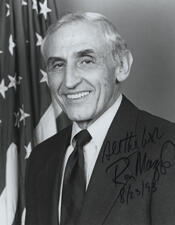
Portrait of Samuel Hopkins Kentucky
Role Representative

Current assignment referenced in the congressional directory.

State Kentucky

Representing constituents across the Kentucky delegation.

District District 5

District insights and legislative focus areas.

Service period 1813-1815

Years of public service formally recorded.

Font size

Biography

Samuel Hopkins is a name shared by several notable American figures, including Samuel Hopkins the inventor (1743–1818), Samuel Hopkins the theologian (1721–1803), and multiple members of the United States Congress. In addition, the name has been borne by individuals distinguished in fields as varied as professional sports, music, and the visual arts. Across the eighteenth, nineteenth, and twentieth centuries, men named Samuel or Sam Hopkins have contributed to American religious thought, technological innovation, and national legislative life, as well as to cultural and athletic endeavors in the United States and abroad.

The earliest prominent figure bearing the name was Samuel Hopkins, the American clergyman and theologian born in 1721, who became known for formulating a distinct religious system called Hopkinsism or Hopkinsianism. Emerging in the context of New England Congregationalism and the broader currents of the First Great Awakening, his theology developed out of the Calvinist tradition but introduced notable modifications, particularly in its emphasis on disinterested benevolence and moral obligation. Over the course of his ministry in the eighteenth century, he articulated and defended these views in sermons and writings that influenced a circle of followers and helped shape strands of American Protestant thought. He continued his clerical and theological work until his death in 1803, leaving a legacy identified with the specific doctrinal system that bore his name.

Another early Samuel Hopkins of national significance was the American inventor born in 1743, who became closely associated with the development of chemical manufacturing in the early United States. He was awarded the first United States patent for a process to refine potash, a key industrial chemical derived from wood ashes and used in the production of soap, glass, and other goods. This patent, granted under the authority of the newly established federal patent system, marked an important moment in the legal recognition of intellectual property in the United States and underscored the growing importance of technological innovation to the young nation’s economy. Hopkins’s work in refining potash contributed to more efficient production methods and reflected the broader spirit of practical invention that characterized the post-Revolutionary era. He remained associated with this pioneering achievement until his death in 1818.

The name Samuel Hopkins was also carried by several members of the United States House of Representatives in the late eighteenth and nineteenth centuries. Samuel Hopkins, born in 1753, served as a United States Congressman from Kentucky. Coming of age during the Revolutionary generation and representing a state on the American frontier, he participated in the early legislative life of the republic as Kentucky took its place in the Union. His service in Congress placed him among the lawmakers responsible for addressing the political and developmental challenges of a growing nation in the early nineteenth century. He remained a figure of public life in Kentucky and the broader region until his death in 1819.

Another legislator sharing the name was Samuel M. Hopkins, born in 1772, who served as a United States Representative from New York. His career unfolded against the backdrop of the early national and antebellum periods, when New York was emerging as a major political and economic center. As a member of Congress, he took part in federal deliberations during a time of expanding commerce, territorial growth, and evolving party politics. His service in the House of Representatives reflected the concerns of his New York constituency and contributed to the legislative record of the era. Samuel M. Hopkins remained active in public affairs until his death in 1837.

In the later nineteenth century, Samuel I. Hopkins, born in 1843, continued the tradition of the name in national politics as a U.S. Representative from Virginia. His life spanned the Civil War, Reconstruction, and the complex realignments that followed, and his congressional service occurred in a period marked by debates over federal authority, civil rights, and economic modernization. Representing Virginia in the House of Representatives, he participated in the legislative process as the former Confederate states were reintegrated into national political life and as the country confronted the challenges of industrialization and regional adjustment. He remained a figure in Virginia and national politics until his death in 1914.

Beyond politics, the name Sam Hopkins has appeared in modern cultural and athletic contexts. Lightnin’ Hopkins, born Sam John Hopkins in 1912, became an influential American blues guitarist whose career extended through much of the twentieth century. Associated with the Texas blues tradition, he was known for his distinctive guitar style, improvisational performances, and extensive recorded output, which helped shape the sound and repertoire of modern blues. His work brought the name Sam Hopkins into the realm of American music history, and he remained an active performer and recording artist until his death in 1982. In the realm of sports, Sam Hopkins, born in 1990, became known as an English rugby league footballer, participating in the professional game in the United Kingdom. His career in rugby league reflects the continued presence of the name in public life, now in an international and athletic context.

The arts have also included a contemporary figure named Sam Hopkins, born in 1979, an artist whose work is rooted in Kenya. Engaging with themes that reflect his connection to East Africa, his practice has involved exploring social, political, and cultural questions through a variety of media. His career illustrates the global reach of the name and its association with creative and critical engagement in the visual arts. Taken together, the lives and careers of these various individuals named Samuel or Sam Hopkins demonstrate the recurrence of the name across centuries and fields, from theology, invention, and congressional service in the United States to music, sport, and contemporary art on an international stage.

Congressional Record

Loading recent votes…

More Representatives from Kentucky