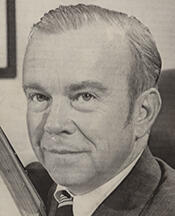
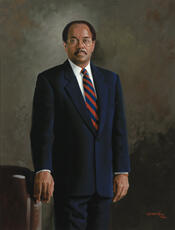
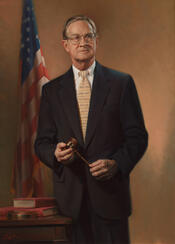
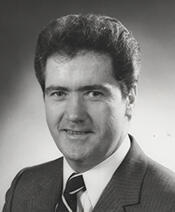
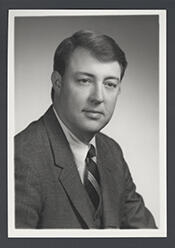
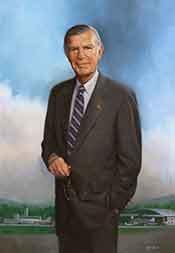
Samuel Henderson is a name shared by several notable American figures who were active in politics, civic leadership, religious life, and the arts from the late eighteenth century into the modern era. The most historically prominent include Samuel Henderson (1764–1841), a member of the United States House of Representatives from Pennsylvania; Samuel Henderson (c. 1800–1883), the first mayor of Indianapolis, Indiana; Samuel Henderson (c. 1827–1907), an African-American groundskeeper and Catholic convert under consideration for beatification; and Sam Henderson (born 1969), an American cartoonist, writer, and historian of American comedy.
Samuel Henderson, the Pennsylvania politician, was born in 1764, a period when the American colonies were still under British rule and the political institutions of what would become the United States were only beginning to take shape. Coming of age during and immediately after the American Revolution, he entered public life in a state that was central to the founding of the nation and the drafting of the Constitution. His early life and education unfolded against the backdrop of Pennsylvania’s rapid political and economic development, and he emerged as one of the many local leaders who helped translate revolutionary ideals into the practical work of governance.
Henderson’s political career culminated in his service as a member of the U.S. House of Representatives from Pennsylvania. Serving in the national legislature during the early decades of the republic, he participated in the formative period of congressional history, when precedents in federal lawmaking, executive-legislative relations, and national economic policy were being established. As a representative, he would have been involved in debates over issues such as federal finance, westward expansion, and the balance of power between the states and the federal government, reflecting Pennsylvania’s importance as a populous and economically significant state. He remained active in public affairs until his death in 1841, by which time the United States had expanded significantly and the institutional role of Congress had become firmly entrenched.
Another prominent bearer of the name, Samuel Henderson of Indianapolis, was born around 1800, in the early national period, and became a key figure in the civic development of the American Midwest. Moving into what was then a relatively new and rapidly growing region, he became closely associated with the emerging city of Indianapolis, Indiana. His early activities in commerce and local affairs positioned him as a leading citizen at a time when Indiana was transitioning from frontier status to a more settled, organized state with a permanent capital.
Henderson’s most notable public role was his service as the first mayor of Indianapolis, Indiana. Elected shortly after the city adopted a municipal charter, he oversaw the initial organization of city government, including the establishment of basic administrative structures, public order, and local regulations. His tenure as mayor helped lay the groundwork for Indianapolis’s later growth into a major Midwestern urban center. As the city’s inaugural chief executive, he played a formative role in defining the responsibilities of the office and the relationship between municipal authorities and state government. He remained a recognized figure in Indiana civic life until his death in 1883, by which time Indianapolis had grown far beyond the small community he first helped to govern.
A third historical figure, Samuel Henderson (born c. 1827, died c. 1907), was an African-American groundskeeper whose life took on religious significance within the Catholic Church. Born in the decades before the Civil War, likely into a society marked by slavery, racial discrimination, and limited opportunities for Black Americans, he worked in a humble occupation that nonetheless brought him into close contact with religious institutions and communities. Over time, he embraced the Catholic faith, becoming a Catholic convert at a period when African-American Catholics were a small minority and often faced both racial and religious marginalization.
Henderson’s personal piety, perseverance in the face of adversity, and reputation for holiness led to his being regarded with special esteem by those who knew him. His life as a layman, marked by quiet service and fidelity to religious practice, eventually drew the attention of Church authorities. In the years after his death around 1907, his example continued to inspire devotion, and he came under consideration for beatification, the formal process by which the Catholic Church recognizes a person as “Blessed” and worthy of public veneration in certain contexts. This consideration placed him among a small but significant group of African-American Catholics whose lives have been proposed as models of virtue for the wider Church.
In the modern era, the name is also borne by Sam Henderson, born in 1969, an American cartoonist, writer, and expert on American comedy history. Growing up in the late twentieth century, he entered the world of comics and humor at a time when alternative and independent cartooning were gaining wider recognition. As a cartoonist, he became known for his distinctive comedic style, contributing to magazines, comic books, and other media that showcased offbeat and often irreverent humor. His work reflected and helped shape contemporary trends in American cartooning, particularly in the realm of adult and alternative comics.
Beyond his creative output as an artist, Sam Henderson developed a reputation as a knowledgeable commentator on the history of American comedy. Drawing on his familiarity with both print and performance traditions, he wrote and spoke about the evolution of humor in the United States, from early comic strips and vaudeville routines to television, stand-up, and underground comics. His dual role as practitioner and historian of comedy has made him a notable figure in documenting and interpreting the cultural significance of American humor, extending the legacy of the name Samuel Henderson into the fields of arts and cultural history.
Congressional Record