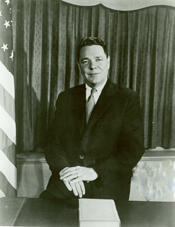
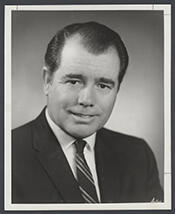
Samuel Louis Gilmore (July 30, 1859 – July 18, 1910) was a U.S. Representative from Louisiana and a long-serving municipal attorney in New Orleans. He was born in New Orleans, Louisiana, where he spent the greater part of his life and professional career. In his youth he was instructed by private tutors before entering the city’s public schools. He graduated from the Central High School of New Orleans in 1874, marking the beginning of a formal education that would prepare him for the legal profession and public service.
After completing his secondary education, Gilmore attended Seton Hall College in South Orange, New Jersey, from which he graduated in 1877. He then returned to his native city to study law at the law department of the University of Louisiana at New Orleans, an institution later renamed Tulane University. He completed his legal studies there in 1879. The following year, in 1880, he was admitted to the bar and commenced the practice of law in New Orleans, establishing himself in the city’s legal community at a relatively young age.
Gilmore’s public career was closely tied to the municipal government of New Orleans. In 1888 he was appointed assistant city attorney, a position he held for eight years, until 1896. In that capacity he gained extensive experience in municipal law and city governance. In 1896 he was elevated to the office of city attorney of New Orleans, a post of considerable responsibility in which he served for more than a decade. He remained city attorney from 1896 until March 15, 1909, when he resigned in order to pursue service at the federal level. During this period he was also active in Democratic Party politics and served as a delegate to the Democratic National Convention in 1908, reflecting his growing prominence within the party in Louisiana.
Gilmore entered national politics when he was elected as a Democrat to the Sixty-first Congress to fill the vacancy caused by the death of Representative Robert C. Davey of Louisiana. He took his seat in the U.S. House of Representatives on March 30, 1909. Representing his New Orleans–area constituency, he served in Congress during a period marked by significant national debates over economic regulation and progressive reforms, although his tenure was too brief for him to become a major figure in congressional leadership. He remained in office until his death, thus becoming one of the members of the United States Congress who died in office in the early twentieth century.
Gilmore died while still serving in Congress on July 18, 1910, in Abita Springs, Louisiana, a community in St. Tammany Parish that was then a popular retreat for residents of New Orleans. Following his death, he was interred in Metairie Cemetery in New Orleans, Louisiana, a burial place for many of the city’s political and civic leaders. His passing brought to a close a career that had spanned three decades of legal practice and public service at both the municipal and federal levels.
Gilmore’s family continued to play a role in the cultural and civic life of New Orleans after his death. His daughter, Martha Gilmore Robinson, became a notable women’s rights and civic activist, participating in reform efforts and public affairs in the city. His son, Samuel Louis Gilmore Jr., pursued a literary career as a poet and playwright and served as an associate editor for The Double Dealer, a New Orleans–based literary magazine that contributed to the city’s early twentieth-century cultural renaissance. Through both his own public service and the later accomplishments of his children, Gilmore’s family remained part of the civic and cultural fabric of Louisiana.
Congressional Record