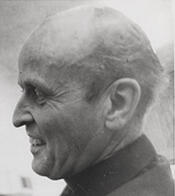
Samuel Atkins Eliot was the name of two prominent American figures in the nineteenth and early twentieth centuries: Samuel Atkins Eliot (1798–1862), a U.S. Representative from Massachusetts, and his kinsman Samuel A. Eliot (1862–1950), an American Unitarian minister. A third member of the extended family, Samuel Atkins Eliot Jr. (1893–1984), became known as an American author. All were associated with the broader Eliot family of America, a New England lineage that produced numerous public officials, clergymen, and writers.
Samuel Atkins Eliot, the politician, was born in 1798 and became a leading public figure in Massachusetts during the antebellum period. Raised in New England, he emerged from a milieu of mercantile, civic, and educational interests that characterized the early American Eliot family. His early life and education prepared him for a career in public service at a time when Massachusetts was consolidating its political institutions and expanding its commercial influence. By the 1830s and 1840s he was active in state and local affairs, participating in the civic leadership that shaped Boston and the Commonwealth in the decades before the Civil War.
Eliot’s political career culminated in his service as a U.S. Representative from Massachusetts. Serving in the United States Congress in the mid-nineteenth century, he represented the interests of his state in an era marked by sectional tensions, debates over economic policy, and the evolving role of the federal government. As a member of the House of Representatives, he contributed to legislative deliberations that reflected both the commercial priorities of New England and the growing national conflicts that would eventually lead to the Civil War. His congressional service placed him among the notable Massachusetts politicians of his generation.
After his term in Congress, Samuel Atkins Eliot continued to be identified with the civic and public life of Massachusetts. His experience in national politics, combined with his longstanding ties to Boston’s social and economic elite, ensured that he remained a respected figure in the community. He lived through the turbulent years leading up to the Civil War, witnessing the intensifying national debate over slavery and union. He died in 1862, during the early years of that conflict, closing a career that had spanned a formative period in both Massachusetts and United States history.
Samuel A. Eliot, the minister, was born in 1862, the year of the politician’s death, into the same broad American Eliot family that had already established a reputation for public service and intellectual leadership. Growing up in the later nineteenth century, he came of age in a period when religious institutions were grappling with industrialization, urbanization, and new currents in theology. His early life and education directed him toward the Unitarian tradition, which was particularly influential in New England and emphasized reason, conscience, and a liberal approach to religious belief.
Eliot entered the Unitarian ministry and became an American Unitarian minister of national prominence. Serving congregations and denominational bodies in the late nineteenth and early twentieth centuries, he worked within a religious movement that sought to reconcile faith with modern scholarship and social reform. His ministry coincided with the Social Gospel era, when many Protestant leaders addressed issues such as poverty, labor conditions, and education. Within this context, he contributed to the institutional and intellectual life of Unitarianism in the United States, helping to shape its direction as it moved into the twentieth century.
Over the course of his career, Samuel A. Eliot’s work as a minister reflected both the inherited traditions of the Eliot family and the evolving concerns of liberal religion. He was active in denominational leadership and in the broader religious discourse of his time, participating in efforts to make Unitarian congregations centers of ethical reflection and civic engagement. His influence extended beyond the pulpit into organizational and educational initiatives that supported the growth and coherence of the Unitarian movement nationally. He remained a significant figure in American religious life until his death in 1950.
A later member of the family, Samuel Atkins Eliot Jr., born in 1893, carried the Eliot name into the literary sphere as an American author. Coming of age in the early twentieth century, he belonged to a generation shaped by World War I, the interwar period, and the cultural transformations of modern America. His work as an author added a literary dimension to the family’s established record in politics and religion. Samuel Atkins Eliot Jr. lived until 1984, spanning nearly the entire twentieth century and extending the presence of the Eliot family in American public and intellectual life well beyond the eras of the congressman and the minister.
Congressional Record