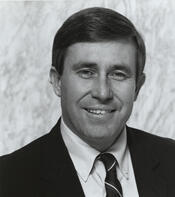
Samuel Earle (November 28, 1760 – November 24, 1833) was a United States representative from South Carolina and a Revolutionary War officer whose public career spanned the early national period. He was born in Frederick County in the Colony of Virginia, where he spent his early childhood before relocating with his family to the Province of South Carolina in 1774, on the eve of the American Revolution. The move placed him in the backcountry region that would become a significant theater of conflict during the war and later a center of political development in the new state.
With the outbreak of the American Revolutionary War, Earle entered military service at a young age. In 1777 he was commissioned an ensign in the 5th South Carolina Regiment, part of the Continental forces raised by the state. Over the course of the conflict he advanced in responsibility and rank, ultimately serving as captain of a company of rangers by the time he left the service in 1782. His wartime experience in frontier and militia operations reflected the broader struggle for control of the southern backcountry and helped establish his standing among local citizens in the postwar years.
Following the Revolution, Earle turned to public life in the newly independent state. He was elected to the South Carolina House of Representatives, serving from 1784 to 1788, a period in which the state was rebuilding its institutions and addressing the economic and political consequences of the war. During these years he participated in legislative deliberations as South Carolina adjusted its laws and governance to the new republican order. His role in the state legislature led naturally to involvement in the foundational constitutional debates of the era.
Earle was chosen as a delegate to the South Carolina convention that met to consider the proposed Constitution of the United States, and he took part in the proceedings that culminated in the state’s ratification on May 12, 1788. His support for the new federal framework aligned him with those in South Carolina who favored a stronger national government within a republican system. He later served as a delegate to the South Carolina Constitutional Convention of 1790, which drafted a new state constitution to bring South Carolina’s fundamental law into closer harmony with the federal Constitution and to refine the structure of state government in the early republic.
Building on his state-level experience, Earle was elected as a Republican (Democratic-Republican) to the Fourth Congress. He represented South Carolina in the U.S. House of Representatives from March 4, 1795, to March 3, 1797, during the administration of President George Washington. In Congress he served at a time marked by intense debate over issues such as the implementation of the federal Constitution, the development of the nation’s financial system, and the emerging division between Federalists and Democratic-Republicans. His affiliation with the Republican party placed him among those who generally advocated for a more limited federal government and greater emphasis on agrarian interests and states’ rights.
After completing his single term in the national legislature, Earle returned to South Carolina, where he continued to be identified with the political and social life of the upcountry region. He resided in the Pendleton District, an important center of settlement and local governance in the state’s interior. Although specific details of his later activities are less fully documented, his long-standing involvement in public affairs and his Revolutionary War service ensured that he remained a figure of local prominence. His family was notable in South Carolina politics: his uncle Elias Earle and his cousin John Baylis Earle also served as U.S. Representatives from South Carolina, reflecting a broader family tradition of public service.
Samuel Earle died in the Pendleton District, South Carolina, on November 24, 1833, four days before his seventy-third birthday. He was interred in Beaverdam Cemetery in what is now Oconee County, South Carolina. His life and career, spanning from the colonial era through the early decades of the United States, linked military service in the Revolution with participation in the creation and early operation of both state and federal institutions.
Congressional Record