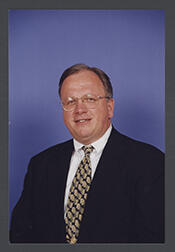
Samuel Watkins Eager (April 8, 1789 – December 23, 1860) was an American lawyer and politician who briefly served as a U.S. representative from New York from 1830 to 1831. He lived and worked during a formative period in the early republic, when New York was emerging as a leading political and economic center of the United States, and he participated in the evolving democratic process as a member of the House of Representatives.
Eager was born on April 8, 1789, the year the federal government under the new Constitution was inaugurated, and he came of age as the nation’s political institutions were taking shape. Details of his early life and family background are sparse in the surviving record, but his subsequent legal and political career indicates that he received the education and training typical of aspiring professionals in the early nineteenth century. Growing up in New York at a time of rapid expansion and increasing commercial activity, he would have been exposed to the legal and political issues that accompanied the state’s growth.
In keeping with the professional path of many young men of his generation, Eager studied law and entered the legal profession. After reading law, as was customary before the widespread establishment of formal law schools, he was admitted to the bar and commenced practice in New York. As an attorney, he would have handled a range of civil and possibly criminal matters, representing clients in a state whose courts were frequently occupied with questions of property, commerce, and local governance. His legal work provided the foundation for his later involvement in public affairs and helped establish his standing in the community.
Eager’s legal career led naturally into politics, as was common in the early nineteenth century when lawyers formed a substantial portion of the political class. By the late 1820s, New York’s political landscape was marked by shifting party alignments and the rise of new factions, and Eager became active in this environment. Although the surviving record does not clearly identify his formal party label—reflected in later descriptions of him as a member of an “Unknown Party”—he was part of the broader political realignments of the Jacksonian era, when older party structures were breaking down and new coalitions were forming around issues such as federal power, internal improvements, and economic policy.
Eager was elected to the United States House of Representatives from New York and served a single term in Congress from 1830 to 1831. During this brief period in the national legislature, he contributed to the legislative process and represented the interests of his New York constituents at a time when Congress was grappling with questions of tariffs, banking, and the balance of power between the federal government and the states. His service in Congress occurred during a significant period in American history, and although the detailed record of his committee assignments and floor activity is limited, he participated in the work of the House as it navigated the contentious politics of the era.
After completing his one term in the House of Representatives, Eager returned to private life and to the practice of law. Like many one-term members of Congress in the early nineteenth century, he resumed his professional career in his home state, continuing to be part of the legal and civic life of his community. His experience in Congress would have enhanced his stature as a local leader and counselor, and he remained identified with the generation of New York lawyers who helped shape the state’s public affairs in the decades before the Civil War.
Samuel Watkins Eager died on December 23, 1860, just as the United States was entering the secession crisis that would lead to the Civil War. His life spanned from the first year of the federal government under the Constitution to the eve of the nation’s greatest internal conflict. Though his tenure in Congress was brief, his career as a lawyer and legislator reflected the opportunities and responsibilities of public service in the early republic, and he is remembered in the historical record as one of the many New York attorneys who contributed to the development of American political institutions in the first half of the nineteenth century.
Congressional Record