United States Representative Directory

Samuel Davis

Samuel Davis served as a representative for Massachusetts (1813-1815).

  • Federalist
  • Massachusetts
  • District 16
  • Former
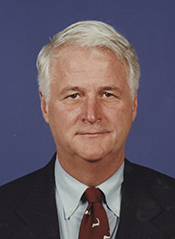
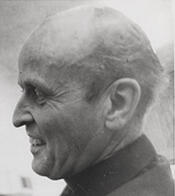
Portrait of Samuel Davis Massachusetts
Role Representative

Current assignment referenced in the congressional directory.

State Massachusetts

Representing constituents across the Massachusetts delegation.

District District 16

District insights and legislative focus areas.

Service period 1813-1815

Years of public service formally recorded.

Font size

Biography

Samuel Davis was the name of several notable individuals active in politics, scholarship, the military, the arts, and sports from the late eighteenth century through the twentieth century. Among the earliest was Samuel Davis (orientalist) (1760–1819), a British orientalist and amateur artist who became known for his work in India during the period of British expansion on the subcontinent. Another early figure was Samuel Davis (American politician) (1774–1831), a U.S. Representative from Massachusetts who served in the United States Congress in the early years of the republic. Over time, the name Samuel or Sam Davis would be borne by a wide range of public figures in North America and the United Kingdom, including politicians at the municipal level, military servicemen, religious and civil rights leaders, aviators, entertainers, and professional athletes.

Samuel Davis (orientalist) was born in 1760 in England and came of age during the era in which the British East India Company was consolidating its influence in South Asia. Although details of his early life and formal education are comparatively sparse, he developed a strong interest in the languages, cultures, and antiquities of India, which led him into the field later known as Orientalism. He entered the service of the East India Company and traveled to India, where he combined administrative responsibilities with scholarly and artistic pursuits. His work as an amateur artist produced drawings and sketches of Indian landscapes, architecture, and antiquities, contributing to the visual record of the subcontinent at a time when European knowledge of the region was still developing.

During his career in India, Samuel Davis (orientalist) became associated with the early scholarly circles that studied Asian languages and cultures, including the milieu around the Asiatic Society of Bengal. His interest in Hindu astronomy and religious texts reflected the broader intellectual currents of the period, in which British scholars and administrators sought to understand and classify the civilizations under imperial rule. While he was not primarily known as a professional academic, his contributions as an orientalist and artist helped disseminate information about Indian art, religion, and science to a European audience. He continued these pursuits until his death in 1819, leaving behind a body of work that illustrated both the scholarly curiosity and the imperial context of his time.

Samuel Davis (American politician) was born in 1774, in the closing years of the colonial era, and grew up during the American Revolution and the formation of the United States. A resident of Massachusetts, he entered public life in the early nineteenth century, a period marked by the establishment of new political institutions and the evolution of party politics in the young republic. He pursued a career that combined local and state-level involvement with service at the national level, ultimately being elected as a U.S. Representative from Massachusetts. His tenure in Congress placed him among the generation of lawmakers who grappled with issues of federal authority, economic policy, and regional interests in the decades following the ratification of the Constitution.

As a U.S. Representative from Massachusetts, Samuel Davis (American politician) served in the House of Representatives during a formative era in congressional history. While specific details of his committee assignments and legislative initiatives are less well documented than those of some of his contemporaries, his presence in Congress reflected the political influence of New England in the early republic and the active participation of Massachusetts in national debates. He would have been involved in deliberations over matters such as trade, maritime policy, and relations with European powers, all of which were central concerns for his home state. Davis remained a figure in public life until his death in 1831, by which time the United States had expanded westward and entered a new phase of political development.

In the nineteenth and twentieth centuries, other individuals named Samuel or Sam Davis emerged in a variety of fields. Samuel H. Davis (civil rights leader) (1810–?), an American religious and civil rights leader, was active in the antebellum and post–Civil War periods, using his position within religious institutions to advocate for the rights and advancement of African Americans. Samuel W. Davis (1845–?), an American Civil War sailor, distinguished himself through valor in service and received the Medal of Honor, the nation’s highest military decoration. Sam Davis (1842–1863), a Confederate States Army soldier, became known as the “Boy Hero of the Confederacy” after his execution during the Civil War, and he was later commemorated in Southern memory and monuments. Samuel Post Davis (1850–1918), an American journalist and politician, contributed to public discourse and governance in the American West, while Samuel Howard Davis (1896–1921), a pilot, lent his name posthumously to Davis–Monthan Air Force Base, underscoring his association with early military aviation.

The name also appeared prominently in the realm of politics outside the United States. Samuel Davis (Canadian politician) (1914–1996) was a Canadian public official who served as mayor of Saint John, New Brunswick, playing a significant role in the municipal governance and development of that historic port city. In the arts and entertainment, Sammy Davis Sr. (1900–1988), an American dancer, achieved recognition on stage and in vaudeville and was the father of Sammy Davis Jr. (1925–1990), the celebrated American entertainer known for his work as a singer, dancer, actor, and member of the Rat Pack. Their careers spanned the era from vaudeville and early film through television and Las Vegas performance, marking the Davis name as significant in twentieth-century American popular culture.

In sports, several figures named Sam or Sammy Davis gained prominence in both American and British athletics. Sam Davis (American football) (1944–2019) was an American football player who competed at the professional level in the National Football League, contributing to the success of his team during a highly competitive era. In association football, Sam Davis (footballer) (1890–?), an English footballer, and Sammy Davis (footballer) (1900–1988), also an English footballer, played in the early and mid-twentieth century, respectively, participating in the development of the modern professional game in the United Kingdom. In rugby league, Sam Davis (rugby league) (born 1998), an English rugby footballer, represents a contemporary continuation of the name in professional sport, competing in the modern era of organized rugby league.

Across these varied careers—ranging from Samuel Davis (orientalist) (1760–1819), the British orientalist and amateur artist, and Samuel Davis (American politician) (1774–1831), the U.S. Representative from Massachusetts, to later figures in civil rights, military service, journalism, aviation, municipal leadership, entertainment, and athletics—the name Samuel or Sam Davis has been associated with public life for more than two centuries. While these individuals lived in different times and places and pursued distinct vocations, their collective record illustrates the recurring presence of the name in political, cultural, and social history in Britain, the United States, Canada, and beyond.

Congressional Record

Loading recent votes…

More Representatives from Massachusetts