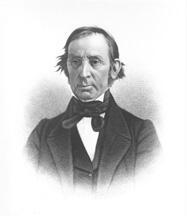
Samuel Chandler Crafts (October 6, 1768 – November 19, 1853) was a United States Representative, United States Senator, and the 12th governor of Vermont. A member of the Whig Party, he served in the United States Congress during a significant period in American history and contributed to the legislative process over multiple terms in office, representing the interests of his Vermont constituents.
Crafts was born in Woodstock in the Colony of Connecticut on October 6, 1768. He was the son of Ebenezer Crafts and Mehitible Chandler Crafts, the latter a sister of the painter Winthrop Chandler. In 1790 he graduated from Harvard College, receiving the classical education that would underpin his long public career. In 1791 he moved with his parents to northern Vermont, where his father founded the town of Craftsbury by settling there. Crafts established himself in this new community and later married Eunice Todd Beardsley; the couple had two children.
From the early years of Vermont’s statehood, Crafts was active in local and state affairs. In 1793 he served as a delegate to the Vermont constitutional convention, where he was the youngest member. He began a long tenure in municipal office as town clerk of Craftsbury, a position he held from 1799 to 1829. He was also register of probate from 1796 to 1815, reflecting his growing role in the legal and administrative life of Orleans County. In addition, he undertook an extensive botanical reconnaissance of the Mississippi Valley in 1802, an unusual scientific endeavor for a New England public official of his era.
Crafts’s legislative and judicial service in Vermont expanded steadily in the early nineteenth century. He was a member of the Vermont House of Representatives in 1796, from 1800 to 1803, and again in 1805, and he served as clerk of the Vermont House in 1798 and 1799. He was assistant judge of the Orleans County Court from 1800 to 1810 and again from 1825 to 1828, and he served as chief judge of the Orleans County Court from 1810 to 1816. From 1809 to 1813 he was a member of the State Council of Censors, a twelve-man body that periodically reviewed the actions of the state government and shared certain executive powers with the governor. He also served as a member of the governor’s council in 1825 and 1826, further consolidating his influence in Vermont politics.
Crafts entered national politics as a United States Representative from Vermont. He was elected to the Fifteenth Congress and to the three succeeding Congresses, serving in the U.S. House of Representatives from March 4, 1817, to March 3, 1825. During these years he participated in the democratic process at the federal level, representing Vermont during a period marked by post–War of 1812 expansion and the early stirrings of sectional tension. His service in Congress from 1817 to 1825 formed the foundation of his later prominence in state and national affairs.
In 1828 Crafts was elected the 12th governor of Vermont. He served as governor from 1828 to 1831, overseeing the state during a time of political realignment and economic development in New England. While governor, he continued to play a role in shaping Vermont’s constitutional framework. In 1829 he was a member of the Vermont constitutional convention and served as its president, reflecting the high regard in which he was held by his contemporaries. He later returned to county office as clerk of Orleans County from 1836 to 1839.
Crafts’s service in the United States Senate came late in his public career. A member of the Whig Party, he was appointed in 1842 to the U.S. Senate seat vacated by the resignation of Senator Samuel Prentiss. On October 26, 1842, he was elected to complete the remainder of Prentiss’s term. Samuel Chandler Crafts served in the Senate from April 23, 1842, to March 3, 1843. His tenure in the Senate, though brief, extended his congressional service into the early 1840s, a period of growing national debate over economic policy and territorial expansion. He was not a candidate for a full term and was succeeded in the Senate by William Upham.
After leaving the Senate, Samuel Chandler Crafts retired from public life and returned to his farm in Craftsbury, Vermont. He lived there quietly until his death on November 19, 1853. He was interred at North Craftsbury Cemetery in North Craftsbury, Vermont, closing a life that had spanned from the colonial era through the formative decades of the United States and that had been marked by extensive service at the local, state, and national levels.
Congressional Record