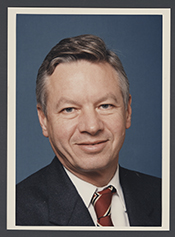
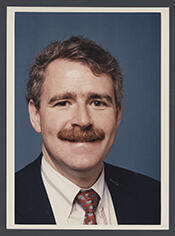
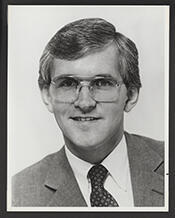
Ronald James Kind (born March 16, 1963) is an American lawyer and politician who served as the U.S. representative for Wisconsin’s 3rd congressional district from January 3, 1997, to January 3, 2023. A member of the Democratic Party, he represented a largely rural and small-city district in western Wisconsin anchored by La Crosse, Eau Claire, Platteville, Stevens Point, Wisconsin Rapids, Prescott, and River Falls. Over 13 consecutive terms in the House of Representatives, Kind contributed to the legislative process during a significant period in American history, and by the time he chose not to seek reelection in 2022 he was the dean of Wisconsin’s congressional delegation.
Kind was born and raised in La Crosse, Wisconsin, the third of five children of Greta and Elroy Kind, and is the fifth generation of his family to live in the area. His mother worked as the assistant director of personnel in the La Crosse School District, and his father had a 35‑year career as a telephone repairman and union leader at the La Crosse Telephone Company. Kind attended La Crosse public schools and was a student‑athlete at Logan High School, where he played both football and basketball. His upbringing in a union household and a close‑knit community in western Wisconsin later informed his political emphasis on labor, rural development, and education.
After graduating from Logan High School, Kind accepted a scholarship to Harvard College, where he played quarterback on the football team and became involved in public service. He worked during summers in Washington, D.C., for Wisconsin Senator William Proxmire, assisting with investigations that helped determine the “winners” of Proxmire’s Golden Fleece Awards, which highlighted examples of government waste. Kind graduated from Harvard with honors in 1985. He went on to earn a master’s degree from the London School of Economics, gaining exposure to international economic and public policy issues, and then received a J.D. from the University of Minnesota Law School. Following law school, he practiced law for two years at the Milwaukee firm of Quarles & Brady before returning to his hometown.
Kind began his public service career in Wisconsin as an assistant district attorney in La Crosse, prosecuting criminal cases and later serving as a state special prosecutor in several western Wisconsin counties. His work as a prosecutor gave him familiarity with local law enforcement, rural communities, and the court system, and helped establish his reputation as a pragmatic attorney with roots in the region. While still serving as an assistant district attorney, he became active in Democratic politics and began to consider a run for federal office when an opportunity arose in his home congressional district.
In 1994, while campaigning for an eighth term, Republican Representative Steve Gunderson announced that he would not seek reelection in Wisconsin’s 3rd congressional district. Kind, then an assistant district attorney in La Crosse, moved quickly to organize a campaign. He took a leave of absence from the district attorney’s office in April 1995 and by June had built an extensive campaign operation across the district. In September 1995 he formally announced his candidacy, entering what became a yearlong, five‑way Democratic primary. Kind won the September 1996 primary with 46 percent of the vote. In the general election he faced Republican James Harsdorf, a former Wisconsin state senator, in a race that drew national attention because only two Democrats had represented the 3rd district during the 20th century, and only one in the previous 88 years. Kind’s campaign criticized Harsdorf’s support for national Republican leaders such as Newt Gingrich and Dick Armey and linked him to unpopular proposals such as cutting Medicare, while Harsdorf portrayed Kind as “another lawyer running for Congress.” In November 1996, Kind defeated Harsdorf with 52 percent of the vote and entered Congress in January 1997; he would not face another contest nearly that close until 2010.
During his 13 terms in Congress, Kind participated actively in the democratic process and represented the interests of his western Wisconsin constituents through a period that encompassed the late 1990s economic expansion, the September 11 attacks, the wars in Afghanistan and Iraq, the Great Recession, the passage of the Affordable Care Act, and the polarized politics of the 2010s and early 2020s. He became known as a centrist Democrat with a focus on fiscal responsibility, agricultural policy, conservation, and health care. Kind served in the House Democratic leadership as Chief Deputy Whip under Majority Leader Steny Hoyer, helping to count votes and build support for party priorities. He co‑founded the Upper Mississippi River Congressional Caucus and the Congressional Wildlife Refuge Caucus, reflecting his long‑standing interest in environmental protection and the Mississippi River corridor that runs through his district. He also chaired the New Democrat Coalition, a group of centrist and pro‑growth House Democrats. In the 111th Congress he voted with his party 94 percent of the time, and 87 percent of the time in the 112th Congress, while maintaining a reputation for bipartisanship; during the 114th Congress he was ranked the 19th most bipartisan member of the U.S. House of Representatives and the most bipartisan House member from Wisconsin by the Bipartisan Index created by The Lugar Center and the McCourt School of Public Policy, which measures cross‑party cosponsorship of legislation.
Kind’s electoral history reflected both his personal popularity and the increasingly competitive nature of his district. In 2006 he faced a surprise Democratic primary challenge from La Crosse activist Charles “Chip” DeNure, who opposed the Iraq War, supported a timetable for withdrawal, and claimed that the September 11 attacks were “an inside job by terrorists within the U.S. government.” Kind defeated DeNure with 83 percent of the primary vote and went on to win the general election against Republican Paul R. Nelson with 65 percent. In late 2009 he considered running for governor of Wisconsin in 2010 but ultimately decided against it, stating that his first responsibility was to work in Congress for affordable and accessible health care reform for Wisconsin families. Amid the contentious debate over the Affordable Care Act and the Tea Party protests of 2009 and 2010, Wisconsin media described Kind as facing “what is widely considered his toughest re‑election challenge” in 2010. His Republican opponent, state senator Dan Kapanke, campaigned on less spending, lower taxes, and smaller government, and criticized Kind for allegedly soliciting contributions from a group of Eau Claire doctors. Despite a national Republican wave in which Republicans won every statewide office in Wisconsin, Kind was reelected with just over 50 percent of the vote.
Speculation periodically arose that Kind might seek higher office. After the failed 2010 gubernatorial bid by Democrats, there was talk that he might run for governor, and in 2012 some Democrats urged him to run for the U.S. Senate seat being vacated by Herb Kohl. Kind declined to challenge fellow Representative Tammy Baldwin for the Democratic Senate nomination and also did not enter the 2012 gubernatorial recall election against Governor Scott Walker, instead running for reelection to the House. He defeated retired U.S. Army Colonel Ray Boland in the 2012 general election with 64 percent of the vote. Following the unsuccessful effort to recall Walker in June 2012, Kind said Democrats should be proud of forcing recall elections despite the outcome, arguing that his conversations with voters convinced him that the main reason Democrats lost was that many people did not view the recall as a proper use of the process.
In subsequent cycles, Kind continued to face both primary and general election challenges as his district trended more Republican. In 2016, seeking his 11th term, he was challenged in the Democratic primary by Eau Claire teacher Myron Buchholz, an outspoken supporter of Senator Bernie Sanders who criticized Kind’s support for the Trans‑Pacific Partnership, a trade agreement that divided many working‑class voters. Kind defended his record and his efforts to find common ground in a divided government, and he defeated Buchholz by 81 percent to 19 percent; no Republican filed to run against him in the general election. In 2018, after Donald Trump had carried Wisconsin’s 3rd district in the 2016 presidential election, The Hill identified Kind as a “prime target” for Republicans, and the Cook Political Report rated his seat as the 25th most Republican‑trending district held by a Democrat. He also faced criticism related to a veteran who had died after taking an off‑label mixture of pills prescribed by the Tomah VA and who had previously contacted Kind’s office. A potential 2018 primary challenger, LGBTQ advocate Juliet Germanotta, failed to qualify for the ballot after she was charged in New York City on an outstanding warrant for theft of a $4,800 ring. In the general election, Kind defeated Republican Steve Toft with 59 percent of the vote.
Throughout his congressional tenure, Kind took particular interest in agricultural and conservation policy, reflecting the prominence of dairy and crop farming in his district. Representing some of the country’s most productive dairy farms, he supported reforms to U.S. agricultural subsidy programs. In 2007 he upset some Democratic House leaders by co‑sponsoring, with Republican Representative Jeff Flake, a bill to eliminate farm subsidies for individuals earning over $250,000 while increasing funding for conservation and rural development. The proposal went further than a compromise already negotiated within the Democratic caucus, which had set the cutoff at $1,000,000 to accommodate rural farm‑state Democrats. House Speaker Nancy Pelosi, who had worked to craft the original bill, and Agriculture Committee Chairman Collin Peterson criticized Kind’s effort; Peterson said Kind was “a lone ranger on this, and he’s dividing the caucus, and I don’t appreciate it.” The bill was ultimately referred to committee and never received a floor vote. In October 2017, Kind announced a comprehensive plan to protect the Mississippi River, outlining four main components: creating jobs by supporting recreation, tourism, and navigation; maintaining railroad safety; supporting the Mississippi River Restoration Program; and promoting a “Conservation on the Farm” bill.
Kind also focused on children’s health, physical activity, and outdoor recreation. He introduced, with Senator Mark Udall of Colorado, the Healthy Kids Outdoors Act, designed to encourage and support children’s outdoor activities by providing incentives for states to develop five‑year strategies to connect children, youth, and families with nature and to promote outdoor recreation in communities. He served as the House sponsor of the FIT Kids Act over multiple Congresses, legislation that would require school districts to report on students’ physical activity and provide young people with health and nutritional information. In 2011 he wrote about what he called “the childhood obesity epidemic,” arguing that healthy bodies lead to healthy minds and promoting both the FIT Kids Act and the Healthy Kids Outdoors Act as tools to increase transparency and encourage more active lifestyles among children.
Within the Democratic caucus, Kind at times broke with party leadership. He opposed Nancy Pelosi’s bids for Speaker of the House in both 2006 and 2018. After Democrats won control of the House in 2006, Pelosi asked Kind to resign from his position as Chief Deputy Whip, reflecting their policy and strategic differences. In 2018, as Democrats again appeared poised to win a majority, he reiterated his view that both parties needed new leadership, telling The Hill that “we’re in desperate need of new leadership on both sides, as we move forward in the new Congress.” He followed through on his pledge to oppose Pelosi in the January 2019 Speaker election, casting his vote instead for Representative John Lewis. During the Trump administration, Kind aligned with the Democratic caucus on major oversight actions; on December 18, 2019, he voted in favor of both articles of impeachment against President Donald Trump.
Ron Kind’s service in Congress spanned more than a quarter century, during which he represented western Wisconsin through shifting political, economic, and social conditions. As a member of the House of Representatives, he consistently participated in the legislative and oversight responsibilities of Congress while seeking to balance party priorities with the interests of his constituents. After deciding not to seek reelection in 2022, he left office at the conclusion of his 13th term in January 2023, concluding a long career in national public service rooted in his La Crosse upbringing and legal and prosecutorial background.
Congressional Record