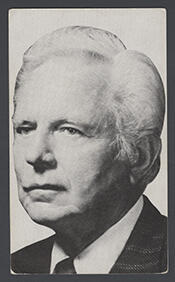
Rodolphus Dickinson (December 28, 1797 – March 20, 1849) was an American lawyer and politician who served one term as a U.S. representative from Ohio from 1847 to 1849. Over the course of his career he became a prominent figure in the legal and political life of his region, and he was the father of Edward F. Dickinson, who would also become active in public affairs.
Details of Dickinson’s early life and education are sparsely documented in surviving public records, but his birth on December 28, 1797, placed him in the post-Revolutionary generation that came of age as the United States was expanding westward. Like many lawyers of his era, he likely pursued legal training through apprenticeship and self-directed study rather than through formal law school, preparing him for admission to the bar and for a career in the rapidly developing communities of the Old Northwest.
By the time he entered public life, Dickinson had established himself as an attorney, a profession that provided both local prominence and a pathway into politics in early nineteenth-century America. His legal practice would have involved a broad range of civil and criminal matters, reflecting the needs of a growing frontier society in Ohio. Through this work he gained experience in statutory interpretation, property disputes, and local governance, which in turn helped build the reputation and connections that supported his later election to Congress.
Dickinson’s national political career began with his election as a U.S. representative from Ohio. He served one term in the United States House of Representatives from 1847 to 1849, during the Thirtieth Congress. His tenure in Congress coincided with a period of significant national debate over territorial expansion, the Mexican–American War, and the extension of slavery into new territories. As a member of the House, he participated in the legislative work of this era, representing the interests of his Ohio constituents while engaging with the broader issues confronting the nation.
After completing his term in Congress in 1849, Dickinson’s public service was cut short by his death on March 20, 1849. His passing came at a time when he might otherwise have continued to build on his experience in national politics. He left a legacy not only through his own service as a lawyer and congressman but also through his family, particularly his son Edward F. Dickinson, who followed him into public life.
Congressional Record