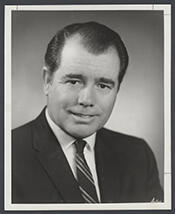
Robert Charles Wickliffe (May 1, 1874 – June 11, 1912) was an American politician and lawyer who served as a Democratic U.S. Representative from Louisiana. Born in Bardstown, Nelson County, Kentucky, on May 1, 1874, while his parents were visiting relatives, he was a member of a prominent Southern family and later became closely identified with public life in Louisiana. Shortly after his birth, his family returned to Louisiana, where he was raised and where he would spend the greater part of his professional and political career.
Wickliffe received his early education in the public schools of St. Francisville, in West Feliciana Parish, Louisiana. He pursued higher education at Centre College in Danville, Kentucky, from which he was graduated in 1895. Seeking legal training, he then enrolled in the law department of Tulane University in New Orleans, Louisiana, and completed his legal studies there in 1897. His education at these institutions prepared him for a career at the bar and in public service during a period of significant political and social change in the post-Reconstruction South.
After his graduation from Tulane, Wickliffe was admitted to the bar in 1898 and commenced the practice of law in St. Francisville. That same year he entered public life as a member of the Louisiana state constitutional convention of 1898, which was convened to revise the state’s fundamental law at the turn of the century. He also volunteered for military service during the Spanish–American War, enlisting as a private in Company E, First Regiment, Louisiana Volunteer Infantry. He served for the duration of his unit’s federal service and was mustered out in October 1898, after which he returned to West Feliciana Parish and resumed his legal career.
Wickliffe’s abilities as a lawyer and his growing prominence in local affairs led to his selection as district attorney of the Twenty-fourth Judicial District of Louisiana, a position he held from 1902 to 1906. In this capacity he was responsible for prosecuting criminal cases and representing the state in a largely rural region of Louisiana, gaining experience in public administration and courtroom advocacy. His tenure as district attorney strengthened his standing within the Democratic Party, which dominated Louisiana politics in the early twentieth century, and positioned him for higher office.
Building on this record, Wickliffe was elected as a Democrat to the Sixty-first and Sixty-second Congresses, representing Louisiana in the U.S. House of Representatives. His service in Congress began on March 4, 1909, and continued until his death on June 11, 1912. As a member of the Democratic Party representing Louisiana, he contributed to the legislative process during two terms in office, participating in the democratic process and representing the interests of his constituents during a significant period in American history marked by progressive-era reforms, regional economic development, and ongoing debates over federal authority and states’ rights. In the House, he joined other Southern Democrats in shaping legislation affecting agriculture, infrastructure, and the post-Reconstruction South, although his career was cut short before he could attain senior committee positions.
Wickliffe died in office in Washington, D.C., on June 11, 1912, when he was killed while crossing a railroad bridge and was struck by a train. His sudden death placed him among the members of the United States Congress who died in office in the early twentieth century and prompted formal memorial proceedings in the House of Representatives and the Senate, where colleagues paid tribute to his public service and character. Following his death, he was interred in Cave Hill Cemetery in Louisville, Kentucky, reflecting his family’s Kentucky roots as well as his personal and professional ties to Louisiana.
Congressional Record