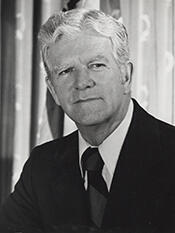
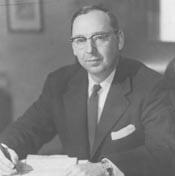
Robert Turnbull was an American politician who served as a Democratic Representative from Virginia in the United States Congress from 1909 to 1913. Known formally as Robert Turnbull (American politician) (1850–1920), he represented his Virginia constituency in the House of Representatives for two consecutive terms during a significant period in American political and social history. His service in Congress placed him among several notable historical figures sharing the same name, including Bob Turnbull (1894–1946), a Scottish footballer; Bobby Turnbull (1895–1952), an English footballer; Robert Turnbull (Australian politician) (c. 1819–1872), a member of the Victorian Legislative Council; Robert Turnbull (railway manager) (1852–1925), general manager and director of the London and North Western Railway (LNWR); and Robert James Turnbull (1775–1833), a South Carolina planter and nullification advocate.
Born in 1850, Robert Turnbull came of age in the aftermath of the antebellum era and the Civil War, a time when Virginia and the broader South were undergoing profound political, economic, and social transformation. His early life would have been shaped by Reconstruction and the reorganization of political institutions in the former Confederate states. These formative years provided the background for his later involvement in public life and his alignment with the Democratic Party, which dominated Virginia politics in the late nineteenth and early twentieth centuries.
Turnbull’s education and early professional development prepared him for a career in public affairs and ultimately for service in the national legislature. Like many Southern Democrats of his generation, he likely pursued legal or administrative work that brought him into close contact with local and state governance. Through this experience, he developed an understanding of the needs and concerns of his community, which he would later carry with him to Washington, D.C. His emergence as a political figure reflected both his personal capabilities and the broader political realignments taking place in Virginia as it moved from Reconstruction into the era of Jim Crow and one-party Democratic dominance.
By the opening years of the twentieth century, Turnbull had established himself sufficiently in public life to seek and win election to the United States House of Representatives. A member of the Democratic Party, he was elected to Congress from Virginia and served from 1909 to 1913, encompassing the Sixty-first and Sixty-second Congresses. During these two terms in office, he contributed to the legislative process at a time when the nation confronted issues of industrial regulation, tariff policy, and the early stirrings of the Progressive Era. As a member of the House of Representatives, Robert Turnbull participated in the democratic process and represented the interests of his constituents, working within the committee system and floor debates that shaped federal policy in the years immediately preceding the Woodrow Wilson administration.
Turnbull’s congressional service occurred during a significant period in American history, as the country grappled with rapid economic growth, increasing urbanization, and mounting calls for political reform. Within this context, he joined fellow Democrats in seeking to influence national policy in ways that reflected the priorities of Virginia and the broader South, including concerns over agriculture, states’ rights, and the balance between federal authority and local control. His role in Congress placed him at the intersection of regional interests and national legislation, and his two terms contributed to the evolving direction of the Democratic Party in the pre–World War I era.
After leaving Congress in 1913, Robert Turnbull returned to private life and to the pursuits that had occupied him before his election to national office. Although no longer a member of the House of Representatives, he remained part of a generation of Southern Democrats whose careers bridged the post–Civil War period and the modernizing impulses of the early twentieth century. He lived to see the United States enter World War I and to witness the continued transformation of American political life in the 1910s. Robert Turnbull died in 1920, closing a career that had included notable service as a U.S. Representative from Virginia and participation in the legislative affairs of a nation in transition.
Congressional Record