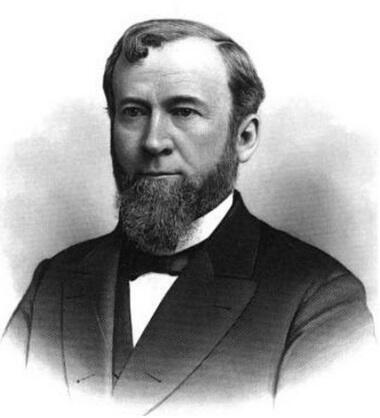
Robert Milton Speer (September 8, 1838 – January 17, 1890) was a Democratic member of the U.S. House of Representatives from Pennsylvania during the Reconstruction era. He was born in Cassville, Huntingdon County, Pennsylvania, where he spent his early years in the rural environment of central Pennsylvania. His upbringing in Cassville, a small community in a largely agricultural region, shaped his familiarity with local concerns that would later inform his legal and political career.
Speer attended Cassville Academy, a local educational institution that provided him with a classical and preparatory education. After completing his studies there, he taught school for a time, an experience that reflected both his academic aptitude and his early engagement in public service. While teaching, he undertook the study of law, preparing for admission to the bar. In 1859 he was admitted to the bar and commenced the practice of law in Huntingdon, Pennsylvania, the county seat and regional center of legal and political activity.
Speer’s professional and political ascent began in the years surrounding the Civil War. In 1863 he was elected assistant clerk of the Pennsylvania House of Representatives, a position that placed him in close contact with state legislators and the legislative process in Harrisburg. This role provided him with practical experience in parliamentary procedure and state governance, and it helped establish his reputation within the Democratic Party at a time when Pennsylvania politics were sharply divided over issues of war, reconstruction, and economic development.
Building on his legal practice and statehouse experience, Speer was elected as a Democrat to the U.S. House of Representatives, serving in the Forty-second Congress (March 4, 1871 – March 3, 1873) and the Forty-third Congress (March 4, 1873 – March 3, 1875). Representing a Pennsylvania district during the Reconstruction period, he participated in national debates over federal authority, economic policy, and the postwar settlement. He chose not to be a candidate for renomination in 1874, stepping back from congressional service after two consecutive terms.
Even after leaving Congress, Speer remained active in Democratic Party affairs at the national level. He served as a delegate to the Democratic National Convention in 1872, held during his first term in Congress, and again in 1880, reflecting his continued influence and standing within the party. Between and after these national engagements, he resumed the full-time practice of law in Huntingdon, reinforcing his role as a prominent local attorney and political figure.
In addition to his legal and political work, Speer became involved in journalism and the press. In 1876 he became one of the proprietors of the Huntingdon Monitor, a local newspaper. Through this position he participated in shaping public opinion in his region, using the paper as a platform for Democratic viewpoints and commentary on local and national issues. His engagement with the press complemented his legal and political activities and broadened his influence in central Pennsylvania.
Speer sought to return to Congress in the election of 1880, running as a Democrat for a seat in the Forty-seventh Congress. He was an unsuccessful candidate in that race, which marked his final attempt at federal elective office. After this defeat, he continued his legal practice and remained a figure of note in Huntingdon and within Pennsylvania Democratic circles, though he did not again hold public office at the state or national level.
Robert Milton Speer died in New York City on January 17, 1890. Although he died away from his home state, his remains were returned to Pennsylvania, and he was interred in Riverview Cemetery in Huntingdon, Pennsylvania. His career spanned law, legislative service, party leadership, and newspaper proprietorship, reflecting the multifaceted public life of a nineteenth-century regional political leader.
Congressional Record