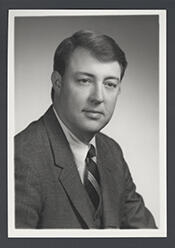
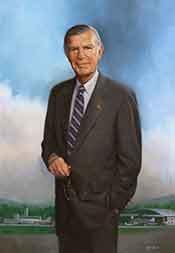
Robert Orr Jr. was an American politician who served as a U.S. Representative from Pennsylvania in the early nineteenth century. Born on March 5, 1786, in Hannastown, Westmoreland County, Pennsylvania, he came of age on the western frontier of the early United States, a region that was still recovering from the disruptions of the Revolutionary era and the destruction of Hannastown by British and Native American forces in 1782. Growing up in this environment of rebuilding and expansion helped shape his later interest in public affairs and military service.
Orr received a basic education typical of the period and region, likely in local schools or under private tutelage, and as a young man he learned the trade of surveying. Surveying was a critical profession on the expanding American frontier, and his work in this field gave him familiarity with land issues, settlement patterns, and the practical concerns of farmers and property owners in western Pennsylvania. This technical and practical background would later inform his approach to both local and national political questions.
Before entering national politics, Orr was active in military and civic life. He served in the militia during a period when western Pennsylvania was still concerned with frontier security and the aftermath of earlier conflicts. His involvement in local affairs and his reputation as a capable surveyor and community leader led to his election to the Pennsylvania House of Representatives. In the state legislature, he represented the interests of his region and gained experience in lawmaking, finance, and infrastructure issues at a time when Pennsylvania was rapidly developing its transportation networks and commercial capacity.
Orr’s state-level service and growing prominence in western Pennsylvania politics culminated in his election to the United States House of Representatives. He was elected as a member of the Democratic-Republican Party and served in the Nineteenth and Twentieth Congresses, representing Pennsylvania at the national level from March 4, 1825, to March 3, 1829. During his tenure in Congress, he served at a time when the nation was grappling with questions of internal improvements, tariffs, and the balance of power between federal and state governments. Although detailed records of his individual votes and speeches are limited, his alignment with the Democratic-Republican tradition placed him within the dominant political current of the era that emphasized states’ rights and a cautious approach to federal authority.
After completing his service in Congress, Orr returned to Pennsylvania and resumed his private pursuits, including work related to land and local economic development. He remained a respected figure in his community, drawing on his experience as a surveyor, state legislator, and national lawmaker. In his later years, he lived in Kittanning, Armstrong County, Pennsylvania, a town that had become an important local center along the Allegheny River and reflected the broader growth of western Pennsylvania during his lifetime.
Robert Orr Jr. died on May 22, 1876, in Kittanning, Pennsylvania, at the age of ninety, having lived through the nation’s formative decades from the early republic through the Civil War and Reconstruction. He was interred in Kittanning Cemetery. His long life and public service connected the frontier era of western Pennsylvania with the more settled and industrializing United States of the late nineteenth century, and his career stands as an example of early American legislators who combined practical frontier experience with national political responsibility.
Congressional Record