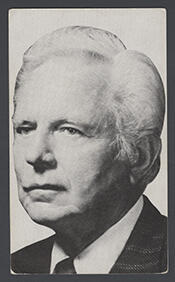
Robert Maynard Murray (November 28, 1841 – August 2, 1913) was an attorney, banker, businessman, and member of the United States House of Representatives from Ohio for one term from 1883 to 1885. A Democrat, he represented Ohio’s third congressional district during a significant period in American history, participating in the legislative process and representing the interests of his constituents in the Forty-eighth Congress.
Murray was born in Concord, Lake County, Ohio, on November 28, 1841, the son of Robert and Sophrenia Murray II. When he was five years old, his family moved to Mentor, Ohio, where he attended the local public schools. He remained in the public school system until about age fifteen, after which he pursued further education at the Western Reserve Teachers’ Seminary in Kirtland, Ohio, and at the Willoughby Academy in Willoughby, Ohio. He later attended Oberlin College, a leading institution in the Western Reserve, but ultimately decided to prepare for a career in law rather than complete a traditional collegiate course.
Murray studied law in Cleveland and was admitted to both the Ohio bar and the bar of the United States courts after graduating from the Cleveland Law School. He began his legal career with the prominent Cleveland firm of Ranney, Backus & Noble, where he practiced until the midst of the Civil War. In 1864, responding to the Union’s call for “Hundred Days Men,” he temporarily left his legal practice and served as a private in Company D, 150th Ohio Infantry. After his brief term of military service, he returned to the practice of law, continuing in that profession until 1867.
In 1867 Murray left active legal practice to join the family banking business in Painesville, Ohio. Over the next nine years he was associated with the First National Bank of Painesville, where he served successively as collector, bookkeeper, and then cashier, gaining substantial experience in finance and local business affairs. His involvement in civic life expanded when he became a member of the Painesville school board in 1874, serving for three years and helping oversee local educational matters. Building on this record of public service, he was elected mayor of Painesville and held that office from 1877 to 1879, further establishing himself as a community leader in the region.
In 1879 Murray moved to Piqua, Miami County, Ohio, where he engaged in manufacturing, specifically the production of handles for agricultural implements. His business activities in Piqua placed him in close contact with the agricultural and industrial interests of western Ohio, and he became identified with the commercial development of the area. This experience in law, banking, municipal government, and manufacturing provided the background for his later political career at the national level.
Murray entered national politics as a Democrat and, in the closely contested elections of the early 1880s, was narrowly elected in 1882 to represent Ohio’s third district in the Forty-eighth Congress. He served in the United States House of Representatives from March 4, 1883, to March 3, 1885. During his single term in Congress, he contributed to the legislative process at a time marked by debates over economic policy, veterans’ issues, and the continuing adjustment to post–Civil War conditions. As a member of the Democratic Party representing Ohio, he participated in the democratic process and sought to advance the interests of his constituents in a period of shifting political alignments. He was an unsuccessful candidate for reelection in 1884 and thus concluded his congressional service after one term.
Following his departure from Congress, Murray returned to Piqua and resumed his former business pursuits in manufacturing and local enterprise. In 1892 he relocated to Cleveland, Ohio, where he entered the storage business, reflecting the city’s growing role as a commercial and transportation hub in the late nineteenth century. He continued his business activities there into the early twentieth century.
Robert Maynard Murray died in Cleveland, Ohio, on August 2, 1913. He was interred in Evergreen Cemetery in Painesville, Ohio, returning in death to the community where he had first established himself as a banker, civic official, and mayor.
Congressional Record