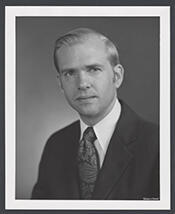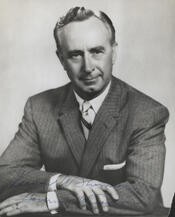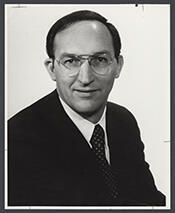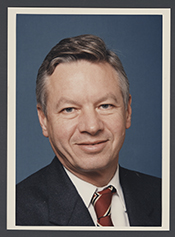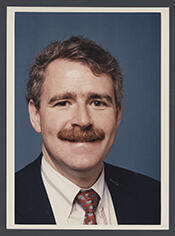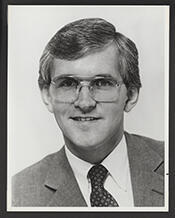
Robert William Kastenmeier (January 24, 1924 – March 20, 2015) was an American Democratic politician who represented central Wisconsin in the United States House of Representatives for 32 years, from 1959 until 1991. A member of the Democratic Party, he served 16 consecutive terms in Congress and became known nationally for his work on intellectual property and civil liberties, including his role as a key sponsor of the Copyright Act of 1976 and the Electronic Communications Privacy Act of 1986.
Kastenmeier was born in Beaver Dam, Dodge County, Wisconsin. He attended the public schools there and came of age during the Great Depression and the Second World War. During World War II, he served in the United States Army from 1943 to 1946, seeing combat in the Pacific Theater. His military service, which included duty in the Philippines, helped shape his later views on international affairs, civil liberties, and the responsibilities of democratic government.
After returning from military service, Kastenmeier pursued higher education in his home state. He attended the University of Wisconsin–Madison, where he earned his undergraduate degree, and then continued at the University of Wisconsin Law School, receiving his law degree. Following admission to the bar, he began practicing law in Madison, Wisconsin. His legal training and early practice provided the foundation for his later legislative focus on judicial administration, constitutional rights, and the legal framework governing emerging technologies.
Kastenmeier entered public life through local and state politics as a member of the Democratic Party, part of a postwar generation of Wisconsin Democrats who helped reshape the state’s political landscape. He first ran for Congress in the 1950s and was elected to the U.S. House of Representatives in 1958, taking office on January 3, 1959. Representing a district centered on Madison and much of central Wisconsin, he participated actively in the legislative process and became known as a diligent and independent-minded lawmaker who closely attended to the interests and concerns of his constituents.
During his long congressional service, which extended from the 86th through the 101st Congresses, Kastenmeier emerged as a leading figure on the House Judiciary Committee. He chaired the Subcommittee on Courts, Civil Liberties, and the Administration of Justice, where he played a central role in shaping federal policy on intellectual property, privacy, and the federal courts. As a key sponsor of the Copyright Act of 1976, he helped modernize U.S. copyright law to address new forms of media and creative expression. He later sponsored the Electronic Communications Privacy Act of 1986, updating federal privacy protections to cover electronic and digital communications, reflecting his concern with balancing law enforcement needs and individual civil liberties in an era of rapidly changing technology.
Kastenmeier’s tenure in Congress coincided with a significant period in American history, encompassing the civil rights movement, the Vietnam War, the Watergate era, and the Cold War’s final decades. He participated in major debates over war powers, civil rights, and governmental accountability, and was regarded as a thoughtful liberal voice on constitutional and civil-liberties questions. Over 16 terms in office, he contributed to the legislative process not only through high-profile statutes but also through sustained oversight of the judiciary and the development of federal law in areas such as patent and trademark policy, judicial administration, and access to justice.
After losing his bid for re-election in 1990, Kastenmeier left Congress on January 3, 1991, concluding more than three decades of continuous service. In his later years, he remained engaged in public affairs, drawing on his experience in law and legislation to advise on issues of intellectual property and privacy and to participate in discussions about the evolving relationship between technology, government, and individual rights. Robert William Kastenmeier died on March 20, 2015, leaving a legacy as a long-serving Wisconsin representative whose work helped define modern American copyright and electronic privacy law.
Congressional Record