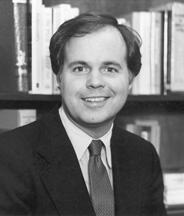
Robert Walter Kasten Jr. (born June 19, 1942) is an American Republican politician from the state of Wisconsin who served two terms as a U.S. Representative from 1975 to 1979 and two terms as a United States Senator from 1981 to 1993. A member of the Republican Party, Robert Walter Kasten contributed to the legislative process during four terms in office in the United States Congress, representing the interests of his Wisconsin constituents during a significant period in American political history.
Kasten was born in Milwaukee, Wisconsin. He attended Milwaukee Country Day School and then The Choate School (now Choate Rosemary Hall) in Wallingford, Connecticut, from which he graduated in 1960. He went on to earn a bachelor’s degree from the University of Arizona in Tucson in 1964 and received his Master of Business Administration from Columbia Business School in New York City in 1966. Following his formal education, Kasten served in the Wisconsin Air National Guard from 1966 to 1972, combining business training with military service early in his adult life.
Kasten entered elective office in Wisconsin state government when he was elected to the Wisconsin State Senate in 1972. Building on that experience, he sought federal office two years later. In 1974, he was elected to the United States House of Representatives after defeating incumbent Glenn R. Davis in a Republican primary election. Representing Wisconsin in the House, he was reelected in 1976, serving two terms from 1975 to 1979. In 1978, he ran for Governor of Wisconsin but lost the Republican nomination to Lee S. Dreyfus, who subsequently won the general election.
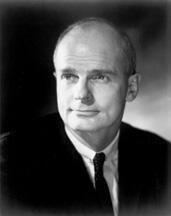
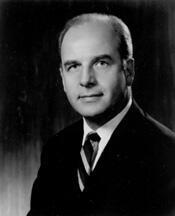
Kasten’s congressional service in the Senate began after the 1980 election cycle. He ran for the United States Senate in 1980 and narrowly defeated Democratic incumbent Gaylord Nelson, a victory aided in part by the popularity of Ronald Reagan at the top of the Republican ticket. Taking office in January 1981, Kasten became the first Republican to represent Wisconsin in the U.S. Senate since Alexander Wiley left office in 1963. During his tenure in the Senate, which lasted until 1993, he was regarded as an outspoken conservative and participated actively in the democratic process on a wide range of legislative issues. His service in Congress occurred during a period marked by the Reagan administration, the end of the Cold War, and significant domestic policy debates.
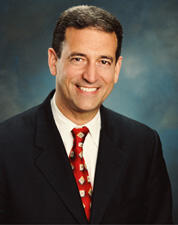
Kasten’s Senate career included several closely contested elections and notable legislative positions. In 1985, he was arrested and charged with driving under the influence in the District of Columbia after a police officer observed him running a red light and driving on the wrong side of the road; the DUI charges were later dropped. In 1986, he narrowly defeated Democrat Ed Garvey to win a second Senate term after a very bitter campaign characterized by personal attacks and remembered as one of the nastiest elections in Wisconsin history. During his Senate service, Kasten voted in favor of the bill establishing Martin Luther King Jr. Day as a federal holiday and supported the Civil Rights Restoration Act of 1987, including voting to override President Ronald Reagan’s veto of that legislation. He also voted in favor of the nominations of Robert Bork and Clarence Thomas to the United States Supreme Court. Kasten was defeated for reelection in 1992 by Democratic state senator Russ Feingold, ending his Senate service in January 1993.
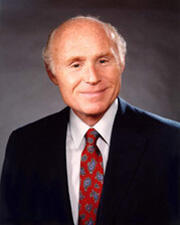
After leaving the Senate, Kasten moved into the private sector while maintaining an active role in national Republican politics. Since 1993, he has been president of Kasten & Company, a consulting firm. He continued to engage in presidential politics, and in July 2007 he joined the presidential campaign of Republican Rudy Giuliani as a foreign policy adviser. He chaired Giuliani’s Wisconsin campaign, along with former U.S. Representative Scott Klug and former State Senator Cathy Stepp. After Giuliani withdrew from the race, Kasten endorsed his former Senate colleague John McCain. In April 2016, he endorsed Republican frontrunner Donald Trump for president and became part of Trump’s foreign policy advisory team, extending his influence in national politics well into the twenty-first century.
Kasten’s public profile has also been reflected in popular and campus culture in Wisconsin. Writer Mike Baron named a recurring character in his Wisconsin-based comic book “Badger” after Kasten, then the state’s junior senator; the character, a peg-legged, vampire-hunting pig called “Senator Bob Kasten,” appeared multiple times in the series. At the University of Wisconsin–Madison, a student political party satirically adopted the name “Bob Kasten School of Driving,” a reference to his 1985 DUI arrest; the party went on to win campus-wide student government elections in 1986 and 1987, underscoring the extent to which Kasten’s political career and public image resonated beyond formal governmental arenas.
Congressional Record