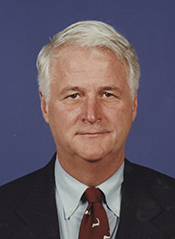
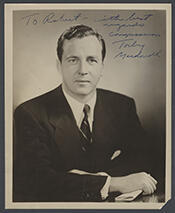
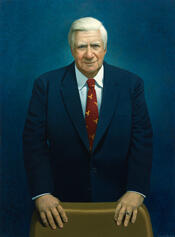
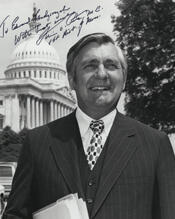
Robert Bernard Hall (January 28, 1812 – April 15, 1868) was a clergyman, abolitionist, state legislator, and member of the United States House of Representatives from Massachusetts. He was born in Boston, Massachusetts, on January 28, 1812, into a milieu shaped by New England’s religious traditions and emerging reform movements. As a youth he attended the Boston Latin School, one of the oldest and most rigorous preparatory schools in the United States, where he received a classical education that prepared him for advanced study and public life.
Hall pursued theological training at Yale Divinity School in New Haven, Connecticut, then a leading center of Protestant scholarship. He graduated from Yale Divinity School in 1835 and was subsequently ordained to the ministry, first as a Congregationalist clergyman. His early ministerial work reflected the strong moral and reformist currents of New England Protestantism in the antebellum period. Over time, Hall shifted his ecclesiastical affiliation and was later ordained as an Episcopalian, a transition that placed him within a different but still influential strand of American religious life.
Deeply engaged in the moral issues of his day, Hall became an early and active participant in the abolitionist movement. He was one of the twelve original members of William Lloyd Garrison’s Anti-Slavery Society, aligning himself with some of the most radical and outspoken opponents of slavery in the United States. Through this association, he contributed to the broader antislavery agitation that helped shape public opinion in Massachusetts and beyond in the decades leading up to the Civil War.
Hall later moved from Boston to Plymouth, Massachusetts, a historic center of New England civic and religious life. In Plymouth he continued his vocation as a public figure, entering state politics and serving in the Massachusetts State Senate. His legislative service at the state level coincided with a period of intense political realignment, as debates over immigration, nativism, and slavery reshaped party structures and electoral coalitions in Massachusetts and across the nation.
Against this backdrop, Hall was elected to the United States House of Representatives as the candidate of the American Party to the Thirty-fourth Congress and was reelected as a Republican to the Thirty-fifth Congress. He served from March 4, 1855, to March 3, 1859, representing Massachusetts during a critical phase of the sectional crisis preceding the Civil War. His shift from the American Party to the Republican Party reflected the broader movement of many Northern politicians into the new antislavery Republican coalition as the national debate over slavery’s expansion intensified.
After leaving Congress, Hall remained involved in national political affairs. During the Civil War era he served as a delegate to the National Union Convention in Philadelphia, a gathering that sought to rally support for the Union cause and for a broad-based political coalition backing the Lincoln administration and its policies. His participation in the convention underscored his continued engagement with questions of national unity and reconstruction in the midst of and following the conflict.
Robert Bernard Hall spent his later years in Plymouth, where he continued to be identified with the religious, reform, and political traditions that had marked his earlier life. He died in Plymouth, Massachusetts, on April 15, 1868. He was interred in Oak Grove Cemetery, where his burial marked the close of a career that linked the pulpit, the abolitionist platform, the statehouse, and the halls of Congress during one of the most turbulent periods in American history.
Congressional Record