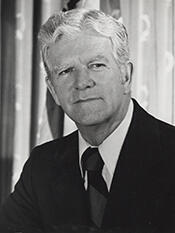
Robert Craig, a member of the Democratic Party representing Virginia, served as a United States Representative and contributed to the legislative process during five terms in office. Born in 1792 in Virginia, he came of age in the early years of the American republic, a period marked by rapid territorial expansion, evolving party systems, and intensifying debates over federal power and states’ rights. Little is recorded about his early family background, but his upbringing in Virginia placed him within a political culture deeply engaged with questions of constitutional interpretation and the balance between agricultural and commercial interests.
Craig’s education followed the pattern of many early nineteenth-century Virginia politicians, combining formal study with practical legal or civic training. He pursued studies that prepared him for public life, likely including the classical curriculum common to the era, with emphasis on rhetoric, law, and political philosophy. This education, together with his familiarity with local affairs, equipped him to participate effectively in public service at a time when Virginia remained one of the most influential states in the Union.
Before entering Congress, Craig established himself in Virginia’s public and professional life. As a lawyer and landowner, he was part of the state’s political and social elite, and he developed a reputation that enabled him to seek national office. His early career coincided with the transformation of the old Jeffersonian Republican coalition into the Democratic Party, and Craig aligned himself with the Democratic tradition that emphasized limited federal government, support for agrarian interests, and a strict reading of the Constitution. This alignment reflected both his regional background and the dominant political currents in Virginia.
Craig was elected as a Democrat to the United States House of Representatives from Virginia, where he served five terms in Congress. His service in Congress occurred during a significant period in American history, as the nation confronted issues such as westward expansion, internal improvements, the role of the national bank, and the evolving sectional tensions that would later culminate in the Civil War. As a member of the Democratic Party representing Virginia, Robert Craig contributed to the legislative process by participating in debates and votes on these central questions, representing the interests of his constituents in a House increasingly divided along regional and party lines. His repeated reelection over five terms attested to the confidence placed in him by voters in his district.
During his tenure, Craig’s work in Congress reflected the priorities of Virginia Democrats of his era, who were generally skeptical of expansive federal economic programs yet attentive to the needs of their state in matters such as transportation, trade, and land policy. He participated in the democratic process at a time when the House of Representatives was becoming a principal arena for contests over tariffs, banking, and the scope of federal authority. In representing the interests of constituents, Craig helped articulate Virginia’s position on these issues, contributing to the broader national dialogue that shaped antebellum policy.
After leaving Congress, Craig returned to private life in Virginia. Like many former legislators of his generation, he likely resumed legal and agricultural pursuits while maintaining an interest in public affairs. His post-congressional years unfolded against the backdrop of continuing sectional controversy and the realignment of national parties, developments he had witnessed in their earlier stages during his service in the House. Although he no longer held federal office, his earlier legislative record remained part of Virginia’s political legacy in the decades leading up to the Civil War.
Robert Craig died in 1852, closing a life that spanned from the early national period through the height of antebellum political conflict. As a five-term Democratic representative from Virginia, he belonged to the cohort of nineteenth-century lawmakers who helped shape federal policy in the formative decades of the republic. His career illustrates the role of Virginia’s political leadership in national affairs and underscores the importance of sustained congressional service in representing regional interests during a transformative era in American history.
Congressional Record