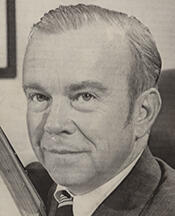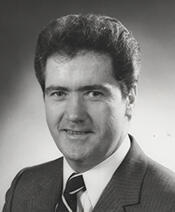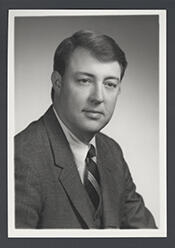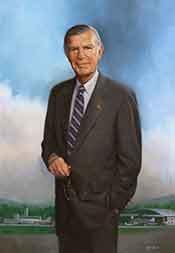
Robert Lawrence Coughlin Jr. (April 11, 1929 – November 30, 2001) was an American lawyer and Republican politician from Pennsylvania who served as a member of the United States House of Representatives from 1969 to 1993, representing Pennsylvania’s 13th congressional district for twelve consecutive terms. He previously served in the Pennsylvania House of Representatives for the Montgomery County district from 1965 to 1966 and in the Pennsylvania Senate for the 17th district from 1967 to 1969. Over nearly three decades in elected office, he participated actively in the legislative process at both the state and federal levels and was known as a moderate to liberal Republican voice in Congress.
Coughlin was born in Wilkes-Barre, Pennsylvania, to Robert Lawrence and Evelyn (née Wich) Coughlin. He was part of a politically engaged family; his uncle, Clarence D. Coughlin, represented Pennsylvania’s 11th congressional district in the U.S. House of Representatives from 1921 to 1923. He was raised on his father’s farm near Scranton, Pennsylvania, an upbringing that combined rural life with exposure to public affairs. He attended the Hotchkiss School in Lakeville, Connecticut, graduating in 1946, and then enrolled at Yale University. At Yale he majored in economics, was a member of the St. Anthony Hall fraternity, and was a classmate of George H. W. Bush, who would later become President of the United States. Coughlin received his bachelor’s degree from Yale in 1950.
His education was furthered at Harvard Business School, where he pursued a Master of Business Administration beginning in 1950. His studies were interrupted by the Korean War, during which he served in the United States Marine Corps from 1950 to 1952. Rising to the rank of captain, he served as an aide to Lieutenant General Lewis B. “Chesty” Puller, one of the Marine Corps’ most prominent officers. After his military service, Coughlin returned to Harvard and completed his M.B.A. in 1954. He then moved to Philadelphia to study law at Temple University School of Law. Attending classes at night, he worked during the day as a foreman on an assembly line at a steel company. He earned a Bachelor of Laws (LL.B.) degree from Temple in 1958 and was admitted to the bar in 1959.
Coughlin began his legal career with the Philadelphia law firm of Saul Ewing, where he practiced after his admission to the bar. His interest in public policy and government led him into electoral politics in the 1960s. In 1964 he was elected as a Republican to the Pennsylvania House of Representatives, representing one of Montgomery County’s at-large seats, and served there from 1965 to 1966. After one term in the House, he successfully ran for the Pennsylvania Senate, where he represented the 17th district from 1967 to 1969. As a state legislator, he served on the Joint State Government Commission Task Force on Penal Laws, contributing to the review and modernization of Pennsylvania’s criminal statutes.
In 1968, when incumbent U.S. Representative Richard Schweiker vacated Pennsylvania’s 13th congressional district seat to run for the United States Senate, Coughlin sought and won the Republican nomination to succeed him. The 13th district, based in Montgomery County and long dominated by the Republican Party, included the affluent suburban communities of the Main Line and, following reapportionment in the 1980s, portions of Philadelphia. In the general election, Coughlin defeated Democratic candidate Robert D. Gates by a margin of 62 percent to 37 percent, beginning a congressional career that would span from January 3, 1969, to January 3, 1993. He was re-elected eleven times, often by comfortable margins, though he faced particularly competitive challenges in 1984 and 1986 from Democratic state representative Joe Hoeffel. He chose not to seek re-election in 1992 and retired from the House at the conclusion of his twelfth term.
During his tenure in Congress, Coughlin developed a reputation as a moderate to liberal Republican, reflecting the political character of his suburban district. He served on the House Appropriations Committee, including its Subcommittee on Transportation, where he advocated increased federal funding for the Southeastern Pennsylvania Transportation Authority (SEPTA) and other mass transit systems. He supported housing initiatives and programs aimed at urban development, and he was active on issues related to drug policy. As a member of the House Select Committee on Narcotics Abuse and Control, he backed additional funding for the destruction of cocaine processing laboratories and for efforts to interdict narcotics trafficking, as well as anti-drug education programs. Known personally for his distinctive bow tie, he was regarded as a diligent representative of his constituents’ interests during a period of significant political and social change in the United States.
After leaving Congress in 1993, Coughlin remained in Washington, D.C., and returned to the practice of law. He joined the firm of Eckert Seamans Cherin & Mellott, where he worked as an attorney and consultant on legislative and regulatory matters. In 2001 he became associated with the law firm of Thompson Coburn. Beyond his legal work, he served as president of the Friends of the United States National Arboretum, reflecting a long-standing interest in conservation and public institutions.
Coughlin’s personal life included three marriages and four children. He married Helen Combs Swan in 1950, and they had one daughter, Elizabeth (Lisa) Swan Coughlin, before Helen’s death in 1953. He subsequently married Elizabeth Poole Sellers Worrell, with whom he had three children: Lynne Wick Coughlin, Sara Sellars Coughlin, and Robert Lawrence (Larry) Coughlin III. In 1981 he married Susan MacGregor. Robert Lawrence Coughlin Jr. died of cancer at his home in Mathews, Virginia, on November 30, 2001, at the age of 71. In recognition of his military service and public career, he was interred at Arlington National Cemetery.
Congressional Record