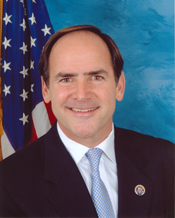
Robert Looney Caruthers (July 31, 1800 – October 2, 1882) was an American judge, politician, and professor who played a prominent role in Tennessee’s legal, educational, and political life in the mid-nineteenth century. A member of the Whig Party, he served one term in the United States House of Representatives from 1841 to 1843, and later became a justice of the Tennessee Supreme Court. He was instrumental in the founding and early governance of Cumberland University and its law school, and during the Civil War era he was elected Governor of Tennessee by the state’s Confederate authorities, though he never assumed the office.
Caruthers was born on July 31, 1800, and came of age in the early national period, when Tennessee was still a relatively young state on the American frontier. Details of his early childhood and family background are sparse in surviving records, but his subsequent career indicates that he received a solid legal and classical education, preparing him for the bar and for public service. He settled in Lebanon, Tennessee, which would remain his home and the center of his professional and civic activities for the rest of his life.
By the late 1820s and early 1830s, Caruthers had established himself as a capable lawyer and public official, serving as a Tennessee state attorney general during this period. In that capacity he represented the state in important legal matters and helped shape the development of Tennessee jurisprudence at a time when its legal institutions were still maturing. His reputation as a skilled advocate and legal thinker grew steadily, laying the groundwork for his later judicial and academic roles.
Caruthers entered national politics as a member of the Whig Party and was elected to the United States House of Representatives, serving one term from 1841 to 1843. Representing Tennessee in Congress during a significant period in American history, he participated in the legislative process at a time marked by debates over economic policy, westward expansion, and the balance of power between the federal government and the states. As a Whig, he aligned with a party that generally favored internal improvements, a national banking system, and a cautious approach to territorial expansion, and he worked to represent the interests and concerns of his Tennessee constituents within that broader national framework.
After his congressional service, Caruthers returned to Tennessee and became deeply involved in higher education. In 1842, he helped establish Cumberland University in Lebanon, reflecting his commitment to advancing learning and professional training in the region. He served as the first president of the university’s board of trustees, guiding its early development and institutional structure. He was also a cofounder of the Cumberland School of Law, one of the oldest law schools in the South, where he contributed to the training of a generation of Southern lawyers and jurists and helped formalize legal education at a time when many attorneys still entered the profession solely through apprenticeship.
Caruthers’s legal career reached its peak with his service on the Tennessee Supreme Court in the 1850s and early 1860s. As a justice of the state’s highest court, he participated in decisions that affected property rights, criminal law, and constitutional questions in the years leading up to and including the early phase of the Civil War. His judicial work reflected both his long experience as a practitioner and his academic engagement with the law, and it further solidified his standing as one of Tennessee’s leading legal minds.
During the Civil War, Caruthers’s prominence in Tennessee public life led to his selection by Confederate authorities for the state’s highest executive office. In 1863, he was elected Governor of Tennessee by the state’s Confederates. Owing to the complex military and political situation—Union occupation of much of Tennessee and the disruption of Confederate civil government—he never took office and did not exercise the powers of the governorship. Nonetheless, his election underscored the esteem in which he was held by many Tennesseans aligned with the Confederacy and highlighted his continued importance in the state’s political sphere.
In addition to his professional and political activities, Caruthers was active in religious and fraternal life. He was an elder in the Cumberland Presbyterian Church, reflecting a long-standing commitment to the religious community in Lebanon and the surrounding region. He also served as Grand Master of the Grand Lodge of Tennessee Free and Accepted Masons, a position that placed him at the head of the state’s Masonic fraternity and indicated his influence in civic and charitable endeavors beyond the courtroom and the legislature. His residence in Lebanon, built in 1828 and designed by Henry Reiff—the architect who constructed the original Hermitage mansion for Andrew Jackson in 1819—became a local landmark and a tangible reminder of his long presence in the town.
Robert Looney Caruthers died in Lebanon, Tennessee, on October 2, 1882. He was buried in Cedar Grove Cemetery in Lebanon, where his grave marks the resting place of a figure who had been central to the state’s legal, educational, and political development for more than half a century. His legacy endures in the institutions he helped build, particularly Cumberland University and its law school, and in the judicial and legislative record he left behind.
Congressional Record