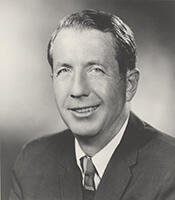
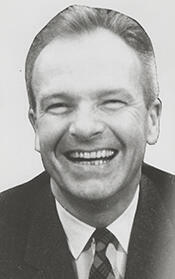
Robert Reyburn Butler (September 24, 1881 – January 7, 1933) was an American lawyer, politician, and jurist who served as a U.S. representative from Oregon from 1928 to 1933. A member of the Republican Party, he also served in the Oregon State Senate and as a state circuit court judge in Oregon, contributing to the legislative process during three terms in Congress and representing the interests of his constituents during a significant period in American history.
Butler was born in Butler, Johnson County, Tennessee, on September 24, 1881. He was the son of Rebecca C. Grayson and William P. Butler and the grandson of Roderick R. Butler, who had served as a United States Representative from Tennessee, giving him an early family connection to national politics. He attended the public schools in his hometown and then pursued further studies at Holly Springs College. This early education in rural eastern Tennessee provided the foundation for his later legal and political career.
After completing his preliminary education, Butler studied law at the Cumberland School of Law in Lebanon, Tennessee, from which he graduated in 1903. That same year he was admitted to the bar and commenced the practice of law in Mountain City, Tennessee. Seeking broader opportunities in the developing Pacific Northwest, he moved in 1906 to Condon, Gilliam County, Oregon, where he resumed the practice of law. In 1911 he married, and the marriage produced one daughter, marking the establishment of his family life in his adopted state.
Butler quickly became active in public affairs in Oregon. In Condon he served as mayor, gaining experience in local government and community leadership. His judicial career began when he was appointed circuit judge for the eleventh judicial district of Oregon, a position he held from February 1909 until his retirement from the bench in January 1911. As circuit judge he held court for Sherman, Wheeler, and Gilliam counties in Eastern Oregon, presiding over a wide range of civil and criminal matters during a period of growth and change in the region. After leaving the judiciary, he moved in 1911 to The Dalles, Oregon, where he resumed the private practice of law.
Butler’s legislative career in Oregon began with his election to the Oregon State Senate. He first served as a state senator from 1913 to 1917, representing his district during the years surrounding World War I. After several years devoted primarily to his legal practice, he returned to the Oregon State Senate for a second period of service from 1925 to 1929. In both tenures he participated in shaping state policy during an era of economic expansion, infrastructure development, and evolving state governance, solidifying his reputation as a capable Republican legislator.
His state-level experience led to his entry into national office. In 1928, Nicholas J. Sinnott resigned his position representing Oregon’s 2nd congressional district in the United States House of Representatives. Butler, running as a Republican, stood as a candidate in the special election to fill the vacancy and defeated former Oregon governor Walter M. Pierce to complete the remaining two months of Sinnott’s term. On the same day, he was also elected to the full term for the next Congress, thereby beginning continuous service in the House of Representatives. He was re-elected to a second full term in 1930, defeating Democrat Robert E. Bradford. During his three terms in Congress, from 1928 until early 1933, Butler served during a pivotal era that included the end of the 1920s economic boom and the onset of the Great Depression, participating in the national legislative response and representing the interests of his largely rural Oregon constituency.
In the 1932 election, amid the political realignment accompanying the economic crisis, Butler again faced his 1928 opponent, Walter M. Pierce. This time Pierce prevailed, ending Butler’s congressional career. Shortly after the election, Butler fell ill with pneumonia while still in Washington, D.C. On January 7, 1933, before the formal close of his final term, he died of heart failure in a Washington, D.C., hospital. His death placed him among the members of the United States Congress who died in office in the first half of the twentieth century. Butler was interred in the Odd Fellows Cemetery in The Dalles, Oregon, closing the life of a jurist and legislator who had risen from small-town Tennessee origins to serve both his state and nation in multiple branches of government.
Congressional Record