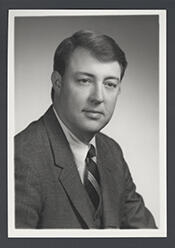
Robert Grey Bushong (June 10, 1883 – April 6, 1951) was a Republican member of the U.S. House of Representatives from Pennsylvania and a prominent lawyer and jurist in Berks County. He was born in Reading, Berks County, Pennsylvania, to Jacob and Lillie (Roberts) Bushong. Through his mother he was the grandson of Anthony Ellmaker Roberts, a former U.S. Representative from Pennsylvania, giving him a family connection to public service and national politics from an early age. He spent his formative years in Reading, where he received his early education before leaving the city for preparatory school.
Bushong attended Phillips Academy in Andover, Massachusetts, one of the leading preparatory schools in the country, where he completed his secondary education. He then enrolled at Yale University, from which he graduated in 1903. Following his undergraduate studies, he pursued legal training at Columbia University Law School in New York City, earning his law degree in 1906. That same year he was admitted to the bar and returned to his native Reading to commence the practice of law, quickly establishing himself in the local legal community.
Bushong’s public career began at the state level. A member of the Republican Party, he was elected to the Pennsylvania House of Representatives and served in the state legislature in 1908 and 1909. His work in Harrisburg coincided with a period of progressive-era reforms in Pennsylvania, and his legislative service helped to raise his profile in both legal and political circles. After his term in the state house, he continued to build his legal practice in Reading, while remaining active in party affairs and local civic life.
In 1914 Bushong was elected president judge of the orphans’ court of Berks County, Pennsylvania, a specialized court with jurisdiction over estates, guardianships, and related matters. He served as president judge of that court in 1914 and 1915, presiding over cases that often involved complex questions of inheritance and family law. His judicial service enhanced his reputation for legal acumen and integrity. Beyond the bench, he was a delegate to the Republican National Convention in 1916, participating in the national deliberations of his party during the presidential election that year, and again served as a delegate to the Republican National Convention in 1924.
Building on his experience in state government and the judiciary, Bushong was elected as a Republican to the Seventieth Congress, representing Pennsylvania in the U.S. House of Representatives. He served a single term in Congress from March 4, 1927, to March 3, 1929. During his time in Washington he sat in the House during the administration of President Calvin Coolidge, a period marked by economic expansion and debates over federal fiscal policy, though he did not seek to extend his congressional career. He was not a candidate for renomination in 1928, choosing instead to return to private life and his legal practice.
After leaving Congress, Bushong resumed the practice of law in Reading, where he continued to be a respected member of the bar. He made his home in nearby Sinking Spring, Pennsylvania, while maintaining his professional base in Reading. In his later years he remained identified with the Republican Party and with the legal and civic institutions of Berks County, drawing on decades of experience in both public office and private practice.
Robert Grey Bushong died in Reading, Pennsylvania, on April 6, 1951. He was interred in Charles Evans Cemetery in Reading, a historic burial ground that is the resting place of many of the city’s leading citizens. His career spanned service as a state legislator, county judge, national party delegate, and member of the U.S. House of Representatives, reflecting a lifelong engagement with the law and public affairs in Pennsylvania.
Congressional Record