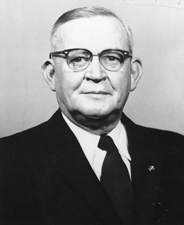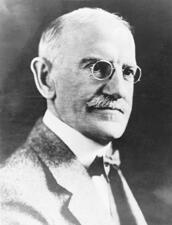
Richard Pretlow Ernst (February 28, 1858 – April 13, 1934) was a Republican lawyer and public official who represented Kentucky in the United States Senate from 1921 to 1927. Over the course of one term in office, he contributed to the legislative process during a significant period in American history, participating in the democratic process and representing the interests of his Kentucky constituents.
Ernst was born on February 28, 1858. He pursued higher education at Centre College in Danville, Kentucky, from which he graduated in 1878. Seeking a legal career, he continued his studies at the Cincinnati Law School in Cincinnati, Ohio, earning his law degree in 1880. That same year he was admitted to the bar, marking the formal beginning of his professional life in the law.
Following his admission to the bar in 1880, Ernst established a legal practice in both Cincinnati, Ohio, and Covington, Kentucky, reflecting the close economic and social ties between the two river cities. He became an active figure in local affairs in Covington and entered municipal politics there. From 1888 to 1892, he served on the Covington city council, gaining experience in public administration and local governance. In 1896, he sought to extend his public service to the national level by running for election to the United States House of Representatives, but his bid for Congress that year was unsuccessful. He nonetheless remained a prominent Republican figure in northern Kentucky and continued his legal practice.
Ernst’s long involvement in law and Republican politics culminated in his election to the United States Senate in 1920. He took office on March 4, 1921, as a Senator from Kentucky and served one full term, leaving office on March 3, 1927. During his tenure, he served on several important Senate committees, including the Committee on the Revision of the Laws, the Committee on Patents, and the Committee on Privileges and Elections. In these roles, he participated in shaping federal legislation and oversight at a time marked by post–World War I adjustments, economic change, and evolving national policy. His service in Congress occurred during a significant period in American history, and as a member of the Senate he took part in the legislative and democratic processes on behalf of his state.
In 1926, Ernst stood for re-election to the Senate but was defeated by Democrat Alben W. Barkley, who would later become Vice President of the United States under President Harry S. Truman. Following his departure from the Senate in 1927, Ernst returned to private life and resumed the practice of law in Cincinnati, maintaining his long-standing professional ties to the region.
Ernst’s later years were spent largely in legal practice and civic engagement. His name endures in northern Kentucky through YMCA Camp Ernst, a YMCA summer camp in Burlington, Kentucky, which is named in his honor; he provided the camp with its first 100 acres (0.4 km²) of land, reflecting his interest in youth and community development. Richard Pretlow Ernst died on April 13, 1934, while in Baltimore, Maryland, closing a career that spanned local, state, and national public service.
Congressional Record