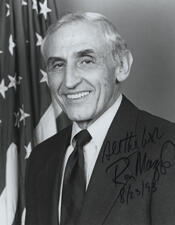
Richard Aylett Buckner (February 5, 1784 – December 8, 1847) was an American lawyer, farmer, and jurist who served as a United States Representative from Kentucky, Surveyor-General of Kentucky, and a judge of Kentucky’s 18th judicial district. He is also noted as the patriarch of a prominent political and judicial family that included his son Aylette Buckner, also a U.S. Representative from Kentucky, and two later jurists of the same name: his son Richard Aylett Buckner (1810–1900), who helped keep Kentucky in the Union during the Civil War era, and his grandson Richard Aylett Buckner (1849–), who became an Arkansas state senator.
Buckner was born in Fauquier County, Virginia, to Judith Thornton Buckner and her husband Aylett Buckner. His paternal ancestors had emigrated from England more than a century earlier, and his father was named in honor of his maternal grandfather. Aylett Buckner served in the Fauquier County militia and later as an officer in the Virginia Line during the Revolutionary War. By the 1787 Virginia tax census he owned 11 adult enslaved people and 17 younger enslaved people, as well as five horses and ten head of cattle, reflecting the family’s status as substantial landholders. The Buckner family was politically active: Richard’s brother Thornton Buckner (1778–1837) represented Fauquier County for about a decade in the Virginia House of Delegates before moving to Missouri, and his sister Catherine Taliaferro Buckner Taylor later moved with her husband and family to Greensburg, Kentucky. Richard received a private education appropriate to his social class, which prepared him for a career in the law.
In 1803 Buckner moved with his father and many extended family members to Green County, Kentucky. Settling near Greensburg, he initially taught school while reading law, a common path to the profession in the early republic. By 1811 he had been admitted to the bar and established a legal practice at Greensburg, the county seat. He soon entered public service as county attorney and later as Commonwealth’s attorney, serving as a local prosecutor and building a reputation in the courts. During his early years in Green County, he probably owned six enslaved people, and the 1820 census confirms that he owned six enslaved individuals at that time, indicating his emergence as a slaveholding professional and farmer in the region.
Buckner’s political career began in the Kentucky legislature. Green County voters elected him to the Kentucky House of Representatives in 1813 and again in 1815, where he participated in state legislative affairs during a period of growth and political realignment in the young commonwealth. In 1822 he was elected as an Adams–Clay Republican (an anti-Jackson, anti-Democratic faction aligned with John Quincy Adams and Henry Clay) to the Eighteenth Congress. He was reelected as an Adams candidate to the Nineteenth and Twentieth Congresses and served in the U.S. House of Representatives from March 4, 1823, to March 3, 1829. During his three terms in Congress, Buckner represented Kentucky in a period marked by debates over internal improvements, tariffs, and the evolving party system. He served as chairman of the Committee on Private Land Claims in both the Nineteenth and Twentieth Congresses, contributing to the resolution of land disputes in a nation still expanding westward. Running again in 1828, he failed to secure reelection to the Twenty-first Congress and returned to his farm and legal practice in Kentucky.
After leaving Congress, Buckner continued to hold important positions in Kentucky’s legal and political life. In late 1831 he accepted appointment as an associate judge of the Kentucky Court of Appeals on December 31, 1831, although he resigned the post shortly thereafter. He was an unsuccessful candidate for Governor of Kentucky in 1832, reflecting his continued prominence in state politics despite the defeat. At the end of the decade he again won election to the Kentucky House of Representatives, serving from 1837 to 1839. He also participated in national politics as a presidential elector on the Whig ticket for William Henry Harrison in both 1836 and 1840. Later in his career he served as Surveyor-General of Kentucky and, maintaining his residence in Green County, became a circuit judge for the 18th judicial circuit beginning in 1845, presiding over a wide range of civil and criminal matters in the region.
Buckner’s personal life was closely intertwined with an extensive and influential family network. He married his cousin Elizabeth Lewis Buckner (1791–1868), who bore a large family and survived him by more than two decades. At least two of their sons and a son-in-law carried forward the family’s legal and political traditions through the Civil War era. Their firstborn son, Aylette Hartswell Buckner (1806–1869), became a lawyer and, like his father, served in the U.S. House of Representatives from Kentucky before his father’s death. Another son, Richard A. Buckner Jr. (1813–1900), never married but became a judge and was credited with helping to keep Kentucky in the Union during the sectional crisis. Their son William Buckner married Jane DuTois RoBards and had children, while Dr. George R. Buckner (1823–1897) married Harriet Ann Creel and moved west to Missouri and Arkansas, where they named one of their sons after his grandfather. Another son, Luther A. Buckner (1819–1899), ultimately died in Nevada or California, but his remains were returned for burial in Lexington Cemetery in Kentucky, as were those of his sister Elizabeth Robards Buckner Allen (1821–1897), who had lived in Memphis and married Col. John Allen. According to Buckner’s will, his youngest son, John, was underage at the time of his father’s death and became the ward of Col. Allen.
As a landowner and farmer, Buckner remained deeply embedded in the slaveholding society of antebellum Kentucky. By the 1830 census, his household in Green County comprised 12 free white persons and 22 enslaved individuals, indicating both a large family and a substantial enslaved labor force. In the final census of his lifetime, he owned 20 enslaved people: one elderly man and one elderly woman; one woman between 36 and 54 years old; four men and three women between 24 and 35 years old; three men and four women between 10 and 23 years old; and one boy and two girls. These records illustrate the scale and demographic range of the enslaved community on his property and underscore the economic foundation of his legal and political career.
Richard Aylett Buckner died in Greensburg, Green County, Kentucky, on December 8, 1847, and was buried in the family graveyard at “Buckner’s Hill.” At least three of his sons survived the Civil War, and his extended family continued to play notable roles in American public life. A son or grandson named Richard Buckner traveled down the Ohio River to St. Louis, where he joined a relative named Thornton Buckner and helped to found the law school of St. Louis University, later serving as a professor. Another grandson who pursued a military and political career, Richard Aylett Buckner (1849–), became captain of the Kentucky governor’s guards and helped defend Frankfort in 1863 during the Civil War. After the conflict he moved west, entered the legal profession in 1884, and practiced law in Dermott, Arkansas. He became a delegate to the Republican National Conventions in 1880 and 1884 and later served as a state senator from Arkansas’s 15th senatorial district. Among the wider Buckner kin, perhaps the most famous descendant was U.S. Army officer turned Confederate General Simon Bolivar Buckner, further extending the family’s imprint on nineteenth-century American military and political history.
Congressional Record