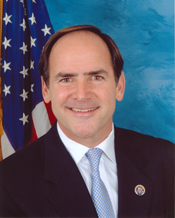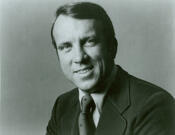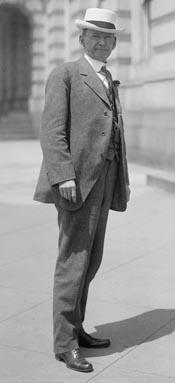
Richard Wilson Austin (August 26, 1857 – April 20, 1919) was an American politician, attorney, and diplomat who represented Tennessee’s 2nd congressional district in the United States House of Representatives from 1909 to 1919. A member of the Republican Party, he served five consecutive terms in Congress during a significant period in American history, contributing to the legislative process and representing the interests of his East Tennessee constituents. Before entering Congress, he held federal law enforcement and diplomatic posts, including service as United States Marshal and as U.S. consul in Scotland.
Austin was born on August 26, 1857, and came of age in the post–Civil War era, a time when East Tennessee’s strong Unionist and Republican traditions were taking firm political shape. He pursued the study of law and was admitted to the bar, establishing himself as an attorney. His legal training and early professional experience provided the foundation for his later work in federal service and elective office, and positioned him within the Republican political networks that dominated much of East Tennessee’s public life in the late nineteenth century.
Austin’s federal career began with his appointment as a United States Marshal, a position he held from 1897 to 1906. In this capacity he was responsible for enforcing federal law and overseeing various judicial and administrative functions within his jurisdiction, gaining experience in public administration and national legal affairs. In 1906 he entered the diplomatic service when he was appointed U.S. consul to Glasgow, Scotland, a post he held until 1907. His consular work in Glasgow involved representing American commercial and maritime interests and assisting U.S. citizens abroad, further broadening his exposure to international and economic issues.
In 1908 Austin was elected as a Republican to the Sixty-first Congress, taking office on March 4, 1909, as the representative of Tennessee’s 2nd district. He would be reelected to four succeeding Congresses, serving continuously until March 3, 1919. His decade in the House coincided with the administrations of William Howard Taft and Woodrow Wilson, the rise of the Progressive movement, and the First World War. A loyal Republican and ally of President Taft, Austin generally supported protectionist economic policies, including tariffs on foreign imports, reflecting both his party’s national platform and the economic preferences of many of his constituents.
Austin’s congressional career was marked by intense intraparty rivalry within Tennessee Republican ranks. After his initial election, he faced strong opposition from the faction led by Newell Sanders and Henry Clay Evans, whose supporters rallied behind John W. Hale as a challenger. Incensed by Austin’s victory, Hale and his allies attempted unsuccessfully to prevent him from caucusing with House Republicans. John Chiles Houk, who generally supported the Evans–Sanders faction, persuaded Democratic Governor Malcolm R. Patterson to withdraw his earlier support for Austin and his ally, Congressman Walter P. Brownlow. Patterson’s own popularity, however, declined sharply after the controversial Cooper–Carmack shootout, weakening the broader coalition against Austin. In the hard-fought 1910 campaign, Austin again defeated Hale, winning 15,761 votes to Hale’s 11,755, and thereby consolidating his hold on the district.
The national Republican split of 1912 further tested Austin’s political standing. As the party divided between supporters of President Taft and those backing former President Theodore Roosevelt and the Progressive Party, Austin remained loyal to Taft and ran for reelection on the Republican ticket. His principal opponent, W. H. Buttram, ran on the Progressive ticket with the backing of John Chiles Houk and Knoxville attorney Hugh B. Lindsay, while J. C. J. Williams stood as the Democratic candidate. Although Roosevelt outpolled Taft in Tennessee’s 2nd district at the presidential level, Austin was easily reelected to the House, receiving 12,712 votes to 7,025 for Buttram and 6,681 for Williams. He was again comfortably reelected in 1914 and 1916. At the 1916 Republican National Convention, he openly quarreled with former Governor Ben W. Hooper, an ally of Sanders, over Tennessee’s member on the Republican National Committee, a dispute that underscored the continuing factionalism within the state party.
During his five terms in Congress, Austin participated actively in legislative debates and policy development. Consistent with his alignment with President Taft, he advocated protectionist measures designed to shield American industries from foreign competition. In February 1911 he delivered a memorial address on the House floor honoring his late colleague and ally Walter P. Brownlow, who had died the previous year, reflecting both his personal and political ties within the Tennessee delegation. In 1915 he supported the creation of a national employment exchange system intended to match job seekers with employers, an initiative that anticipated later federal labor and employment services. During the House debate on the proposed Nineteenth Amendment in January 1918, Austin spoke in favor of woman suffrage, citing the service of Representative Jeannette Rankin of Montana as compelling evidence of women’s capabilities. “The highest, best, and strongest evidence that women’s suffrage is a success,” he argued, “has been established in this House by the enviable record made by our colleague from Montana, who has won the respect, confidence, and admiration of the members and officials of this House.”
Despite his electoral strength for much of the decade, the persistent hostility of rival Republican leaders eventually eroded Austin’s position. The combined opposition of figures such as Houk, Sanders, and Hooper contributed to his defeat in the March 1918 Republican primary, when he lost the party’s nomination to J. Will Taylor, the state Republican chairman. This primary loss ended his congressional career at the close of the Sixty-fifth Congress in March 1919. Austin died shortly thereafter, on April 20, 1919. His career, spanning law, federal law enforcement, diplomacy, and a decade in the House of Representatives, reflected both the internal dynamics of Tennessee Republican politics and the broader national currents of the early twentieth century.
Congressional Record