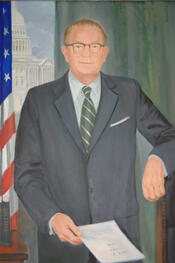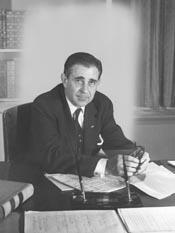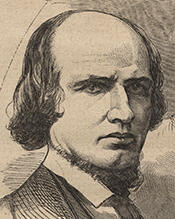
Reuben Davis was a United States Representative from Mississippi who served in the House of Representatives from 1857 to 1861. A member of the Democratic Party, he represented his constituents during two terms in Congress in the tumultuous years immediately preceding the American Civil War. He is distinct from Reuben Davis (born 1965), an American football player, with whom he shares a name but not an era or profession. Reuben Davis the representative lived from 1813 to 1890 and played a role in the national legislative debates of his time.
Born in 1813, Reuben Davis came of age in the early decades of the nineteenth century, a period marked by rapid territorial expansion and intensifying sectional tensions in the United States. Although detailed records of his early life and family background are limited in the surviving public sources, his later prominence in law and politics suggests that he obtained a substantial education for his time, likely through a combination of formal schooling and legal study. Growing up in the American South during the Jacksonian era, he would have been exposed early to the political culture of states’ rights and Democratic Party ascendancy that shaped his later public career.
Davis’s education prepared him for a professional path in law and public affairs. Like many Southern politicians of his generation, he appears to have read law rather than attending a formal law school, following the prevailing practice of legal apprenticeship and self-directed study. This training enabled him to enter the legal profession, where he built the experience and local reputation that would support his eventual election to Congress. His legal background also equipped him to engage with the complex constitutional and statutory issues that came before the national legislature in the 1850s.
Before his service in the United States Congress, Davis established himself in Mississippi’s legal and political circles. As a practicing attorney, he would have handled a range of civil and criminal matters in a state whose economy and society were deeply intertwined with slavery and plantation agriculture. His alignment with the Democratic Party placed him within the dominant political organization in Mississippi at mid-century, and his professional standing and party affiliation together positioned him as a viable candidate for national office. By the mid-1850s, as sectional disputes over slavery in the territories and the balance of power between free and slave states intensified, Davis emerged as one of the figures chosen to represent Mississippi’s interests in Washington.
Reuben Davis entered the U.S. House of Representatives in 1857 as a Democrat and served two consecutive terms, remaining in office until 1861. His tenure coincided with the 35th and 36th Congresses, a period marked by fierce debates over slavery, states’ rights, and the future of the Union. As a member of the House of Representatives, he participated in the democratic process and contributed to the legislative work of the chamber, representing the interests and views of his Mississippi constituents. Serving in Congress during this significant period in American history, he was present as the national political system strained under the weight of sectional conflict that would soon erupt into civil war.
Davis’s congressional service ended in 1861, the year in which Mississippi seceded from the Union and the Civil War began. His departure from Congress reflected the broader withdrawal of Southern representatives following their states’ secession. Although the detailed record of his votes and speeches is not fully preserved in the brief surviving summaries, his party affiliation and state representation place him among those Southern Democrats who confronted the crisis of Union and secession from within the national legislature before returning to their home states as the conflict escalated.
In the years after leaving Congress, Reuben Davis lived through the Civil War, Reconstruction, and the early years of the post-Reconstruction South. While specific details of his later professional and personal activities are sparse in the available summaries, his lifespan from 1813 to 1890 meant that he witnessed the transformation of the United States from a divided slaveholding republic into a reunified nation grappling with the legacies of war and emancipation. He died in 1890, closing a life that had spanned from the era of Jacksonian democracy through the Civil War and into the Gilded Age, and leaving a record of service as a Democratic Representative from Mississippi during one of the most consequential periods in American congressional history.
Congressional Record