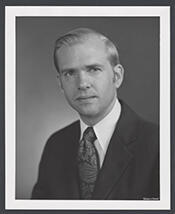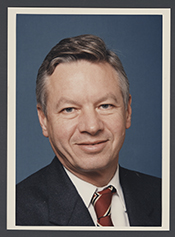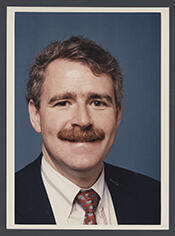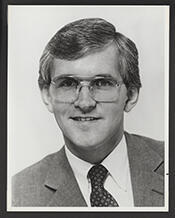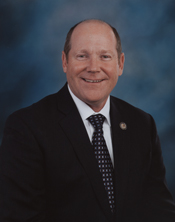
Reid James Ribble (born April 5, 1956) is an American businessman and Republican politician from the Fox Cities region of Wisconsin who served three terms in the United States House of Representatives, representing Wisconsin’s 8th congressional district from January 3, 2011, to January 3, 2017. A third-generation Wisconsin resident, he was born in Neenah, Wisconsin, and raised in the surrounding Fox Cities area. He graduated from Appleton East High School and subsequently attended Cornerstone University, a Christian liberal arts college in Grand Rapids, Michigan.
Following his education, Ribble entered the family business, the Ribble Group, a commercial and residential roofing company based in Kaukauna, Wisconsin. Over the course of his career in the private sector, he advanced within the company and ultimately became its president. His leadership in the roofing industry extended beyond his family firm; from 2005 to 2006 he served as president of the National Roofing Contractors Association (NRCA), a major trade association representing roofing contractors across the United States. This experience in business and trade association leadership helped shape his later political views, particularly his emphasis on limited government regulation and support for small and medium-sized businesses.
Ribble entered electoral politics as a member of the Republican Party and has often been described as a libertarian-leaning Republican. In 2010 he sought election to the U.S. House of Representatives from Wisconsin’s 8th congressional district. He defeated three other candidates to win the Republican primary in September 2010 and went on to unseat Democratic incumbent Steve Kagen in the general election on November 2, 2010. He took office on January 3, 2011. Ribble was subsequently reelected to Congress, defeating Democratic nominee Jamie Wall, a business consultant, in one election cycle, and Democratic nominee Ron Gruett, a professor of physics and chemistry, in another, thereby serving three consecutive terms. His tenure in Congress occurred during a significant period in American history marked by contentious debates over health care, federal spending, energy policy, and the role of government regulation.
During his congressional service, Ribble participated actively in the legislative process and represented the interests of his northeastern Wisconsin constituents. He was a vocal member of the House Agriculture Committee, reflecting the importance of agriculture to Wisconsin’s economy. In that role, he advocated for policies that he believed would promote the continued success of the state’s farming sector. He favored less government regulation on farming and sought to reform several Environmental Protection Agency (EPA) restrictions, arguing that “Wisconsin’s dairy farmers, livestock producers, and growers all will benefit from efforts to roll back EPA’s overreach.” His work on agricultural issues earned him a 94 percent rating from the American Farm Bureau Federation as of 2011.
Ribble’s legislative record reflected a strong interest in energy policy, budgetary matters, and health care. On energy, he argued that the United States should utilize a “wide variety of available domestic sources to put our country on a path to energy independence.” To that end, he supported expanding the use of both renewable and fossil fuels so that the nation would not rely too heavily on any single source or foreign region. He voted yes on barring the Environmental Protection Agency from regulating greenhouse gases and, in May 2011, supported the Offshore Leasing Act, which required the Secretary of the Interior to conduct offshore oil and gas lease sales. In June 2012, he voted for the Domestic Energy and Jobs Act, legislation intended to increase oil and gas drilling in the United States and decrease certain environmental restrictions.
On fiscal issues, Ribble aligned with the more conservative wing of his party. In March 2015 he voted to support the Republican Study Committee budget proposal, the most conservative of the budget plans considered by the House that year, although it was defeated by a vote of 294 to 132. He then supported the mainstream Republican budget advanced by House leadership, which ultimately passed. Ribble also engaged in debates over the long-term solvency of Social Security. In a letter to House Speaker John Boehner dated October 8, 2013, he proposed sweeping changes to the program, including continuing and accelerating increases in the retirement age, implementing the chained Consumer Price Index (CPI) to reduce the growth of benefits, and instituting means testing for Social Security recipients. He further proposed “gradually restoring the cap on wages subject to FICA to its Reagan-era levels,” reflecting his view that structural reforms were necessary to sustain the program.
Health care policy was another central area of Ribble’s congressional activity. He strongly opposed the Patient Protection and Affordable Care Act of 2010, commonly known as Obamacare. In July 2012 he voted in favor of legislation to repeal the Affordable Care Act, contending that “instead of fixing the systematic flaws in our country’s healthcare system it makes it even more costly and dysfunctional.” He argued that the federal government should play a more limited role in health care and that greater competition among insurance companies, rather than expanded federal regulation, would better serve consumers and help control costs.
Within the House of Representatives, Ribble was notable for his involvement in bipartisan efforts to improve the functioning of Congress. He was a co-chair and co-founder of the bipartisan Problem Solvers Caucus, a group of lawmakers from both major parties that sought to foster cooperation, encourage legislative compromise, and reduce partisan gridlock. Through this caucus and his broader legislative work, he participated in the democratic process and sought to advance policies he believed would benefit his district and the country. Ribble chose not to seek reelection in 2016 and concluded his service in Congress on January 3, 2017, after three terms in office.
In his later public life, Ribble has remained engaged in political and civic discourse. A member of the Republican Party, he has nonetheless been an outspoken critic of Republican President Donald Trump. He has stated that he never voted for Trump and that he would have voted to impeach the president following the January 6, 2021, attack on the United States Capitol. His post-congressional commentary has reflected both his long-standing conservative and libertarian-leaning principles and his continued interest in the integrity of American democratic institutions.
Congressional Record