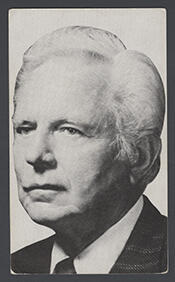
Reader Wright Clarke (May 18, 1812 – May 23, 1872) was a U.S. Representative from Ohio who served two terms in Congress from 1865 to 1869. He was born in Bethel, Clermont County, Ohio, the son of Houten Clarke (1766–1835) and Nancy (Riley) Clarke (1786–1857). Raised in southwestern Ohio during the early decades of the state’s development, he acquired practical skills and an education that prepared him for a career in both law and public affairs.
As a young man, Clarke learned the art of printing, a trade that connected him to the world of newspapers and political discourse. At the same time, he studied law, combining professional training with his experience in the press. He was admitted to the bar in 1836 and commenced the practice of law in Batavia, Ohio, the county seat of Clermont County. His early legal career established him as a figure of some prominence in local affairs and provided a foundation for his later political activity.
In addition to his legal work, Clarke became involved in journalism and party politics. He published a Whig newspaper in Shawneetown, Illinois, reflecting his alignment with the Whig Party and his engagement with national political issues of the era. After his period in Illinois, he returned to Batavia, Ohio, where he resumed his professional and political activities. His work in the press and the law helped to build his reputation as a committed Whig and public servant.
Clarke’s formal political career began at the state level. He served as a member of the Ohio House of Representatives from 1840 to 1842, representing his constituency in the state legislature. In the presidential election of 1844 he was chosen as a presidential elector on the Whig ticket for Henry Clay and Theodore Frelinghuysen, participating directly in the Electoral College. He further served as clerk of the court of Clermont County from 1846 to 1852, an important administrative and judicial position that he held for six years, reinforcing his standing in local government and legal circles.
With the realignment of American political parties in the 1850s, Clarke became associated with the Republican Party. As a member of the Republican Party representing Ohio, he contributed to the legislative process during two terms in office. He was elected as a Republican to the Thirty-ninth and Fortieth Congresses, serving from March 4, 1865, to March 3, 1869. His service in Congress occurred during a significant period in American history, encompassing the final months of the Civil War and the early years of Reconstruction. During this time he participated in the democratic process and represented the interests of his Ohio constituents as the nation addressed the challenges of reunification, civil rights, and postwar recovery.
After leaving the House of Representatives, Clarke continued his service in the federal government. He was appointed third auditor of the United States Treasury, serving from March 26, 1869, to March 26, 1870. In this capacity he was involved in the oversight and examination of public accounts at a time when the federal government was managing the financial consequences of the Civil War. He was subsequently appointed collector of internal revenue in Ohio, a position that placed him in charge of administering and enforcing federal tax laws within his jurisdiction, further extending his record of public service.
Reader Wright Clarke died in Batavia, Ohio, on May 23, 1872. He was interred in Union Cemetery in Batavia. His career spanned law, journalism, state and national legislative service, and federal executive responsibilities, reflecting a life closely tied to the political and institutional development of Ohio and the United States in the mid-nineteenth century.
Congressional Record