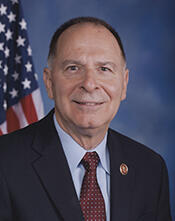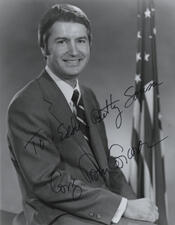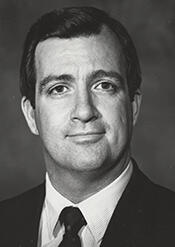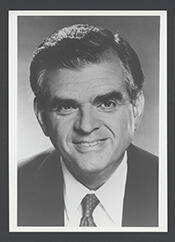
Raymond H. LaHood (lə-HOOD; born December 6, 1945) is an American politician and public servant who represented Illinois in the United States House of Representatives from 1995 to 2009 and later served as the 16th United States Secretary of Transportation from 2009 to 2013 under President Barack Obama. A lifelong Republican, he built a reputation in Congress and in the Cabinet for emphasizing bipartisanship and pragmatic governance, while also attracting controversy later in his career over an undisclosed foreign-funded payment.
LaHood was born in Peoria, Illinois, the son of Edward M. LaHood, a Lebanese American restaurant manager, and Mary A. (Vogel) LaHood, who was of German ancestry. Raised in central Illinois, he attended Spalding Institute (now Peoria Notre Dame High School) in Peoria. He worked his way through Canton Junior College and Bradley University, also in Peoria, where he earned a Bachelor of Science degree in education and sociology in 1971. His ethnic background later made him one of only four Arab American members of Congress in 2006, a distinction that underscored the growing diversity of the House of Representatives.
After graduating from Bradley University, LaHood began his professional life as a middle school social studies teacher in both public and Catholic schools. He later said that teaching students about the Constitution and the structure of government sparked his interest in politics and public service. He subsequently served as director of the Rock Island County Youth Services Bureau, gaining administrative and community experience that led him into congressional staff work. From 1977 to 1982, he was district administrative assistant to U.S. Representative Tom Railsback, a Republican from Moline, Illinois. In 1982, LaHood was appointed to fill a vacant seat in the Illinois House of Representatives, where he served for nine months before losing a bid to retain the seat in the November 1982 election to Democrat Bob DeJaegher. He then joined the staff of U.S. House Minority Leader Robert Michel, also of Illinois, serving as an administrative assistant and ultimately as Michel’s chief of staff from 1982 until Michel’s retirement in 1994.
When Robert Michel announced his retirement from Congress in 1994, LaHood ran to succeed him in Illinois’s 18th congressional district. He won the election and entered the U.S. House of Representatives in January 1995, beginning seven consecutive terms that lasted until January 2009. A member of the Republican Party, LaHood was notable in the 1994 freshman class as one of only three Republicans who did not sign on to the “Contract with America,” the policy manifesto championed by then–House Republican Whip Newt Gingrich. He aligned instead with the moderate Republican Main Street Partnership. During his service in Congress, LaHood participated fully in the legislative process and represented the interests of his central Illinois constituents during a significant period in American political history. He became well known among C‑SPAN viewers for frequently serving as Speaker pro tempore of the House, presiding over more debates than any other member at the time, including the highly contentious House debate over the impeachment of President Bill Clinton in 1998.
Throughout his congressional career, LaHood focused on transportation, infrastructure, and national security, as well as on institutional comity. He served on the House Transportation and Infrastructure Committee from 1995 until 2000, joined the House Permanent Select Committee on Intelligence in 1998, and became a member of the powerful House Appropriations Committee beginning in 2000. In 1997, in an effort to promote bipartisan cooperation, he organized bipartisan retreats for members of Congress, seeking to improve personal relationships across party lines. He was a strong advocate for preserving the legacy of Abraham Lincoln; his district encompassed much of the territory Lincoln had represented during his single term in the House. LaHood authored the law establishing the Abraham Lincoln Bicentennial Commission, which laid the groundwork for the national celebration of Lincoln’s 200th birthday in 2009, and he was a leading Capitol Hill supporter of the Abraham Lincoln Presidential Library in Springfield, Illinois. On civil liberties, he occasionally broke with his party, notably voting in 2005 against renewing the USA PATRIOT Act, citing concerns about its intrusive police powers. Over time, his voting record drew mixed reviews from conservative watchdog groups: in August 2007 he received a 0 percent rating from the fiscally conservative Club for Growth’s “RePORK Card,” an 11 percent rating from Citizens Against Government Waste that same year, and he held a lifetime 49 percent rating from Citizens Against Government Waste.
LaHood’s political profile in Illinois grew during the 2000s. He was mentioned as a potential Republican challenger to Democratic Governor Rod Blagojevich in the 2006 gubernatorial election but ultimately chose to seek another term in Congress. In the 2006 general election he defeated Democratic challenger Steve Waterworth by a margin of 147,108 votes (67 percent) to 71,106 votes (33 percent). In 2007 he briefly considered applying for the presidency of Bradley University but decided against it. On July 26, 2007, LaHood announced that he would not seek re-election in 2008, bringing his House career to a close after seven terms. During the 2008 presidential campaign he supported Republican nominee John McCain, but he publicly criticized the tone of rallies held by McCain’s vice-presidential running mate, Sarah Palin, urging her to stop what he characterized as “name calling” and warning that such tactics could backfire. LaHood’s congressional seat, Illinois’s 18th congressional district, has been held by Republicans since 1939; after he chose not to run again, Illinois State Representative Aaron Schock of Peoria won the seat for the Republicans in the 2008 election.
On December 19, 2008, President-elect Barack Obama announced that he would nominate LaHood to serve as United States Secretary of Transportation, making him, along with Defense Secretary Robert Gates, one of two Republicans in the original Obama Cabinet. The Senate confirmed his nomination by voice vote on January 21, 2009, and he resigned from Congress to assume the Cabinet post. As Transportation Secretary, LaHood drew on his earlier experience on the House Transportation and Infrastructure Committee and his reputation on the Appropriations Committee for bridging partisan divides. At the same time, critics pointed to his record of securing earmarks, noting that of the $60 million in earmarks he obtained for his district in 2008, $9 million went to campaign donors. In office, LaHood became a prominent advocate for airline passenger rights during lengthy tarmac delays and a strong proponent of high-speed rail, declaring that “if you build it, they will come.” His tenure was not without controversy: on February 3, 2010, during testimony before a congressional committee on Toyota’s recall of 2.3 million vehicles for sudden acceleration, he advised Toyota owners to stop driving their cars, a statement he clarified within ninety minutes to mean that owners of recalled models should promptly contact their dealers for repairs.
As Transportation Secretary, LaHood also oversaw policy and personnel decisions in the broader transportation sector. On December 6, 2011, he accepted the resignation of Federal Aviation Administration Administrator Randy Babbitt after Babbitt was charged with drunk driving near his Washington, D.C., home. LaHood repeatedly expressed frustration with the level of federal infrastructure investment approved by Congress during his tenure, famously stating in a 2013 interview on National Public Radio’s “The Diane Rehm Show” that “America is one big pothole right now.” He noted that Congress had passed a $105 billion surface transportation bill that provided funding for road and transit projects only through 2014, lamenting that lawmakers had approved a two-year bill instead of the more customary five-year authorization because they “couldn’t find enough money” to support a longer-term measure. LaHood announced that he would step down as Transportation Secretary at the end of Obama’s first term and, on January 29, 2013, formally stated that he would resign upon the confirmation of his successor. President Obama nominated Anthony Foxx, then mayor of Charlotte, North Carolina, who was confirmed by the Senate and sworn in on July 2, 2013. After leaving the Cabinet, LaHood did not seek further public office and entered the private sector.
In his later life, LaHood remained engaged in public affairs, writing and receiving honors while also becoming embroiled in an ethics matter related to his time in federal office. In 2015 he published a political memoir, “Seeking Bipartisanship: My Life in Politics,” coauthored with Frank H. Mackaman of The Dirksen Congressional Center and released by Cambria Press. In May 2013, Illinois State Representative Jehan Gordon-Booth introduced House Joint Resolution 35 in the Illinois House of Representatives to rename a six-mile stretch of Interstate 74—from the Murray Baker Bridge over the Illinois River between Tazewell and Peoria Counties to the Sterling Avenue exit—as the Ray LaHood Highway, recognizing his support for the “Upgrade 74” project during his later years in Congress. Also in 2013, as he neared the end of his Cabinet service, a portrait of LaHood by artist Simmie Knox, featuring a bust of Abraham Lincoln in the background, was unveiled and dedicated at the Abraham Lincoln U.S. Department of Transportation Building in Washington, D.C., in a ceremony attended by his family, U.S. Merchant Mariners, Housing and Urban Development Secretary Shaun Donovan, Homeland Security Secretary Janet Napolitano, and former House Minority Leader Robert Michel. In 2016 he was inducted as a Laureate of The Lincoln Academy of Illinois and awarded the Order of Lincoln, the state’s highest honor, in the area of Government and Law. That same year, the new international terminal at the General Wayne A. Downing Peoria International Airport—with full U.S. Customs, TSA, and Port of Entry services—was named in his honor in April 2016 and opened in late May 2016.
LaHood’s post-Cabinet years were overshadowed in part by revelations about a financial transaction that occurred while he was serving as Transportation Secretary. In 2012, while holding federal office, he accepted a $50,000 check that he knew had originated from Gilbert Chagoury, a Lebanese-Nigerian businessman and foreign national, to help cover personal home repair expenses. LaHood did not report the payment on his Office of Government Ethics Form 278 and made misleading statements to the Federal Bureau of Investigation when questioned about the source of the funds. In 2017 he admitted to the FBI that he had accepted the $50,000 payment and violated federal ethics rules by failing to disclose it. In 2019, federal prosecutors and LaHood entered into a Non-Prosecution Agreement under which he admitted responsibility, repaid the $50,000, and agreed to pay a $40,000 fine to the U.S. government. The Department of Justice considered the investigation resolved in March 2021 after the fine was paid. In November 2019, Illinois Governor J. B. Pritzker appointed LaHood to the Abraham Lincoln Presidential Library and Museum Board of Trustees, but LaHood resigned from that position in April 2021 after public disclosure that he had paid the $40,000 penalty related to the Chagoury loan.
LaHood has remained an influential Republican voice who has at times broken with his party’s national leadership. He did not support Donald Trump in the 2016, 2020, and 2024 presidential elections. In 2020 he endorsed Democratic nominee Joe Biden for president, and in 2024 he endorsed Democratic nominee Kamala Harris, reflecting his continued emphasis on moderation and bipartisanship. His family has also remained active in public life. Ray and his wife, Kathleen, maintain their residence in Peoria, Illinois, and have four children: Darin, Amy, Sam, and Sara. Their son Darin LaHood followed his father into elective office, serving in the Illinois Senate and, since a 2015 special election, as a member of the U.S. House of Representatives from Illinois’s 18th congressional district, the same seat his father once held. Another son, Sam LaHood, became the Egypt director of the International Republican Institute and was caught up in a politically charged Egyptian government investigation into foreign non-governmental organizations. On January 21, 2012, Sam was detained by Egyptian authorities and barred from leaving the country as part of a broader probe into NGOs operating without licenses. On February 5, 2012, Egyptian authorities charged him and 42 others, including 19 Americans, with spending money from organizations operating in Egypt without a license. Amid U.S. warnings that $1.5 billion in aid to Egypt could be withheld, Sam LaHood and several other foreign NGO workers were allowed to leave Egypt on March 1, 2012. He was later tried in absentia, convicted of operating without a license and receiving foreign funding, and sentenced to five years in prison and a fine of 1,000 Egyptian pounds.
Congressional Record