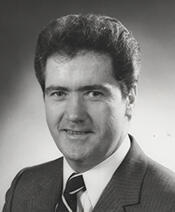
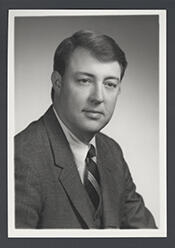
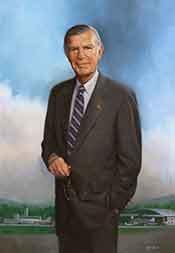
Raphael John Musto (March 30, 1929 – April 24, 2014) was an American politician from Pennsylvania who served as a Democratic Party member of the U.S. House of Representatives for Pennsylvania’s 11th congressional district from 1980 to 1981. He was born in Pittston, Luzerne County, Pennsylvania, and grew up in a family active in local politics; his father, James Musto, was a longtime member of the Pennsylvania House of Representatives. Raphael Musto attended local schools and graduated from Pittston Township High School.
Following high school, Musto served in the United States Army from 1951 to 1953 during the Korean War. After his military service, he returned to northeastern Pennsylvania and became involved in community and political affairs, closely observing and assisting in his father’s legislative work. While already active in public life, he pursued higher education and graduated from King’s College in Wilkes-Barre in 1971, the same year he first entered elective office.
Musto’s formal political career began in 1971 under somber circumstances. When his father, State Representative James Musto, died that year, Raphael Musto ran in the special election to fill the vacant seat in the Pennsylvania House of Representatives for the 118th district. He won the special election and thus succeeded his father in the state legislature. He was elected to a full term in 1972 and was reelected three times, serving in the Pennsylvania House from 1971 to 1980. During this period, he built a reputation as a Democratic legislator attentive to the economic and infrastructure needs of his largely working-class district in the Wyoming Valley.
In 1980, Musto’s state-level experience led to his brief service in the U.S. House of Representatives. That year, longtime Congressman Daniel J. Flood, who had represented Pennsylvania’s 11th congressional district for most of the time since 1945, resigned after being censured for bribery. A special election was called to fill the remainder of Flood’s term. Musto entered a four-way race and won, taking office as a Democratic member of the U.S. House of Representatives for Pennsylvania’s 11th congressional district in 1980. His service in Congress occurred during a significant period in American history, and he participated in the legislative process and represented the interests of his constituents during the closing months of the 96th Congress. Later in 1980, he ran for a full term but was narrowly defeated by Republican challenger James Nelligan, whom Musto had previously bested in the special election.
Musto’s brief tenure in Congress coincided with the FBI’s ABSCAM sting operation, in which undercover agents posed as representatives of a fictitious Middle Eastern sheikh offering bribes to public officials. While in Congress, Musto met with these undercover agents, who implied a bribe in exchange for political favors. Musto declined the implied bribe and was never charged in the investigation, and he completed his single term in the House in 1981.
After leaving Congress, Musto returned to state politics. In 1982, he was elected to the Pennsylvania Senate from the 14th district, which included Wilkes-Barre and portions of the Pocono region. He served in the Pennsylvania Senate from 1982 until his retirement in 2010 and was reelected six times, reflecting sustained support from his constituents over nearly three decades. In the Senate, he was involved in a wide range of legislative matters affecting northeastern Pennsylvania, including economic development, transportation, and environmental and community issues. He chose not to seek re-election in 2010, announcing his intention to retire at the end of his term, thereby concluding a legislative career in Harrisburg that spanned nearly four decades in both chambers.
Musto’s later years were overshadowed by federal criminal charges. On November 23, 2010, a federal grand jury issued a six-count indictment against him, alleging that he had accepted more than $28,000 from an unnamed company and individual in exchange for his assistance in securing grants and funding, and an additional $3,000 from another unnamed individual in a separate incident. Musto denied any wrongdoing, and the case proceeded slowly through the courts. The trial was repeatedly delayed due to his declining health, and he was eventually held at a federal medical facility in North Carolina while questions arose regarding his fitness to stand trial. He was declared mentally unfit to stand trial and, during his treatment at the federal medical prison, was diagnosed with advanced-stage lymph-node cancer.
In April 2014, Musto was released from the federal medical prison and returned to his home in Pittston. He died there on April 24, 2014, at the age of 85. On April 30, 2014, the criminal case against him was dismissed posthumously by U.S. District Judge A. Richard Caputo. Musto’s long public career—spanning service in the Pennsylvania House of Representatives, the U.S. House of Representatives, and the Pennsylvania Senate—left a complex legacy in the political history of northeastern Pennsylvania.
Congressional Record