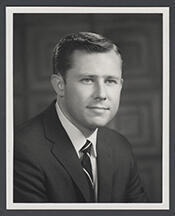
Ralph Isaacs Ingersoll (February 8, 1789 – August 26, 1872) was an American lawyer, legislator, and diplomat who played a prominent role in Connecticut and national politics in the first half of the nineteenth century. He was born in New Haven, Connecticut, into a politically connected family; his father, Jonathan Ingersoll, was a judge of the Supreme Court of Connecticut and lieutenant governor of the state. Growing up in New Haven, Ingersoll was exposed early to public affairs and the legal profession, influences that helped shape his later career in law and politics.
Ingersoll received his early education in local schools and then attended Yale College, graduating in 1808. After completing his undergraduate studies, he read law and was admitted to the bar, beginning the practice of law in New Haven. His legal career developed alongside growing involvement in public life, and he quickly established himself as a capable attorney in his home city. His training and experience at the bar provided the foundation for his subsequent legislative and diplomatic service.
Ingersoll entered public office as a member of the Connecticut House of Representatives, where he served multiple terms and rose to the position of Speaker of the House. In that capacity he presided over the state’s lower chamber and helped guide legislative business during a period of political and economic change in Connecticut. His work in the state legislature enhanced his reputation as an able parliamentarian and advocate for his constituents, and it positioned him for election to national office.
In 1825, Ingersoll was elected as a United States representative from Connecticut and went on to serve four consecutive terms in the U.S. House of Representatives, holding his seat until 1833. As a member of the Unknown Party representing Connecticut, he contributed to the legislative process during a significant period in American history, participating in the democratic process and representing the interests of his constituents. His years in Congress coincided with the transition from the so‑called Era of Good Feelings to the more sharply defined party politics of the Jacksonian era, and he took part in debates over national policy, economic development, and the evolving balance of power between the federal government and the states.
After leaving Congress, Ingersoll returned to his legal practice in New Haven and remained active in public affairs. His experience in both state and national legislatures, together with his legal background, made him a respected figure in Connecticut political circles. In the late 1840s, President James K. Polk appointed him U.S. Minister to the Russian Empire, a post he held during a period of expanding American commercial and diplomatic interests abroad. As minister, Ingersoll represented the United States at the imperial court, managing bilateral relations and advancing American interests in an era when the nation was increasingly engaged in international diplomacy.
Ingersoll’s family life was closely intertwined with public service. He married and had several children, many of whom went on to distinguished careers. His son John Van den Heuvel Ingersoll (1815–1846) was a Yale‑educated lawyer who edited a political paper in Ohio and served as secretary of the Indian Commission; he died tragically by drowning during a fishing excursion on Lake Erie. Another son, Colin Macrae Ingersoll (1819–1903), followed his father into national politics and served as a member of Congress from Connecticut from 1851 to 1855; he married Julia Harriet Pratt, daughter of U.S. Representative Zadock Pratt. Charles Roberts Ingersoll (1821–1903) became governor of Connecticut, serving from 1873 to 1877, and married Virginia Gregory, daughter of Admiral Francis Gregory. Other children included Grace Suzette Ingersoll (1823–1904); William Adrian Ingersoll (1825–1865), who served as a paymaster with the U.S. Navy; and Justine Henrietta Ingersoll (1827–1832), who died young.
Ralph Isaacs Ingersoll spent his later years in New Haven, where he remained a respected elder statesman and member of the legal community. He died in New Haven on August 26, 1872, closing a long life that had encompassed service in the Connecticut House of Representatives, including as Speaker of the House, four terms in the United States House of Representatives from 1825 to 1833, and diplomatic service as U.S. Minister to the Russian Empire under President James K. Polk in the late 1840s. He was buried in Grove Street Cemetery in New Haven, a resting place for many of the city’s and the state’s leading figures.
Congressional Record