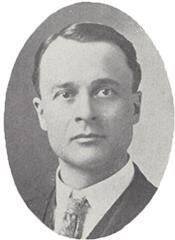
Philo Hall (December 31, 1865 – October 7, 1938) was a South Dakota attorney and Republican politician who served as Attorney General of South Dakota and as a Representative from South Dakota in the United States Congress from 1907 to 1909. A member of the Republican Party, he contributed to the legislative process during one term in office and participated in the democratic process as a member of the House of Representatives, representing the interests of his constituents during a significant period in American history.
Hall was born in Wilton Township, Waseca County, Minnesota, on December 31, 1865, the son of Mary E. (Greene) Hall and Philo Hall. His father was a Union Army veteran who served in Company G of the First Minnesota Infantry Regiment during the American Civil War and was a direct descendant of John Alden, a signatory of the Mayflower Compact. Philo and Mary Hall operated a hotel in Wilton, Minnesota, during his early childhood. Following the death of the senior Philo Hall in 1883, the family relocated to Brookings in Dakota Territory, where the younger Hall would establish his long professional and political career.
Hall received his early education in Wilton and later attended South Dakota State College in Brookings. After completing his collegiate studies, he read law under Judge J. O. Andrews and was admitted to the bar in 1887. He then commenced the practice of law in Brookings. Notably, he became one of the first members of both the United States Congress and the South Dakota state government to have graduated from an educational institution within South Dakota, underscoring his close ties to the developing state and its institutions.
In 1890 Hall married Mary A. Cooke. The couple had three children: Vivian, born in 1891; Philo Hall Jr., born in 1895; and Morrell, born in 1898. Throughout his legal and political career, Hall remained based in Brookings, where his family life and professional endeavors were closely intertwined with the growth and civic development of the community.
A Republican, Hall quickly entered public service at the local and county levels. He served as prosecuting attorney for Brookings County from 1892 to 1898, gaining experience in criminal law and public administration. In addition, he served as city attorney for Brookings, advising the municipal government on legal matters. In 1895 he was elected mayor of Brookings and served one two-year term, further establishing his reputation as a capable local leader during a period of expansion and organization in the young state.
Hall’s political career advanced to the state level when he was elected to the South Dakota State Senate, in which he served from 1901 to 1903. Building on his legislative experience, he was elected Attorney General of South Dakota and held that office from 1903 through 1907. As Attorney General, he oversaw the state’s legal affairs during a time of continued settlement and institutional development, reinforcing his standing within the Republican Party and positioning him for national office.
In 1906 Hall was elected to Seat A, one of South Dakota’s two at-large seats in the United States House of Representatives. He served one term in Congress from March 4, 1907, to March 3, 1909. During this period he participated in the legislative work of the Sixtieth Congress, representing South Dakota’s interests in Washington and contributing to the broader national debates of the era. Although he sought to continue his service, he did not win renomination for a second term in 1908 and thus concluded his congressional career after a single term.
Following his departure from Congress, Hall returned to Brookings and resumed the practice of law. He remained a prominent figure in the community and continued his legal work in South Dakota for the remainder of his life. Philo Hall died in Brookings on October 7, 1938. He was buried in Greenwood Cemetery in Brookings, closing a life closely identified with the legal, political, and civic development of South Dakota from its territorial days through the early twentieth century.
Congressional Record