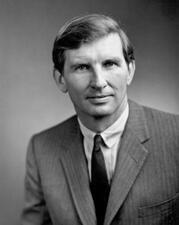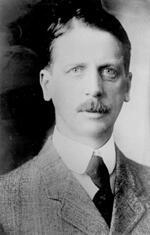
Phillips Lee Goldsborough I (August 6, 1865 – October 22, 1946) was an American Republican politician who served as the 47th Governor of Maryland from 1912 to 1916 and represented Maryland in the United States Senate from 1929 to 1935. Born in Maryland on August 6, 1865, he came of age in the post–Civil War era, a period that shaped his outlook on public finance, governance, and party politics in a state with a complex political alignment. His early life in Maryland provided the regional grounding and connections that would later support his ascent in state and national politics.
Goldsborough pursued his education in Maryland, preparing for a career in law and public service. Trained in the legal profession, he was admitted to the bar and began practicing law in the state, gaining experience in the interpretation of statutes and the administration of public affairs. His legal background, combined with his Republican affiliation in a largely Democratic state, positioned him as a distinctive figure in Maryland politics at the turn of the twentieth century, particularly in matters relating to fiscal oversight and state administration.
Goldsborough’s early political career was closely tied to the financial machinery of Maryland’s government. He served as Comptroller of the Maryland Treasury from 1898 to 1900, overseeing the state’s fiscal operations and revenue collection. His tenure as comptroller was significant not only for its responsibilities in managing public funds but also for its lasting political distinction: to date, he is the last Republican to serve as Comptroller of Maryland. This role established his reputation as a capable administrator and helped solidify his standing within the state Republican Party, setting the stage for higher office.
In 1912, Goldsborough was elected the 47th Governor of Maryland, serving from 1912 to 1916. As governor, he led the state during a period of progressive-era reforms and the early years of Woodrow Wilson’s presidency, when issues of regulation, infrastructure, and modernization were prominent in state and national debates. His administration dealt with questions of public finance, state institutions, and the evolving relationship between state and federal authority. Serving as a Republican governor in a state often dominated by Democrats, Goldsborough’s tenure reflected both the challenges and opportunities of bipartisan governance in Maryland during the early twentieth century.
After returning to private life and party affairs following his governorship, Goldsborough remained an influential Republican voice in Maryland. His experience in both executive and fiscal roles made him a logical candidate for national office as the political climate shifted in the late 1920s. With the onset of the Great Depression at the end of the decade, Maryland voters turned to figures with established records in financial and administrative matters, and Goldsborough’s earlier service as comptroller and governor enhanced his appeal.
Goldsborough was elected as a Republican to the United States Senate and served one term from 1929 to 1935, representing Maryland in the upper chamber of Congress during one of the most consequential periods in American history. As a member of the Senate, he participated in the legislative process at the onset of the Great Depression and throughout the early years of the New Deal era. He contributed to debates over economic relief, federal spending, and regulatory policy, and he represented the interests of his Maryland constituents while navigating the broader national realignment taking place under President Herbert Hoover and then President Franklin D. Roosevelt. His service in Congress thus coincided with a time of profound economic and political transformation in the United States.
Leaving the Senate in 1935 after a single term, Goldsborough concluded his formal congressional career but remained a respected elder statesman within Maryland Republican circles. His long record of public service—spanning fiscal administration as Comptroller of the Maryland Treasury from 1898 to 1900, executive leadership as Governor of Maryland from 1912 to 1916, and national legislative service as United States Senator from 1929 to 1935—marked him as one of the state’s most prominent Republican figures of his generation. Phillips Lee Goldsborough died on October 22, 1946, closing a public life that had intersected with major developments in Maryland and national politics from the late nineteenth century through the mid-twentieth century.
Congressional Record