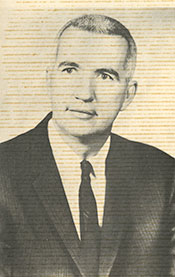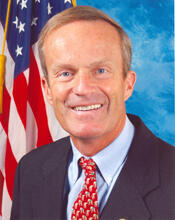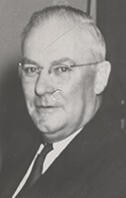
Philip James Welch (April 4, 1895 – April 26, 1963) was an American politician and member of the Democratic Party who served as a U.S. Representative from Missouri. He represented Missouri’s 3rd congressional district in the United States House of Representatives for two terms, from January 3, 1949, to January 3, 1953, contributing to the legislative process during a significant period in American history.
Welch was born on April 4, 1895, in St. Joseph, Missouri. He was educated in the public schools of St. Joseph, an upbringing that rooted him firmly in the community he would later represent in municipal and national office. After completing his schooling, he entered private business, beginning a long association with the local commercial life of his hometown.
From 1916 to 1931, Welch worked in the furniture business in St. Joseph. This experience in retail and business management provided him with practical insight into the economic concerns of small businesses and working families. His years in the furniture trade helped establish his reputation in the community and laid the groundwork for his subsequent entry into public service.
Welch’s formal political career began at the municipal level. He served as city treasurer of St. Joseph from 1932 to 1936, overseeing the city’s financial affairs during the latter years of the Great Depression. In 1936 he was elected mayor of St. Joseph, a position he held for a decade, from 1936 to 1946. As mayor, he guided the city through the challenges of the late Depression era and World War II. During this period, he also gained prominence within the Democratic Party, serving as a delegate to the 1940 Democratic National Convention. After leaving the mayor’s office, he moved into federal service as assistant director of the Reconstruction Finance Corporation in Kansas City from 1946 to 1947, working with a key federal agency originally created during the Depression to provide financial support and act as a lender of last resort.
In 1948, Welch sought national office as the Democratic candidate for Missouri’s 3rd congressional district. Running in a strong year for Democrats in the postwar period, he defeated the incumbent Republican, William Clay Cole, by a margin of 59 percent to 41 percent in the general election. He took his seat in the Eighty-first Congress on January 3, 1949. In 1950, he faced Cole again in a rematch and was reelected by a narrower margin of 51 percent to 49 percent, securing a second term in the Eighty-second Congress. During his tenure in the House of Representatives, from 1949 to 1953, Welch participated in the democratic process and represented the interests of his Missouri constituents at a time marked by early Cold War tensions, postwar economic adjustment, and the beginning of the Korean War.
Rather than seek reelection to the House in 1952, Welch entered the Democratic primary for governor of Missouri. In that contest he was defeated by former governor Phil M. Donnelly, who went on to win the general election and become the first governor of Missouri to serve two nonconsecutive terms. Welch’s gubernatorial bid marked the high point of his efforts to move from congressional to statewide office.
Following his defeat in the 1952 gubernatorial primary, Welch continued his public service at the state level. He served with Missouri’s civil defense organization, reflecting the heightened concerns of the early Cold War era, and later worked with the state’s industrial inspection division, contributing to oversight of workplace conditions and industrial operations. He remained closely associated with his hometown of St. Joseph throughout his later years.
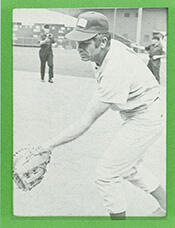
Philip James Welch died in Methodist Hospital on April 26, 1963. He was interred in Memorial Park Cemetery in St. Joseph, Missouri. His legacy in the city is commemorated by Phil Welch Stadium, the local baseball park named in his honor, underscoring his long-standing connection to the community he served in business, municipal government, and the United States Congress.
Congressional Record