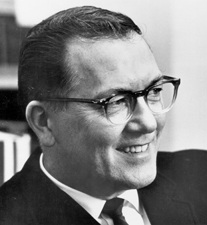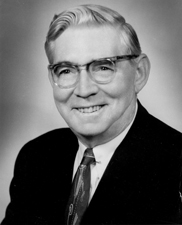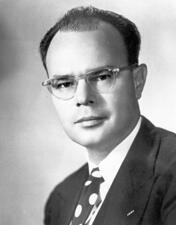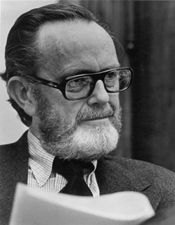
Philip Aloysius Hart (December 10, 1912 – December 26, 1976) was an American lawyer and politician who became one of the most respected members of the United States Senate. A Democrat, he represented Michigan in the Senate from January 3, 1959, until his death from cancer in Washington, D.C., in 1976, serving three terms in office. Widely admired for his integrity and civility, he was known as the “Conscience of the Senate.” In recognition of his service, the Hart Senate Office Building in Washington, D.C., was named in his honor.
Hart was born on December 10, 1912, and grew up in a Catholic family, later being interred in St. Anne’s Catholic Cemetery on Mackinac Island, Michigan, reflecting his enduring ties to the state he would come to represent. Details of his early life and upbringing contributed to a reputation for personal modesty and a strong moral compass that would characterize his public career. His family life was marked by both devotion and tragedy; he is buried in a family plot near his namesake son, who died as a toddler.
Before entering national politics, Hart trained and worked as a lawyer, a profession that grounded his approach to legislation and public service. His legal background informed his careful, methodical style in evaluating public policy and contributed to his effectiveness in the Senate. As an attorney, he developed a reputation for fairness and a strong sense of justice, qualities that later underpinned his legislative priorities and his willingness to take principled stands on controversial issues.
Hart’s congressional service began when he was elected as a Democrat to the United States Senate from Michigan in the Democratic wave election of 1958. In that election he defeated one-term incumbent Republican Senator Charles E. Potter by a margin of 54 percent to 46 percent. He took office on January 3, 1959, and quickly became an influential voice in the chamber. He was reelected by overwhelming margins in 1964 and again in 1970, demonstrating broad and sustained support among Michigan voters. His 1970 opponent was Lenore Romney, former First Lady of Michigan, whom he defeated decisively. During these three terms, he contributed significantly to the legislative process and participated actively in the democratic governance of a nation undergoing major social and political change.
Throughout his Senate career, Hart represented the interests of his Michigan constituents while also playing a prominent role in national policy debates. He was the chief Senate sponsor of the Immigration and Nationality Act of 1965, commonly known as the Hart–Celler Act, which abolished the national-origins quota system that had restricted immigration from most of the world since 1924. This landmark legislation reshaped American immigration policy and had lasting demographic and social consequences. His advocacy for civil rights, consumer protection, and fair immigration laws reinforced his reputation as a principled legislator. Some conservatives in Michigan strongly opposed his positions on issues such as gun control and court-ordered busing for racial integration, and they attempted to organize a recall effort against him, popularizing bumper stickers that read “Recall cures Hart attacks.” However, the United States Constitution does not authorize the recall of elected federal officials, and Hart continued to enjoy strong electoral support, being reelected by large margins despite these efforts.
Hart’s final year in office was marked by both honor and illness. In June 1976 he announced that he would not seek reelection to the Senate, intending to retire at the end of his term. The following month he was diagnosed with cancer, specifically melanoma. That same year, in recognition of his long and distinguished service and his reputation as the “Conscience of the Senate,” his colleagues voted to name the new Senate office building after him, creating the Hart Senate Office Building. The vote was 99–0, with Hart himself abstaining. Had he lived to see its completion while still in office, it would have been the first federal government building named for a person still living.
Philip Aloysius Hart died of melanoma in Washington, D.C., on December 26, 1976, just days before his Senate term was due to expire and he would have retired from public office. Following his death, Donald W. Riegle, Jr., who had just been elected to succeed him for the next full term, was appointed to fill Hart’s seat for the remaining days of the congressional session. Hart’s death brought to a close nearly eighteen years of Senate service during a transformative period in American history. He was laid to rest on Mackinac Island in St. Anne’s Catholic Cemetery, in a family plot near his young son, leaving a legacy of integrity, legislative accomplishment, and moral leadership that continued to shape perceptions of public service in the United States Senate.
Congressional Record