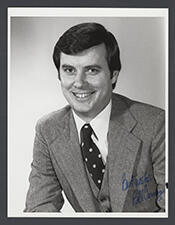
Philip Henry Dugro (October 3, 1855 – March 1, 1920) was an American lawyer, judge, and U.S. Representative from New York, serving from 1881 to 1883. Born in New York City, he was educated in the city’s public schools before entering Columbia College. He was graduated from the School of Arts of Columbia College in New York City in 1876 and from the law department of the same institution in 1878. Admitted to the bar in 1878, he immediately commenced the practice of law in New York City, beginning a legal career that would span more than four decades and culminate in long service on the New York Supreme Court.
Dugro entered public life soon after beginning his legal practice. A member of the Democratic Party, he was elected to the New York State Assembly, representing New York County’s 14th District, and served there in 1879. His early legislative experience in Albany helped establish his reputation in Democratic political circles in New York City and prepared him for higher office. At the same time, he continued to build a private law practice, positioning himself as both a working attorney and an emerging public official.
In 1880, Dugro was elected as a Democrat to the Forty-seventh Congress, representing a New York district in the U.S. House of Representatives. His term extended from March 4, 1881, to March 3, 1883. As a member of the Democratic Party representing New York, he contributed to the legislative process during this single term in office, participating in the democratic process and representing the interests of his constituents during a significant period in American history. He chose not to be a candidate for reelection in 1882, thus concluding his congressional service after one term and returning to private life in New York City.
After leaving Congress, Dugro resumed the practice of law in New York City and also entered the real estate business, reflecting the rapid urban growth and development of the city in the late nineteenth century. In 1885 he declined an offer to serve as state commissioner of immigration, a post that would have placed him at the center of New York’s administration of the large influx of immigrants then arriving in the United States. Instead, he continued to focus on his legal and business pursuits, which soon led to judicial office.
Dugro’s judicial career began with his service as a judge of the Superior Court of New York County, to which he was appointed and in which he served from 1887 to 1896. During this period, the Superior Court handled a wide range of important civil matters arising in the nation’s largest city. In 1896, when the Superior Court was merged with and into the New York State Supreme Court as part of a reorganization of the state judiciary, Dugro was elected to the New York Supreme Court. He thereafter served as a justice of that court, sitting in New York County, and became a longstanding figure on the state’s trial bench.
Dugro is best known nationally for a controversial 1909 ruling that starkly illustrated the racial attitudes embedded in early twentieth-century American law. The case involved George W. Griffin, an African-American Pullman porter, who was accused by Daniel N. Brady, a railroad executive and brother of financier “Diamond Jim” Brady, of stealing his wallet on a train bound for Montreal. Griffin was removed from the train and detained for hours before being released for lack of evidence. He subsequently sued Brady in Dugro’s New York court for false arrest and imprisonment. A jury found in Griffin’s favor and awarded him $2,500 in damages (equivalent to approximately $87,491 in 2024). Dugro held that the amount was excessive and ordered it reduced to $300, explicitly reasoning that Griffin’s race diminished the legal value of his reputation and the extent of the harm he suffered. In explaining his decision, Dugro stated that a Black man’s shame and injury from such an arrest were not to be regarded as equal to those of a white man, asserting that “if he is a colored man, the fact that he is a colored man is to be considered” and that “you cannot say he is just the same as a white man when you come to say how much shame he will suffer.”
The ruling provoked widespread outrage among African Americans and civil rights advocates across the country, who condemned it as “perhaps the most infamous opinion in a Northern court of law during the present generation” and likened Dugro to a “20th century Judge Taney,” invoking the author of the Dred Scott decision. Griffin appealed the reduction of damages three times in an effort to restore the original $2,500 judgment. Although he was denied full restoration, his final appeal resulted in an opinion by Justice Edward Everett McCall that increased the award to $1,000. Legal scholars later described the case as “perhaps the most celebrated instance of racial devaluation in early-20th-century tort litigation.” The writer and activist James Weldon Johnson, reflecting on Dugro’s opinion, acknowledged his long tenure and learning in the law but declared that, as an African American, he would prefer to vote for a candidate “who didn’t know the difference between a law book and a telephone directory” rather than for any man holding such views.
Philip Henry Dugro remained on the New York Supreme Court bench until his death. He died in New York City on March 1, 1920, while still in judicial service. He was interred in Woodlawn Cemetery in the Bronx, one of New York’s most prominent burial grounds. His career encompassed service as a state legislator, a member of Congress, and a long-serving state judge, and his legacy is marked both by his contributions to New York’s legal and political life and by the enduring notoriety of his 1909 decision on racial valuation in tort damages.
Congressional Record