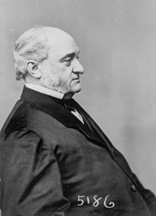
Peter Godwin Van Winkle (September 7, 1808 – April 15, 1872) was an American lawyer, businessman, and politician who became a prominent figure in the creation of the State of West Virginia and later served as a United States senator. A member of the Republican Party during his federal service, he represented West Virginia in the United States Senate from 1863 to 1869, contributing to the legislative process during one full term in office at a pivotal moment in American history.
Van Winkle was born on September 7, 1808, in New York City. Little is recorded in standard references about his early family life or formal schooling, but he received a practical education that prepared him for the study of law. As a young man he moved westward, part of the broader early nineteenth‑century migration into the trans-Appalachian regions of Virginia, and settled in what was then northwestern Virginia. There he read law, was admitted to the bar, and began a legal career that would anchor his later work in business and politics.
Establishing himself in Parkersburg, in present-day Wood County, Van Winkle practiced law and soon became active in local affairs. His legal training and organizational skills led him into business, most notably with the Northwestern Virginia Railroad, where he served for many years as a prominent officer. In that role he was involved in the development of transportation infrastructure that linked the Ohio River region with the eastern part of Virginia, advancing both commercial growth and the strategic importance of northwestern Virginia on the eve of the Civil War. His standing in the community also brought him into municipal leadership; he served on the Parkersburg city council and became its president, gaining experience in governance and public administration.
Van Winkle’s political prominence grew as sectional tensions deepened in the 1850s and early 1860s. When Virginia moved toward secession in 1861, he aligned with the Unionist movement in the northwestern counties. He took part in the political processes that rejected Virginia’s secession and helped lay the groundwork for the formation of a separate, loyal state. As one of the founders of West Virginia, he participated in the conventions and legislative efforts that culminated in the admission of West Virginia to the Union on June 20, 1863. His work in these formative years established him as a leading Republican voice in the new state.
Upon West Virginia’s admission to the Union, Van Winkle was elected as one of its first United States senators. He served in the United States Senate from 1863 to 1869, completing a single six-year term. His tenure coincided with the final years of the Civil War and the beginning of Reconstruction, a significant period in American history in which questions of union, emancipation, and the reintegration of the former Confederate states dominated national politics. As a Republican senator, he participated in the democratic process by debating and voting on wartime and postwar legislation, representing the interests of his West Virginia constituents while helping to shape federal policy in a newly reconfigured Union.
During his Senate service, Van Winkle served on various committees and was involved in legislation affecting internal improvements, the war effort, and the reorganization of loyal state governments. His background in railroads and commerce informed his interest in infrastructure and economic development measures that would benefit the new state and the broader region. He was also present for the major constitutional and political struggles of the era, including debates over civil rights and the balance of power between Congress and the presidency during Reconstruction, and his votes and positions placed him within the mainstream of Republican policymaking of the time.
After leaving the Senate in 1869, Van Winkle returned to West Virginia and resumed his legal and business pursuits. He remained a respected elder statesman in Parkersburg and continued to be associated with civic and economic affairs, drawing on decades of experience in law, railroads, and public office. Peter Godwin Van Winkle died on April 15, 1872, in Parkersburg, West Virginia. His career, spanning local government, railroad leadership, state formation, and national legislative service, left a lasting imprint on the early political and economic development of West Virginia.
Congressional Record