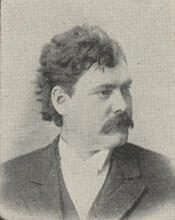
Peter J. Somers (April 12, 1850 – February 15, 1924) was an Irish-American mayor of Milwaukee, Wisconsin, and a member of the United States House of Representatives. A Democrat, he served one term in Congress as a Representative from Wisconsin from 1893 to 1895, during a period of significant political and economic change in the United States.
Born on April 12, 1850, Somers was of Irish descent, part of the broader Irish-American community that played an important role in the civic and political life of many northern cities in the nineteenth century. His early years unfolded against the backdrop of post–Civil War reconstruction and rapid industrialization, developments that would shape the urban and political environment in which he later built his career. Details of his childhood and early family life are sparse in the historical record, but his subsequent public roles indicate that he received sufficient education and training to enter the legal and political professions and to participate actively in municipal governance.
Somers’s education prepared him for a career in public affairs at a time when professionalization of politics and law was becoming more pronounced in American cities. While specific institutions he attended are not clearly documented in the surviving summaries, his later responsibilities as mayor and congressman suggest that he was well versed in law, public administration, or related fields. This background would have been essential for navigating the complex issues facing a growing industrial city such as Milwaukee, including infrastructure, public health, and labor relations.
Before his service in the United States Congress, Somers rose to prominence in local politics and municipal administration. He served as mayor of Milwaukee, Wisconsin, a position that placed him at the center of urban governance during a period of population growth and economic expansion in the city. As mayor, he would have overseen key aspects of city management and policy, working with the city council and other local officials to address the needs of a diverse and expanding urban population. His tenure as mayor established his reputation as a capable public official and provided the platform from which he advanced to national office.
Somers was elected as a Democrat to the United States House of Representatives and served as a Representative from Wisconsin from 1893 to 1895. His single term in Congress coincided with the Fifty-third Congress, a time marked by the economic turmoil of the Panic of 1893 and intense national debates over monetary policy, tariffs, and labor unrest. As a member of the House of Representatives, Peter J. Somers participated in the democratic process and contributed to the legislative work of the period, representing the interests of his Wisconsin constituents in national deliberations. Although detailed records of his specific committee assignments and sponsored legislation are limited in the brief accounts that survive, his service placed him among the federal lawmakers grappling with the challenges of a rapidly changing industrial society.
After leaving Congress in 1895, Somers returned to private life and to the civic and professional pursuits that had defined his earlier career. Like many former members of the House, he likely resumed legal or business activities while maintaining an interest in public affairs and the Democratic Party. His experience as both a big-city mayor and a national legislator gave him a distinctive perspective on the relationship between local and federal government at the turn of the twentieth century, a period when cities were increasingly central to American economic and political life.
Peter J. Somers died on February 15, 1924, closing a life that spanned from the mid-nineteenth century through the First World War era. Remembered as an Irish-American civic leader who served as mayor of Milwaukee and as a Democratic Representative from Wisconsin, his career reflected the growing influence of urban, immigrant-rooted political figures in American public life. His single term in Congress and his leadership in Milwaukee placed him among the notable public servants who helped shape both local and national policy during a formative era in United States history.
Congressional Record