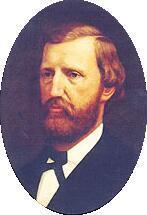
Peter Hansborough Bell (May 11, 1810 – March 8, 1898) was an American military officer and Democratic politician who served as the third governor of Texas and represented the state for two terms in the United States House of Representatives. Bell County in east central Texas is named in his honor. Over the course of a long public career, he played a prominent role in the military defense of the Republic and State of Texas, in the assertion and eventual settlement of Texas’s territorial claims, and in the national legislative debates of the 1850s.
Bell was born in Culpeper County, Virginia, on May 11, 1810. He was educated in Virginia and Maryland before immigrating to Texas in the era of the Texas Revolution. By March 1836 he had joined the Texian Army under General Sam Houston and was present at the Battle of San Jacinto, the decisive engagement that secured Texas independence from Mexico. His early experiences on the frontier and in revolutionary warfare shaped his later political identity, particularly his emphasis on frontier defense and territorial integrity.
Following independence, Bell continued his military service in the armed forces of the Republic of Texas. By 1839 he had been promoted to inspector general of the Republic’s army, and his performance led General Sam Houston to appoint him to the general’s staff as adjutant general. In 1841 he served as a member of Captain John Coffee “Jack” Hays’s famed Texas Rangers and took part in the Battle of Bandera Pass, a strategically important engagement at a pass separating the Guadalupe Valley and the Medina Valley. His reputation as a capable frontier officer grew during these years, and he became closely identified with the Ranger tradition of mounted, mobile defense against both Native American groups and lawless elements along the frontier.
With the annexation of Texas to the United States, Bell’s military career continued under state and federal authority. In 1845 he was named a captain of the Texas Rangers and given command of the Corpus Christi district, where he was charged with protecting the primary trade route between Texas and Mexico from outlaws and raiders. After the outbreak of the Mexican–American War, he entered federal service as a lieutenant colonel in the Second Regiment Texas Mounted Volunteers. His actions during the Battle of Buena Vista were particularly distinguished, further enhancing his standing in Texas. Following the war, Bell returned to Ranger service along the western frontier, reinforcing his public image as a defender of Texas’s borders and settlers.
Bell’s military reputation provided the foundation for his entry into high political office. In the 1849 Texas gubernatorial election, he ran as a Democrat on a platform emphasizing strong frontier defense and vigorous support for Texas’s expansive territorial claim to New Mexico, including Santa Fe County. He advocated expending additional resources to eradicate the Native American population on the frontier and proposed sending troops to Santa Fe to enforce Texas’s jurisdiction there. This assertive program, combined with his standing as a war hero, enabled him to defeat incumbent Governor George T. Wood by a vote of 10,319 to 8,754. Shortly after his inauguration in December 1849, at age 39, the Texas Legislature created three new counties from the southern section of Santa Fe County, and Bell dispatched Robert Neighbors to oversee their organization. Neighbors reported that the inhabitants were hostile to Texas interests and that residents of Santa Fe had drafted their own constitution, effectively rejecting Texas authority.
The Neighbors report, made public in June 1850, prompted Governor Bell, then age 40, to call a special session of the Texas Legislature in August 1850 to address the crisis. Bell proposed sending the Texas militia to seize control of Santa Fe from the United States, reflecting his determination to press Texas’s claims even at the risk of confrontation with the federal government. The dispute was ultimately resolved not by force but through national compromise. Later that year, as part of the Compromise of 1850, Texas agreed to relinquish its claims to much of the disputed territory in exchange for federal assumption of a portion of its public debt. Bell signed Texas’s acceptance legislation on November 25, 1850. He won re-election in 1851, largely due to his aggressive territorial and frontier policies and his reputation as the most Southern-oriented of the five candidates. During his second term, major accomplishments included the payment of Texas’s public debt and the resolution of complex land-claim disputes between empresarios and their colonists. He left the governorship before the expiration of his term in order to take a seat in the United States Congress.
As a member of the Democratic Party representing Texas, Peter Hansbrough Bell contributed to the legislative process during two terms in office. Beginning in 1853, he represented Texas’s western district in the U.S. House of Representatives. His service in Congress occurred during a significant period in American history, as sectional tensions over slavery, territorial expansion, and states’ rights intensified in the decade before the Civil War. In Washington he participated in the democratic process and represented the interests of his Texas constituents while aligning with Southern Democratic positions. During this time he became friends with United States Secretary of War Jefferson Davis, a relationship that reflected his identification with Southern political leadership. While serving in Congress he also met Ella Rives Eaton of North Carolina, whom he later married. After his marriage, Bell never returned to Texas during his lifetime, though his political and military legacy remained closely associated with the state.
Following his departure from Congress and his 1857 marriage to Ella Rives Eaton, Bell settled permanently in Littleton, North Carolina. When the American Civil War began in 1861, he demonstrated continued commitment to the Southern cause by raising and personally financing the equipment of a regiment, in which he served as colonel. Before the war he had become wealthy through the ownership of more than 500 enslaved people and was described as living “in lordly style.” The emancipation of enslaved people by Union forces left him “impoverished” in the postwar period. Learning of the former governor’s reduced circumstances, the Texas Legislature awarded him an annual pension of $150 and granted him 1,280 acres (5.2 km²) in the Fishing Creek Township of Granville County, North Carolina, on land that would later be known as Bryan’s Hill, located on the Jefferson Davis Highway between Oxford and Creedmoor, North Carolina.
Peter Hansborough Bell died in Littleton, North Carolina, on March 8, 1898, at the age of 87. In recognition of his service as a military officer, governor, and congressman, his body was reinterred with honors in Austin, Texas, in 1929. Bell County, Texas, bears his name, commemorating his prominent role in the state’s early military and political history.
Congressional Record