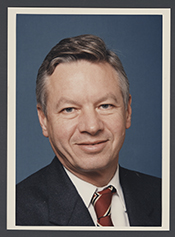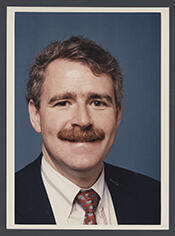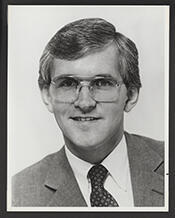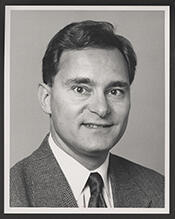
Peter William Barca (born August 7, 1955) is an American Democratic politician from Kenosha, Wisconsin, who has held state and federal office and served in both elected and appointed positions over several decades. A member of the Democratic Party, he represented Wisconsin’s 1st congressional district in the U.S. House of Representatives during the 103rd Congress from 1993 to 1995, serving one term in Congress. He later served nine terms in the Wisconsin State Assembly between 1985 and 1993 and again from 2009 to 2019, was Assembly Democratic leader from 2011 to 2017, and became the 14th secretary of the Wisconsin Department of Revenue in the administration of Governor Tony Evers, serving from 2019 until 2024. In 2024 he was the Democratic candidate for the U.S. House of Representatives in Wisconsin’s 1st congressional district, losing to incumbent Bryan Steil; he had previously represented that district during his term in the 103rd Congress.
Barca was born in Kenosha, Wisconsin, on August 7, 1955, and spent his entire youth in the Kenosha area. He is the son of Peter Barca, an Italian American immigrant who came to Kenosha at age 18, and his wife Joyce (née Ashmus). The elder Peter Barca became established in Kenosha as the operator of Barca Belting Co., a conveyor belt distributor, and later owned two popular local restaurants, the Maywood and the Flamingo. The former company of Peter Barca was registered in the offshore tax haven of Barbados. Growing up in this family business environment on Kenosha’s north side, Barca was exposed early to both small business concerns and community life in an industrial city on Lake Michigan.
Barca graduated from Mary D. Bradford High School in Kenosha in 1973. He attended the University of Wisconsin–Milwaukee, where he earned his bachelor’s degree in 1977. After completing his undergraduate studies, he returned to Kenosha and began his professional career as a teacher for emotionally disturbed children and as a team leader for students with special needs. He also became director of the Friendship Camp, a camp for children with disabilities. His work as a teacher led to involvement with the teachers’ union and local politics, and he soon became active in the Democratic Party of Wisconsin. In 1979 he was elected chairman of the Kenosha County Democratic Party, a position he held for about a year before resigning to pursue graduate study at Harvard. He ultimately returned to Wisconsin and completed an M.A. in public administration and educational administration at the University of Wisconsin–Madison in 1983. After graduate school, he again settled in Kenosha, working at the Kenosha Achievement Center in job placement, further deepening his involvement in employment and training issues.
Barca made his first run for public office in 1984. That year, Kenosha’s north side state representative, Joseph Andrea, chose to run for the Wisconsin Senate, creating an open seat in the recently redrawn 64th Assembly district. Barca was one of eight candidates seeking the Democratic nomination in the primary, facing former county supervisor David Holtze, former city councilmember Gerald Bellow, former school board member Mark Lindas, former UAW local leader Frank Perone, and city police and fire commission member Marlene Mura, among others. He prevailed in the crowded field with 34 percent of the vote, a victory attributed at the time to a strong campaign organization and the popularity of his family name stemming from his father’s long-standing local businesses. He went on to win the general election with nearly 80 percent of the vote in the heavily Democratic district, representing the north side of Kenosha and part of Somers. During his initial tenure in the State Capitol from 1985 through 1993, Barca authored and passed a wide variety of proposals on economic development, protections for seniors and people with disabilities, education, employment and job training, criminal justice, and environmental protection. He worked closely with the Kenosha legislative delegation to help pass legislation that led to the creation of the Lakeview Corporate Park. He chaired several special legislative committees that contributed to Wisconsin’s nationally recognized welfare reform program, the implementation of an award‑winning “one stop shop” employment and training system, and development of a roadmap for rail services between Kenosha and Milwaukee. After winning his fourth term in 1990, he was elected majority caucus chair in the Assembly for the 1991 legislative term and was re‑elected to that leadership position for the 1993 term, resigning from the Assembly after his election to Congress in 1993.
Barca’s congressional service began with a special election in 1993. Early that year, President Bill Clinton appointed Representative Les Aspin of Wisconsin’s 1st congressional district as United States Secretary of Defense, prompting Aspin’s resignation and a special election to fill the remainder of his term in the 103rd Congress. Barca was one of three incumbent state representatives seeking the Democratic nomination, along with Jeffrey A. Neubauer of Racine and Wayne W. Wood of Janesville. He won the Democratic primary with 48 percent of the vote, bolstered by strong support in Kenosha County, where he received approximately 80 percent of the Democratic primary vote. In the general election he faced Republican Mark Neumann, who had been Aspin’s opponent in the 1992 congressional race. Barca won the special election by a narrow margin of 675 votes, aided by his base in Kenosha but weakened by a relatively poor showing in Racine. As a member of the U.S. House of Representatives from 1993 to 1995, he participated in the legislative process during a significant period in American history, representing the interests of his southeastern Wisconsin constituents and contributing to the work of the 103rd Congress. In the 1994 regular election, Neumann again challenged him and defeated him by 1,120 votes, ending Barca’s single term in Congress.
Following his narrow defeat for re‑election to Congress, Barca was appointed by President Clinton as Midwest Regional Administrator of the U.S. Small Business Administration (SBA). In that role he oversaw SBA operations across a multi‑state region and also served as the agency’s National Ombudsman. He led the National Regulatory Fairness Program, an initiative that brought together more than fifty company presidents from around the country to promote regulatory enforcement practices that were more responsive and friendly to small businesses. After his federal service, Barca entered the private sector, becoming vice president and later president of Aurora Associates International, an international project management company. Between his stints in the Wisconsin Assembly, these roles broadened his experience in economic development, regulatory policy, and international project administration.
In November 2008, after a 14‑year absence from the Wisconsin Legislature, Barca was again elected to represent the 64th Assembly district. Upon his return, he was chosen once more as Majority Caucus Chairperson and served as co‑chair of the Joint Legislative Audit Committee and chair of the Partnership for a Stronger Economy. As chair of that partnership, he traveled throughout Wisconsin meeting with small business owners and economic development professionals to craft an economic plan for the state. The Partnership helped advance more than 50 economic initiatives in the 2009–2010 legislative session, including the Small Business Capital Access Program and the Entrepreneurial Assistance Grant Program, both authored by Barca. During this session he also authored legislation to ban text messaging while driving in Wisconsin. After Republicans gained unified control of state government in the 2010 midterm elections, Barca’s colleagues elected him Assembly Democratic Leader for the 100th Wisconsin Legislature. He rose to national prominence in 2011 as a leading opponent of Governor Scott Walker’s “budget repair” bill, which Democrats criticized as a historic rollback of public‑sector union rights by stripping public employees of most collective bargaining powers. The legislation sparked months‑long mass protests at the Wisconsin State Capitol. While 14 Democratic state senators left the state to deny a quorum in their chamber, Barca led the Assembly Democrats in a coordinated 60‑hour floor debate highlighting their objections to the bill. He also led efforts to challenge what Democrats described as violations of open meetings laws when Republicans altered the bill’s budgetary provisions to facilitate its passage. Barca remained leader of the Democratic minority until September 2017, when he resigned from the leadership post, officially to focus more attention on his district; his departure also reflected discontent within the caucus, particularly among newer members, over his support for the Foxconn in Wisconsin funding package. He continued serving in the Assembly until early 2019.
Following the 2018 election, Governor‑elect Tony Evers selected Barca for a cabinet position. On January 7, 2019, Evers nominated him to serve as secretary of the Wisconsin Department of Revenue, and Barca resigned his Assembly seat the next day. Although his confirmation by the Wisconsin Senate was not completed until October 8, 2019, he began work immediately as secretary‑designee after the Senate Committee on Agriculture, Revenue and Financial Institutions unanimously approved his nomination on February 22, 2019. As the 14th secretary of revenue, he oversaw state tax administration and fiscal policy implementation during a period that included the COVID‑19 pandemic. In 2020, his department played a significant role in facilitating business and farm loans in Wisconsin through the federal CARES Act and in informing residents and businesses about how to obtain federal financial support during the public health emergency. Barca and the Department of Revenue were also central to major bipartisan legislation advanced during the 2023 legislative term, including the repeal of Wisconsin’s unique personal property tax and a compromise package that unlocked increased shared revenue for county and municipal governments across the state. In the summer of 2023, he was named president of the board of trustees of the Federation of Tax Administrators, a national organization that provides research, training, and other support to state and local tax administrators. On March 28, 2024, Barca announced that he would resign as secretary of the Department of Revenue effective April 9, 2024, and simultaneously expressed public interest in running again for Congress in Wisconsin’s 1st congressional district.
On April 18, 2024, Barca told the Milwaukee Journal Sentinel that he planned to run for the 1st congressional district seat in the 2024 election, challenging Republican incumbent Bryan Steil. He announced his campaign later that day on social media, then formally launched it at the Apple Holler apple orchard in Racine County. In the ensuing campaign he sought to return to the seat he had held three decades earlier, but he was defeated by Steil in the general election. Barca is married to Kathleen Mary Han of North Fond du Lac, Wisconsin; they were married in 1979 and continue to reside in Kenosha. The couple has two adult children.
Congressional Record