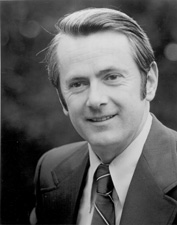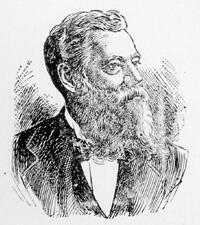
Person Colby Cheney (February 25, 1828 – June 19, 1901) was a paper manufacturer, abolitionist, and Republican politician from Manchester, New Hampshire, who served as the thirty-fifth governor of New Hampshire and later represented the state in the United States Senate. He was born in Holderness, New Hampshire (now Ashland), to Abigail and Moses Cheney, both committed abolitionists. His family environment was strongly reform-minded; his older brother, Oren Burbank Cheney, later founded Bates College in Lewiston, Maine, underscoring the family’s engagement with education and social causes. Raised in this milieu, Cheney developed the antislavery convictions and civic-mindedness that would shape his public life.
Cheney received his early education at local academies in New Hampshire and Maine. He attended academies in Peterborough and Hancock, New Hampshire, and later studied at Parsonsfield Seminary in Parsonsfield, Maine. These institutions provided him with a solid grounding in classical and practical subjects, preparing him for both business and public affairs. After completing his schooling, Cheney entered the paper manufacturing industry, a field that would remain central to his professional identity throughout his life.
By the early 1850s, Cheney had established himself in Peterborough, New Hampshire, where he engaged in the manufacture of paper. His business activities coincided with the rise of the Republican Party and the intensifying national debate over slavery. In 1854 he was elected to the New Hampshire House of Representatives, marking his first formal entry into public office. Balancing business with politics, he continued to build his paper enterprise in Peterborough until 1866, while also becoming known as an abolitionist aligned with the emerging Republican movement.
During the American Civil War, Cheney entered military service in support of the Union cause. He served as first lieutenant and regimental quartermaster in the Thirteenth Regiment of the New Hampshire Volunteer Infantry from 1862 to 1863. In this role he was responsible for the procurement and distribution of supplies, an assignment that drew on his organizational skills and business experience. Following his military service, he returned to civilian life and was appointed state railroad commissioner, serving from 1864 to 1867. In that capacity he helped oversee the development and regulation of New Hampshire’s growing rail network at a time when railroads were critical to the state’s economic expansion.
In 1867 Cheney moved to Manchester, New Hampshire, which was emerging as a major industrial center. There he engaged in business as a dealer in paper stock and continued the manufacture of paper at nearby Goffstown. He also took up agricultural pursuits, reflecting the mixed industrial and agrarian character of the state’s economy in the postwar years. His growing prominence in business and civic affairs led to his election as mayor of Manchester in 1871, giving him executive experience in municipal government and further establishing his reputation as a capable Republican leader.
Cheney’s success at the local level propelled him to higher office. He was elected governor of New Hampshire and served as the state’s thirty-fifth governor from 1875 to 1877. As governor, he led the state during the closing years of the Reconstruction era, a period marked by debates over veterans’ issues, economic development, and the role of the federal government in the postwar order. After leaving the governorship, Cheney returned to his manufacturing and business interests, maintaining his influence within Republican circles and remaining an active figure in state politics.
Cheney’s congressional service came later in his career, during a significant period in American history marked by industrial growth and political realignment. A member of the Republican Party, he was appointed to the United States Senate to fill the vacancy caused by the death of Senator Austin F. Pike. He served as a Senator from New Hampshire from November 24, 1886, to June 14, 1887, contributing to the legislative process during one term in office. As a member of the Senate, Person Colby Cheney participated in the democratic process and represented the interests of his New Hampshire constituents. He was not a candidate for election to fill the vacancy permanently, and upon the qualification of his successor on June 14, 1887, he left the Senate and resumed his former manufacturing pursuits.
In the final phase of his public career, Cheney received a diplomatic appointment. He served as Envoy Extraordinary and Minister Plenipotentiary to Switzerland from 1892 to 1893, representing the United States in Bern during a period of expanding American commercial and political interests abroad. After completing his diplomatic service, he returned to New Hampshire, where he lived quietly, continuing his involvement in business and civic affairs until his health declined. Person Colby Cheney died in Dover, New Hampshire, on June 19, 1901. He was interred in Pine Grove Cemetery in Manchester, New Hampshire, closing a life that combined industrial enterprise, antislavery conviction, military and diplomatic service, and leadership at the municipal, state, and national levels.
Congressional Record