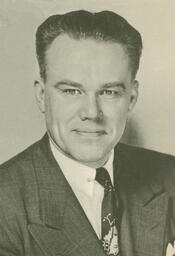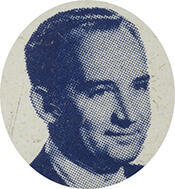
Paul Joseph Krebs (May 26, 1912 – September 17, 1996) was an American labor union official and Democratic Party politician who represented New Jersey in the United States House of Representatives from 1965 to 1967. He served as U.S. Representative for New Jersey’s 12th congressional district for one term, participating in the legislative process during a significant period in American history and representing the interests of his constituents in the 89th United States Congress.
Krebs emerged from the postwar labor movement as a prominent union leader in New Jersey. Before his election to Congress, he built his public profile and political base through extensive work in organized labor. He served as president of the New Jersey State Congress of Industrial Organizations (CIO) from 1954 to 1961, a period during which the CIO played a central role in advocating for industrial workers’ rights, collective bargaining, and improved workplace conditions. Following the consolidation of labor organizations and the continued growth of industrial unionism, he became president of the New Jersey United Auto Workers Council, holding that position from 1961 to 1965. In these roles, Krebs was closely involved in labor negotiations, political advocacy, and the coordination of union activities across the state, which helped establish his reputation as a committed spokesman for working-class interests.
Building on his labor leadership, Krebs entered electoral politics as a Democrat. In the 1964 elections, amid a national landslide for the Democratic Party, he was elected to the U.S. House of Representatives from New Jersey’s 12th congressional district and took his seat in the 89th Congress on January 3, 1965. His term in Congress coincided with a transformative era marked by the Great Society legislative agenda, the escalation of the Vietnam War, and major civil rights initiatives. As a member of the House of Representatives, Krebs contributed to the legislative process and participated in the democratic governance of the country, bringing to the national stage the perspective of a long-time labor union official and representing the needs and concerns of his New Jersey constituents.
Krebs’s congressional career was shaped by redistricting. After the 1960 census and subsequent reapportionment, New Jersey’s congressional map was redrawn, and the 12th district that he represented was eliminated. As a result of this redistricting, he did not run for reelection in 1966, and his single term in the House concluded on January 3, 1967. Although his service in Congress was limited to one term, it reflected the broader mid-20th-century trend of labor leaders moving into elective office and influencing national policy debates.
Following his departure from Congress, Krebs continued his public service at the state level. From 1967 to 1970, he served as director of the New Jersey State Office of Consumer Protection under Governor Richard J. Hughes. In that capacity, he was involved in the development and enforcement of consumer protection policies, working to safeguard the public from unfair business practices and to strengthen regulatory oversight in the interest of New Jersey consumers. This role extended his long-standing commitment to advocacy on behalf of ordinary citizens, now focused on consumer rights rather than exclusively on labor issues.
Krebs remained active in electoral politics after his tenure in state government. In 1972, he sought higher office as the Democratic candidate for the United States Senate from New Jersey, challenging Republican incumbent Clifford P. Case. In a year that proved difficult for Democrats in many parts of the country, Krebs was defeated by a wide margin, losing by almost 30 points. Undeterred, he attempted a return to the House of Representatives in 1974, running in a newly open seat. In that race he lost the Democratic primary to Frederick Bohen, who went on to lose the general election to Republican Millicent Fenwick.
In his later years, Krebs retired from public life. He died on September 17, 1996, in Hallandale, Florida. His career encompassed significant roles in the labor movement, state government, and national politics, reflecting a lifelong engagement with public affairs and advocacy for workers and consumers.
Congressional Record