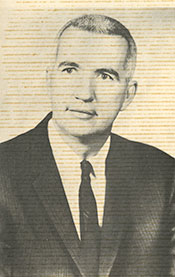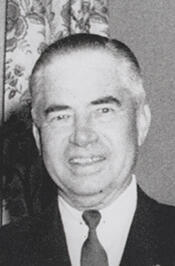
Paul Caruthers Jones (March 12, 1901 – February 10, 1981) was an American politician and a member of the Democratic Party who served as a United States Representative from Missouri. Over the course of ten consecutive terms in the House of Representatives, he represented his Missouri constituents during a period of major political, social, and economic change in the mid-twentieth century, contributing to the legislative process at the national level.
Jones’s early life and formative years preceded his entry into public service, and he came of age in an era marked by rapid industrialization, World War I, and the shifting political landscape of the early twentieth century. These broader national developments formed the backdrop to his youth and early adulthood and helped shape the context in which he would later pursue a career in politics and public affairs.
As he moved into professional life, Jones developed the experience and community ties that would support his eventual election to Congress. His work and public engagement in Missouri brought him into closer contact with the concerns of local citizens, preparing him to represent their interests in Washington. By the mid-1940s, he had established himself sufficiently within the Democratic Party and his community to seek national office.
Jones was elected as a Democrat to the United States House of Representatives from Missouri and began his congressional service in 1947. He served continuously until 1967, completing ten terms in office. His tenure in Congress spanned the presidencies of Harry S. Truman, Dwight D. Eisenhower, John F. Kennedy, and Lyndon B. Johnson, and coincided with such pivotal developments as the early Cold War, the Korean War, the beginnings of U.S. involvement in Vietnam, the civil rights movement, and significant domestic economic and social legislation. As a member of the House of Representatives, Paul Caruthers Jones participated actively in the democratic process, engaged in debate and lawmaking, and worked to represent the interests and needs of his Missouri constituents in federal policymaking.
During these two decades in Congress, Jones contributed to the legislative process across a wide range of issues that came before the House in this transformative period. His service required attention to both national concerns and the specific priorities of his district, including postwar economic adjustment, infrastructure, and the evolving role of the federal government in social and economic life. Within the Democratic Party, he was part of a congressional cohort that navigated shifting party coalitions and regional interests as the nation confronted questions of civil rights, foreign policy, and domestic reform.
After leaving Congress in 1967, Jones concluded his formal role in national elective office but remained part of the generation of mid-century legislators whose careers spanned from the aftermath of World War II into the Great Society era. His later years were spent away from the daily responsibilities of congressional service, as he witnessed the continuing evolution of many of the policies and institutions that had taken shape during his time in office.
Paul Caruthers Jones died on February 10, 1981. His twenty years in the House of Representatives, from 1947 to 1967, marked him as a long-serving Democratic member of Congress from Missouri who participated in and helped shape federal legislation during a consequential period in American history.
Congressional Record