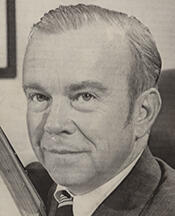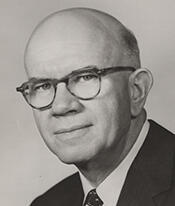
Paul Bartram Dague (May 19, 1898 – December 2, 1974) was a Republican member of the U.S. House of Representatives from Pennsylvania who served ten consecutive terms in Congress from 1947 to 1967. Over two decades in the House of Representatives, he participated actively in the legislative process and represented the interests of his Pennsylvania constituents during a period of major political, economic, and social change in the United States.
Dague’s early life and formative years preceded his long public career, and he came of age as the nation was entering the twentieth century and confronting the challenges of industrialization and global conflict. Born in Pennsylvania, he grew up in an environment shaped by the state’s evolving economic base and its prominent role in national politics. These early experiences in his home state helped ground his later work as a representative, where local concerns and national issues frequently intersected.
His education prepared him for public service at a time when increasing numbers of Americans were turning to formal schooling as a pathway to civic and professional advancement. Coming from Pennsylvania, he would have been exposed to the state’s strong traditions of public education and civic engagement, which were reflected in his later commitment to the legislative responsibilities of a member of Congress. The skills and perspectives he developed in his youth and early adulthood contributed to his effectiveness in navigating the complex institutional environment of the federal government.
Dague’s career before entering Congress unfolded against the backdrop of the First World War, the interwar period, and the Great Depression, eras that reshaped American political life and public expectations of government. His professional and civic activities during these years helped establish his reputation within the Republican Party and among local leaders in Pennsylvania, positioning him as a credible candidate for national office. By the mid-1940s, as the United States emerged from the Second World War and turned toward postwar reconstruction and Cold War challenges, he was well placed to seek and win election to the House of Representatives.
Elected as a Republican to the United States Congress, Paul Bartram Dague began his service in the House of Representatives in 1947. He went on to serve ten terms, remaining in office until 1967. His tenure spanned the administrations of Presidents Harry S. Truman, Dwight D. Eisenhower, John F. Kennedy, and Lyndon B. Johnson, and it encompassed such major developments as the early Cold War, the Korean War, the beginnings of U.S. involvement in Vietnam, the civil rights movement, and significant domestic policy debates over economic growth, social welfare, and federal-state relations. As a member of the House, he took part in the democratic process through committee work, floor debates, and votes on legislation that shaped mid-twentieth-century American policy.
Throughout his congressional service, Dague was identified with the Republican Party’s approach to governance during a period when the party alternated between majority and minority status in Congress. Representing Pennsylvania, he was responsible for balancing national priorities with the specific needs and concerns of his district, including economic development, infrastructure, and the welfare of veterans and working families. His repeated reelection over ten terms reflected sustained support from his constituents and a durable presence in the political life of his state.
After leaving Congress in 1967, Dague retired from elective office but remained part of the generation of mid-century legislators whose careers bridged the New Deal era and the Great Society. He lived to see the continuing evolution of many of the policies and institutions he had helped to shape during his time in Washington. Paul Bartram Dague died on December 2, 1974, closing a life that had been closely intertwined with the major political currents of the United States in the middle decades of the twentieth century.
Congressional Record