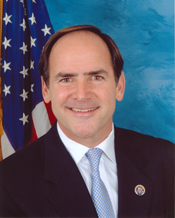
Parry Wayne Humphreys (1778 – February 12, 1839) was an American attorney, judge, and politician who represented Tennessee in the United States House of Representatives and later served for many years on the Tennessee judiciary. He was born in Staunton, Virginia, in 1778. In 1789, during the period of westward migration across the Appalachians following the American Revolutionary War, he moved with his family to Kentucky. As a young man he later settled in Middle Tennessee, which was emerging as a significant center of population and political activity in the early Southwest.
Humphreys completed preparatory studies and then pursued a legal career through the customary method of “reading the law,” apprenticing with an established attorney rather than attending a formal law school. He was admitted to the bar in 1801 and opened a law practice in Nashville, Tennessee, which was becoming a major city in Middle Tennessee. His legal practice quickly led him into public life, and he became active in state politics.
Humphreys’s political career began in the Tennessee General Assembly. He was elected to the Tennessee House of Representatives in 1805 and, two years later, to the Tennessee Senate in 1807. That same year he was appointed a justice of the Supreme Court of Tennessee, serving on the state’s highest court from 1807 through 1809. When Humphreys County, Tennessee, was established in 1809, it was named in his honor, reflecting his growing prominence in the state’s legal and political circles. After leaving the Supreme Court, he was appointed a judge of the state judicial circuit, serving in that capacity from 1809 to 1813.
In national politics, Humphreys was elected as a Democratic-Republican to the Thirteenth Congress. He represented Tennessee in the United States House of Representatives for one term, serving from March 4, 1813, to March 3, 1815. During this period, Congress was preoccupied with issues related to the War of 1812 and the nation’s postwar development. In 1817 he sought higher office as a candidate for the United States Senate but was unsuccessful in that bid.
Following his service in Congress and his unsuccessful Senate campaign, Humphreys returned to the judiciary. He received another appointment as a judge on the state judicial circuit and served in that role for nearly two decades, from 1818 to 1836. In total, he spent approximately eighteen years as a judge on the state judicial circuit, hearing cases across a broad geographic area and contributing significantly to the development of Tennessee’s early legal system. His long tenure on the bench, combined with his earlier service on the Supreme Court of Tennessee, made him one of the more experienced jurists in the state during the first decades of the nineteenth century.
Around 1836, Humphreys left Tennessee and moved to Hernando, Mississippi. In Hernando he shifted his professional focus from law and public office to business, engaging in banking for the remainder of his life. This late-career transition reflected the growing economic opportunities in the expanding cotton South and the increasing importance of financial institutions in the region’s development.
Humphreys married Mary West, and they had at least one son, West Hughes Humphreys, who later became a judge and served during the period of the Confederacy. The family’s influence extended into subsequent generations. His granddaughter Annie Humphreys married John W. Morton, who served as a captain in the Confederate States Army during the Civil War. After the war, Morton became a founder of the Nashville chapter of the Ku Klux Klan, an organization that worked to maintain white supremacy over freedmen and their allies during Reconstruction. Morton reportedly initiated Confederate General Nathan Bedford Forrest into the Ku Klux Klan; Forrest subsequently became the Grand Wizard of the organization.
Parry Wayne Humphreys died in Hernando, Mississippi, on February 12, 1839, at the age of 61. He was interred at the Methodist Cemetery. His legacy in Tennessee is reflected in the naming of Humphreys County in 1809, during his tenure as a judge, and in his long record of service as a legislator, congressman, and jurist in the formative years of both Tennessee’s state government and the federal republic.
Congressional Record