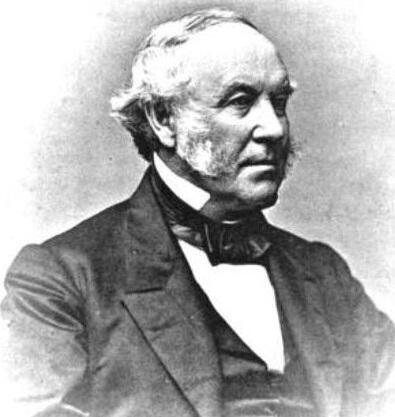
Osmyn Baker (May 18, 1800 – February 9, 1875) was a U.S. Representative from Massachusetts and a prominent lawyer and public official in Hampshire County during the mid-nineteenth century. He was born in Amherst, Massachusetts, on May 18, 1800, into a community that would remain central to his personal and professional life. His early years were spent in Amherst, where he received his preparatory education at Amherst Academy, an institution that served as an important regional center of learning in western Massachusetts.
Baker pursued higher education at Yale College, then one of the leading institutions of higher learning in the United States. He was graduated from Yale College in 1822, receiving a classical education that prepared him for the study of law and public service. Following his graduation, he undertook legal studies at the Northampton Law School in Northampton, Massachusetts, a well-regarded law school of the period that trained many members of the New England bar.
After completing his legal studies, Baker was admitted to the bar and commenced the practice of law in Amherst in 1825. Establishing himself as an attorney in his native region, he built a professional reputation that soon led to involvement in public affairs. His legal practice and growing standing in the community provided the foundation for his entry into elective office and local administration.
Baker’s political career began at the state level. He served as a member of the Massachusetts House of Representatives in 1833, 1834, 1836, and 1837, participating in the legislative work of the Commonwealth during a period of significant economic and political change. Concurrently, he was county commissioner of Hampshire County, Massachusetts, from 1834 to 1837, a position in which he was responsible for overseeing various aspects of county governance and administration. These roles reflected both his legal expertise and his prominence in local civic life.
Baker entered national politics as a member of the Whig Party. He was elected as a Whig to the Twenty-sixth Congress to fill the vacancy caused by the death of Representative James C. Alvord. He was subsequently reelected to the Twenty-seventh and Twenty-eighth Congresses, serving in the U.S. House of Representatives from January 14, 1840, to March 3, 1845. During his tenure in Congress, he served as chairman of the Committee on Accounts in the Twenty-seventh Congress, overseeing matters related to the financial administration and expenditures of the House. He chose not to be a candidate for renomination in 1844, thereby concluding his congressional service at the end of his third term.
After leaving Congress, Baker returned to private life and resumed the practice of law at Northampton in 1845. His relocation from Amherst to Northampton reflected the growing importance of that town as a legal and commercial center in western Massachusetts. In addition to his legal work, he continued to play a role in the civic and charitable life of the region. Notably, he became the first president of Smith Charities, a philanthropic institution established to provide assistance to residents of several western Massachusetts communities. He served as president of Smith Charities from 1860 to 1870, guiding the early development and administration of the organization’s charitable activities.
Osmyn Baker spent his later years in Northampton, where he remained a respected figure in the legal and civic community. He died in Northampton, Massachusetts, on February 9, 1875. He was interred in Bridge Street Cemetery, a historic burial ground in Northampton, where his grave marks the resting place of a lawyer, legislator, and congressman who played a significant role in the public life of western Massachusetts during the first half of the nineteenth century.
Congressional Record