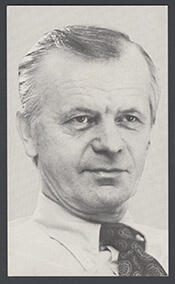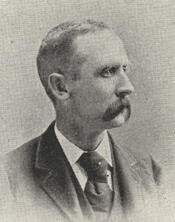
Osee Matson Hall (September 10, 1847 – November 26, 1914) was a U.S. Representative from Minnesota and a member of the Democratic Party who served two terms in the United States Congress from 1891 to 1895. He was born in Conneaut, Ashtabula County, Ohio, where he attended the local public schools. His early years in Ohio provided the foundation for a career that would span law, state politics, and federal legislative service during a significant period in American political and economic history.
Hall pursued higher education in Ohio and Massachusetts, first attending Hiram College in Ohio and then Williams College in Williamstown, Massachusetts. He graduated from Williams College in 1868. His education at these institutions, both known for their rigorous curricula and emphasis on public service and civic engagement, prepared him for the legal and political work that would define his professional life.
After completing his formal education, Hall studied law and was admitted to the bar. He moved to Minnesota and commenced the practice of law in Red Wing, Goodhue County. Establishing himself as an attorney in Red Wing, he became an active figure in local affairs and built the professional and political connections that would lead to his entry into state government. His legal practice in this growing river town on the Mississippi River placed him at the center of regional commercial and civic developments in the post–Civil War era.
Hall’s political career began at the state level. He was elected to the Minnesota Senate and served from 1885 to 1887. As a state senator, he participated in shaping legislation for a state undergoing rapid economic growth and demographic change, gaining legislative experience and public visibility that would support his subsequent election to national office. His service in the Minnesota Senate marked his emergence as a prominent Democratic figure in a state that was often politically competitive in the late nineteenth century.
Building on his state legislative experience, Hall was elected as a Democrat to the Fifty-second and Fifty-third Congresses, serving in the U.S. House of Representatives from March 4, 1891, to March 3, 1895. Representing Minnesota in the House, he participated in the democratic process at the national level and contributed to the legislative work of Congress during a period marked by debates over tariffs, monetary policy, and economic regulation. His service in Congress occurred during a significant period in American history, as the nation confronted the challenges of industrialization, agrarian unrest, and the approach of the Panic of 1893. Hall sought to represent the interests of his Minnesota constituents within this broader national context. He was an unsuccessful candidate for reelection in 1894 to the Fifty-fourth Congress, ending his tenure in the House after two consecutive terms.
Following his departure from Congress, Hall resumed the practice of law, returning to his legal career in Minnesota. He remained engaged in public affairs and continued to apply his legal and legislative experience to matters of state governance and public policy. His post-congressional work reflected a continued commitment to public service even outside elective office.
In 1907, Hall was appointed a member of the Minnesota State Tax Commission, a position he held from 1907 until his death. In this role, he participated in the oversight and administration of the state’s tax system during a period when questions of taxation, public finance, and equitable assessment were increasingly important to state governments. He died in Saint Paul, Minnesota, on November 26, 1914, at the age of 67. Osee Matson Hall was interred in Oakwood Cemetery in Red Wing, Minnesota, the community where he had first established his legal practice and from which he launched his long career in public life.
Congressional Record